


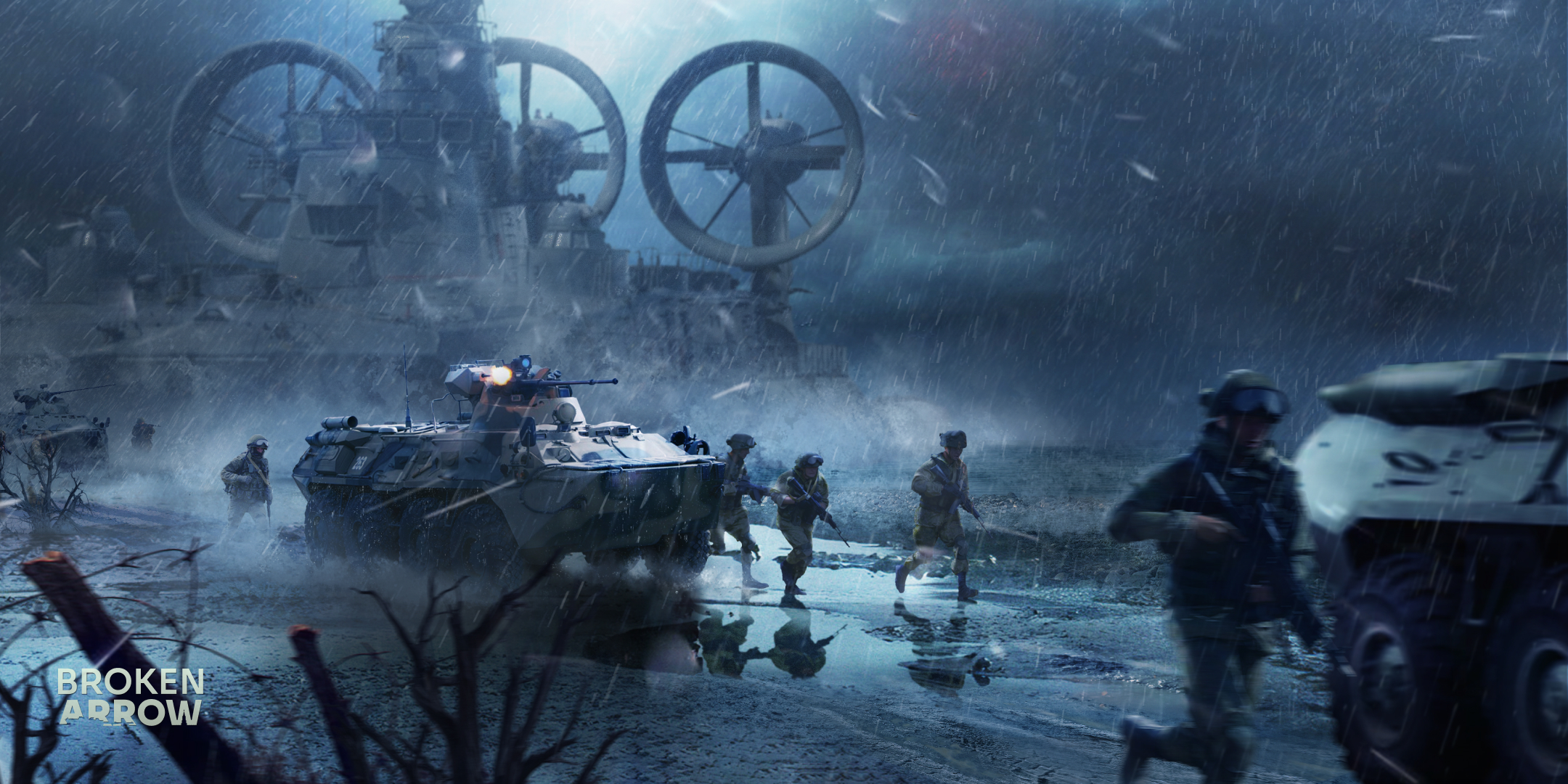
The Russian Coastal Troops are not really an equivalent of the US Marines. Conducting amphibious and air assaults is also part of their operations but is not their main focus, as they are also a defensive unit responsible for defending coastal installations and repelling amphibious and air-assaults coming from the sea.
They are represented in the game as a mix between a light motorized/mechanized group lacking modern equipment and relying on old soviet armored vehicles, working alongside top of the art cruise and ballistic missile systems and equipment dedicated to arctic warfare.
Reconnaissance
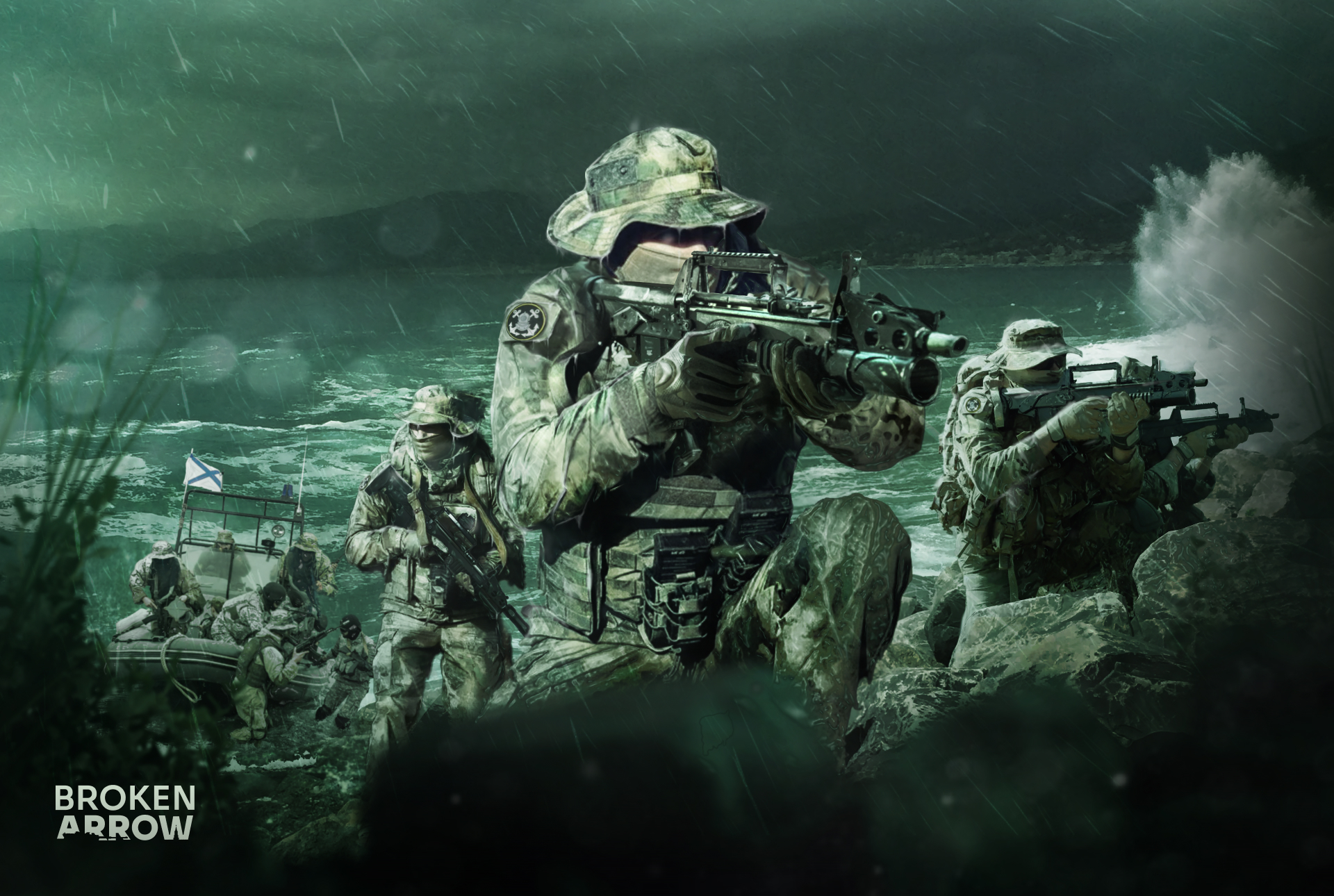
Morskaya razvedka: A 5 man recon team equipped with suppressed weapons which have less impact on a unit's stealth when shooting. They also carry several RPG-27 disposable rocket launchers to defend against light vehicles.

PDSS: A team of 4 combat divers able to swim across waterways. They are extremely stealthy and can be airdropped, making them superb at infiltration behind enemy lines.
They can be equipped either with ADS rifles able to shoot underwater or DP-64 double grenade launchers.

Spetsnaz VMF: A 6 man special forces team equipped either in close quarter configuration with Bullpup PKP machine guns and SVU-AS marksman rifles or long range fire support with ASVK anti-materiel sniper rifles.
They can also provide laser designation and be airdropped.
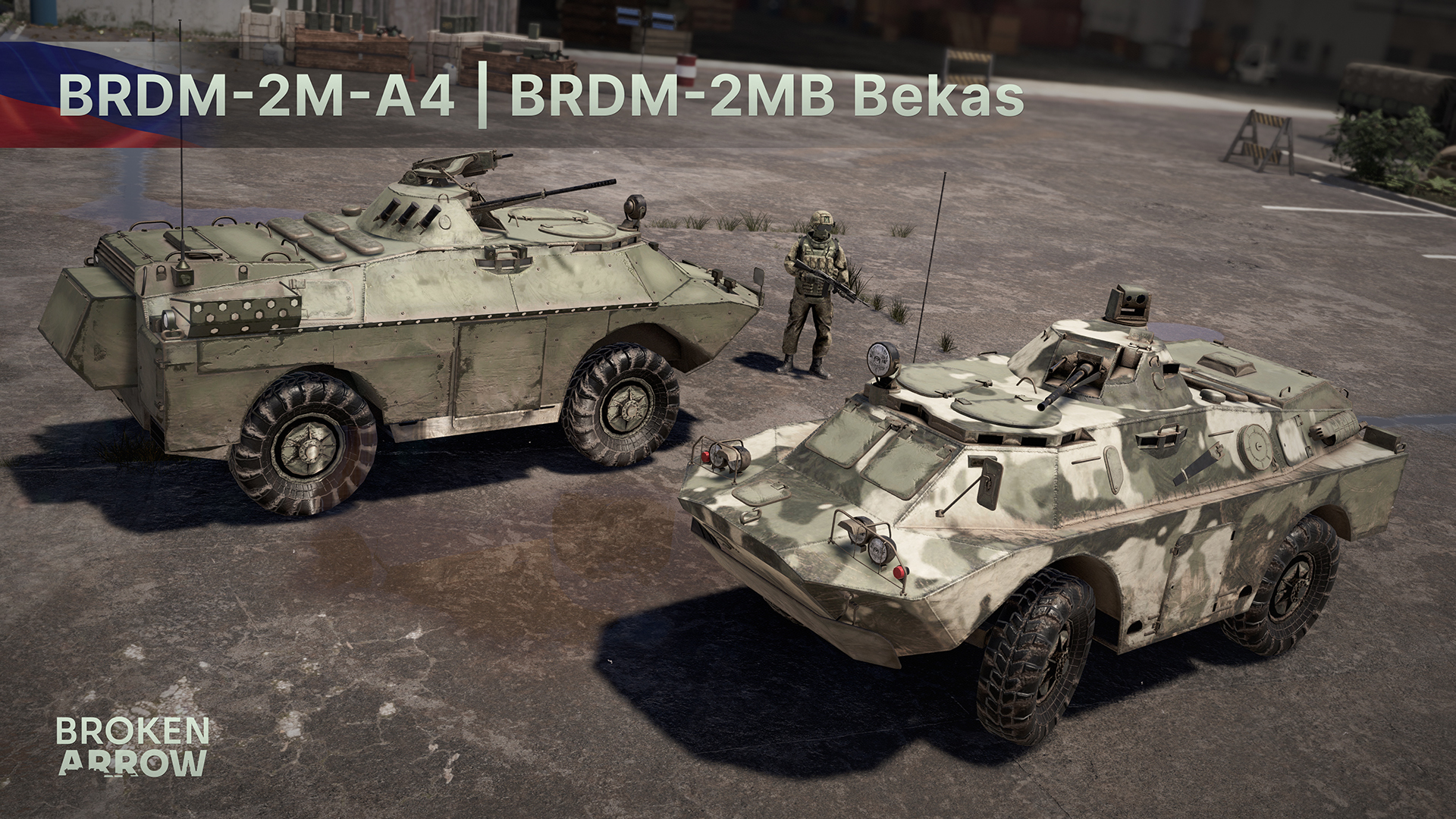
BRDM-2: An old wheeled armored car with a variety of weapons options available including a mix of Kord 12.7mm and KPVT 14.5mm heavy machine guns, automatic grenade launcher and KPVB 23mm autocannon.
The optics can be upgraded with the modernized “Bekas” module/
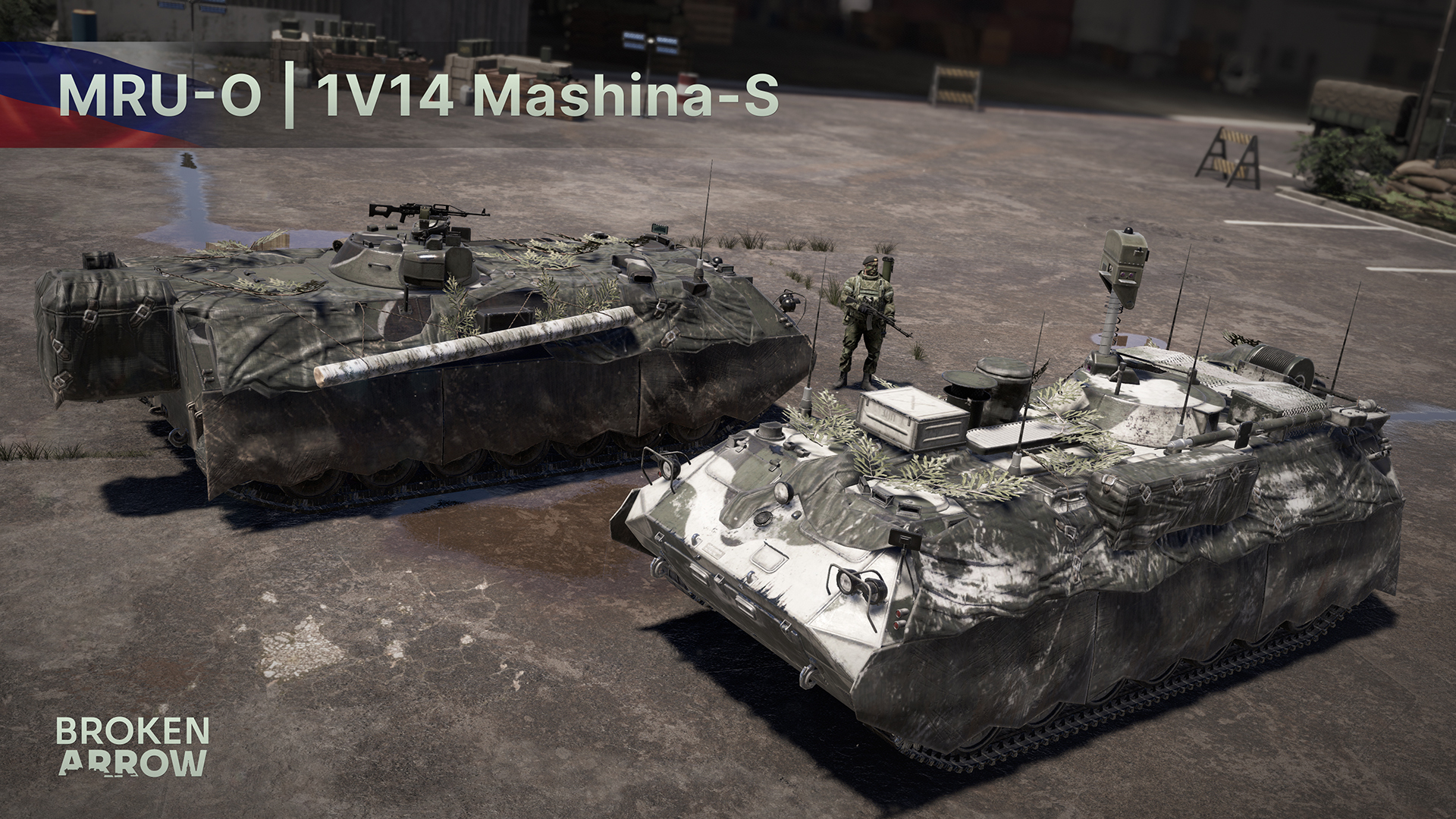
1V14 Mashina-S: tracked recon platform with a laser designator which can be upgraded with MRU advanced recon module to increase its detection range.
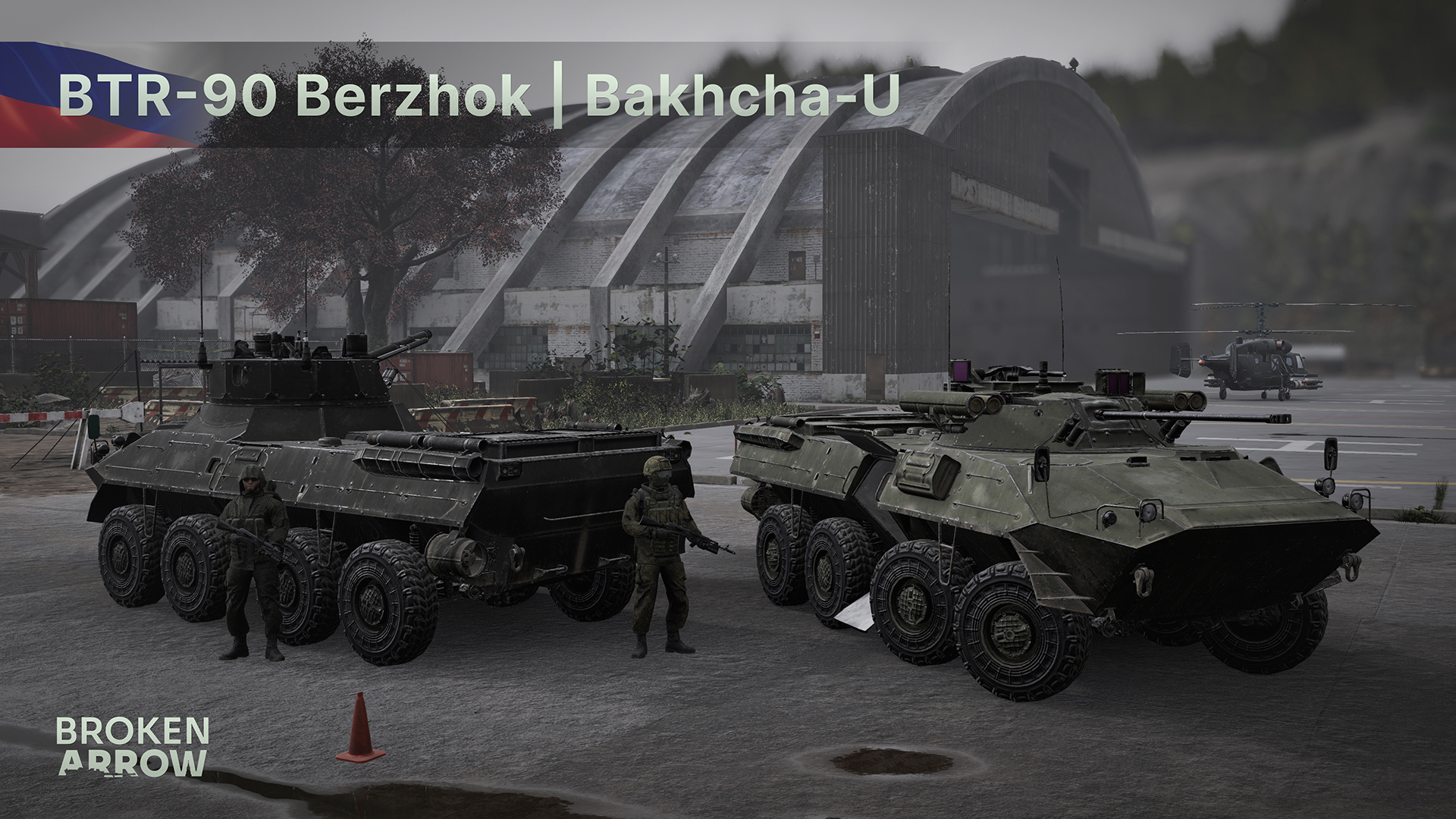
BTR-90 is a transport exclusive to naval troops’ recon teams. This is basically an upgraded BTR-80 using a BMP-2 turret with its 30mm autocannon and Konkurs ATGMs and optional AGS-17 grenade launcher.
It is also compatible with the BMD-4 turret called Bakhcha-U featuring a 100mm and 30mm gun, or the Berezhok turret with 4 Kornet launchers.
The vehicle armor can also be upgraded with a kit comprising additional metal plates, a cage armor and several reactive armor bricks to better protect the crew of the turret.
Infantry & Transports
Morskaya pekhota: Also called morpehi, they’re a versatile 7 man assault squad armed AK-74 rifles, RPK-74M light machine guns, underbarrel grenade launchers and 5 punchy 105mm RPG-27 anti-tank launchers.

Chernye Berety: A 14 man squad of veteran morpehi equipped either with RPG-27 or larger 125mm RPG-28s. They are a formidable unit in any situation but come at a high price and the number of available squads is low.

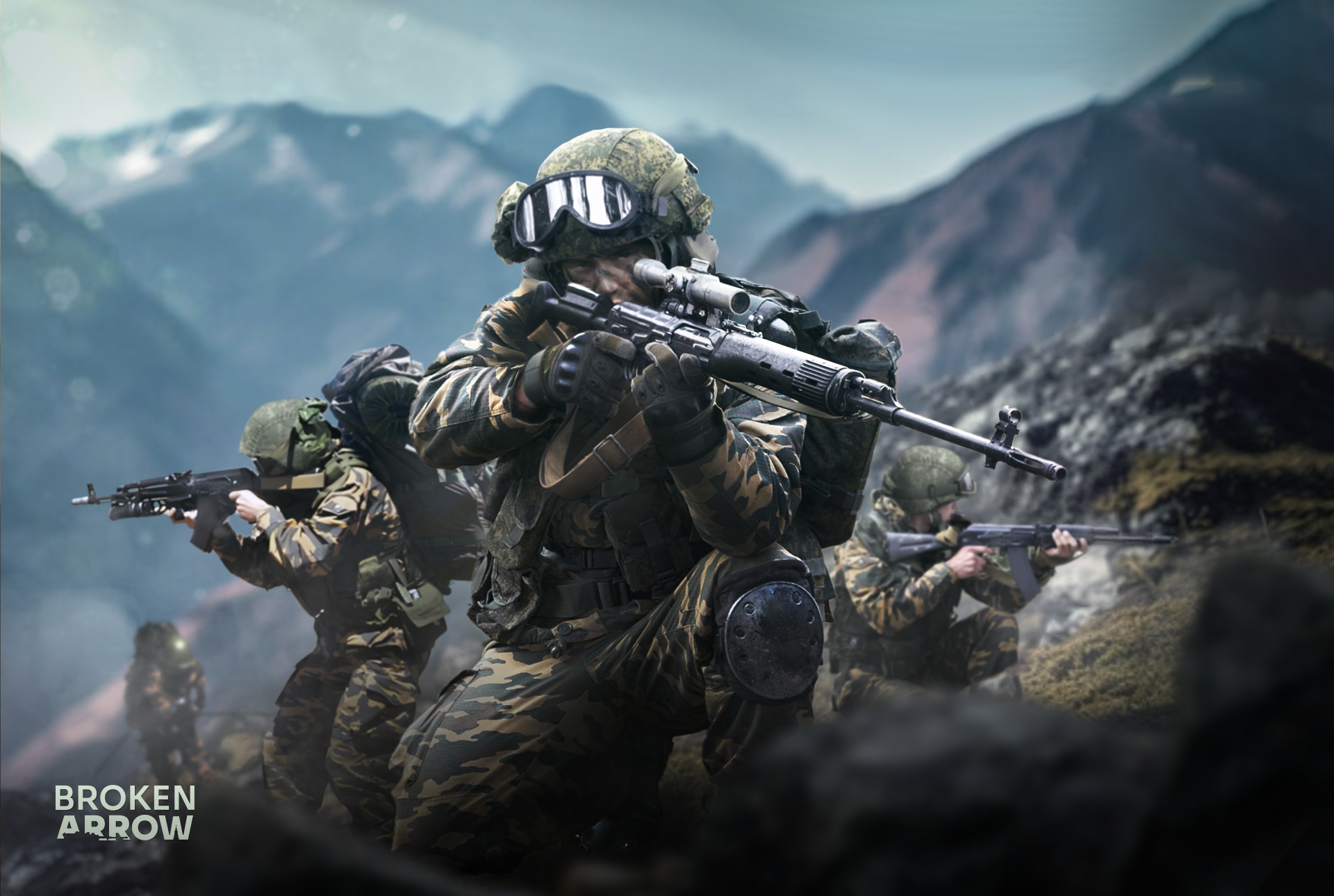
Gornostrelki: Mountaineers consisting of 7 man team, armed with medium range weaponry including 2 SVD marksman rifles and a light Metis ATGM. They are best used as skirmishers engaging enemy infantry and light vehicles outside of the usual combat range and falling back once the enemy gets in range.
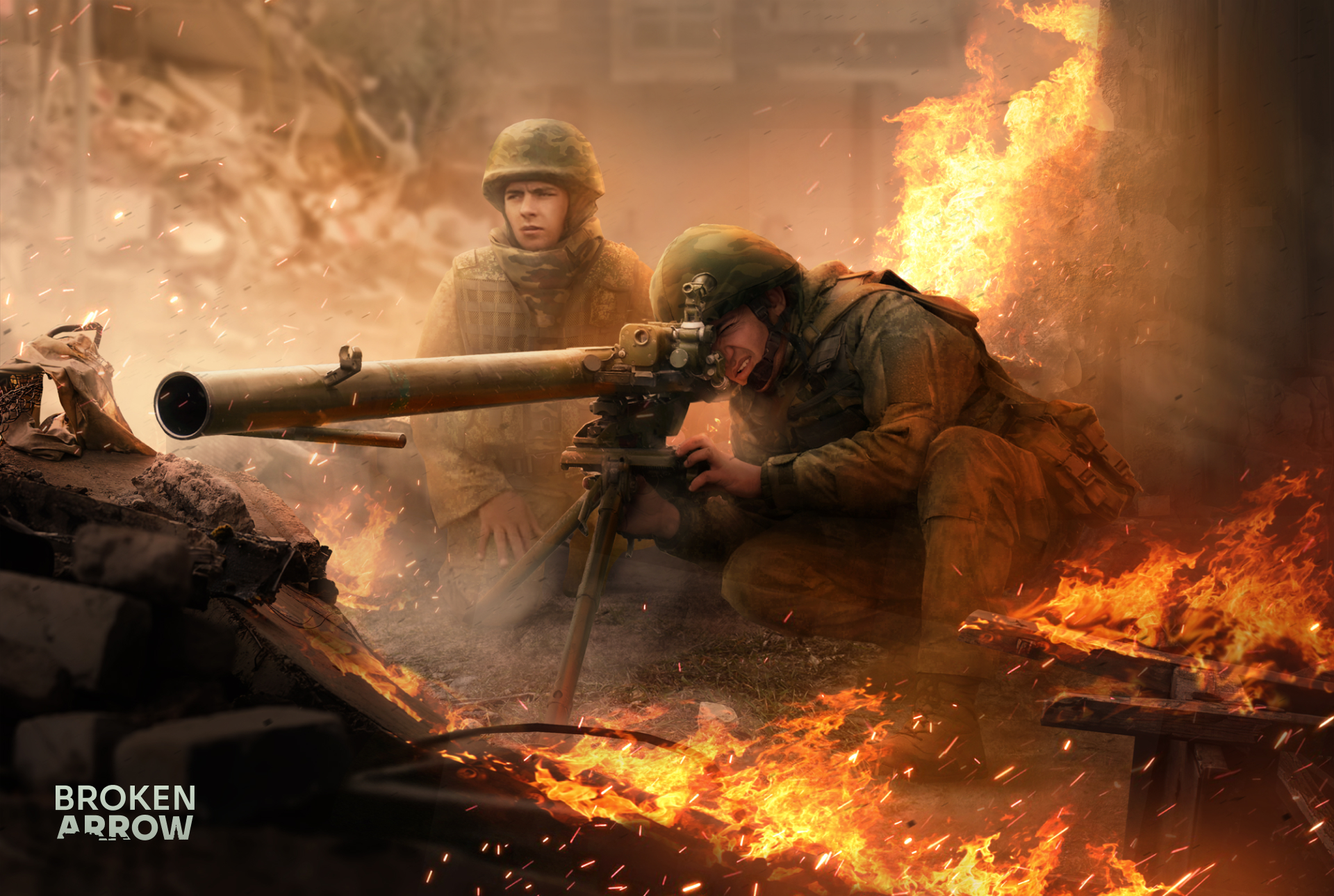
PTRK Konkurs: A dedicated anti-tank team manning a Konkurs ATGM launcher which can be upgraded to the Konkurs-M with additional damage and armor penetration. Its long range makes it an efficient deterrent against any armored vehicle but will still lack the teeth to seriously threaten modern tanks' frontal armor.
SPG-9 Sapog: This support squad is equipped with 2 SPG-9 recoilless rifles providing long range fire support against infantry and vehicles but low armor penetration.
The transports available to both recon and line infantry consist of:
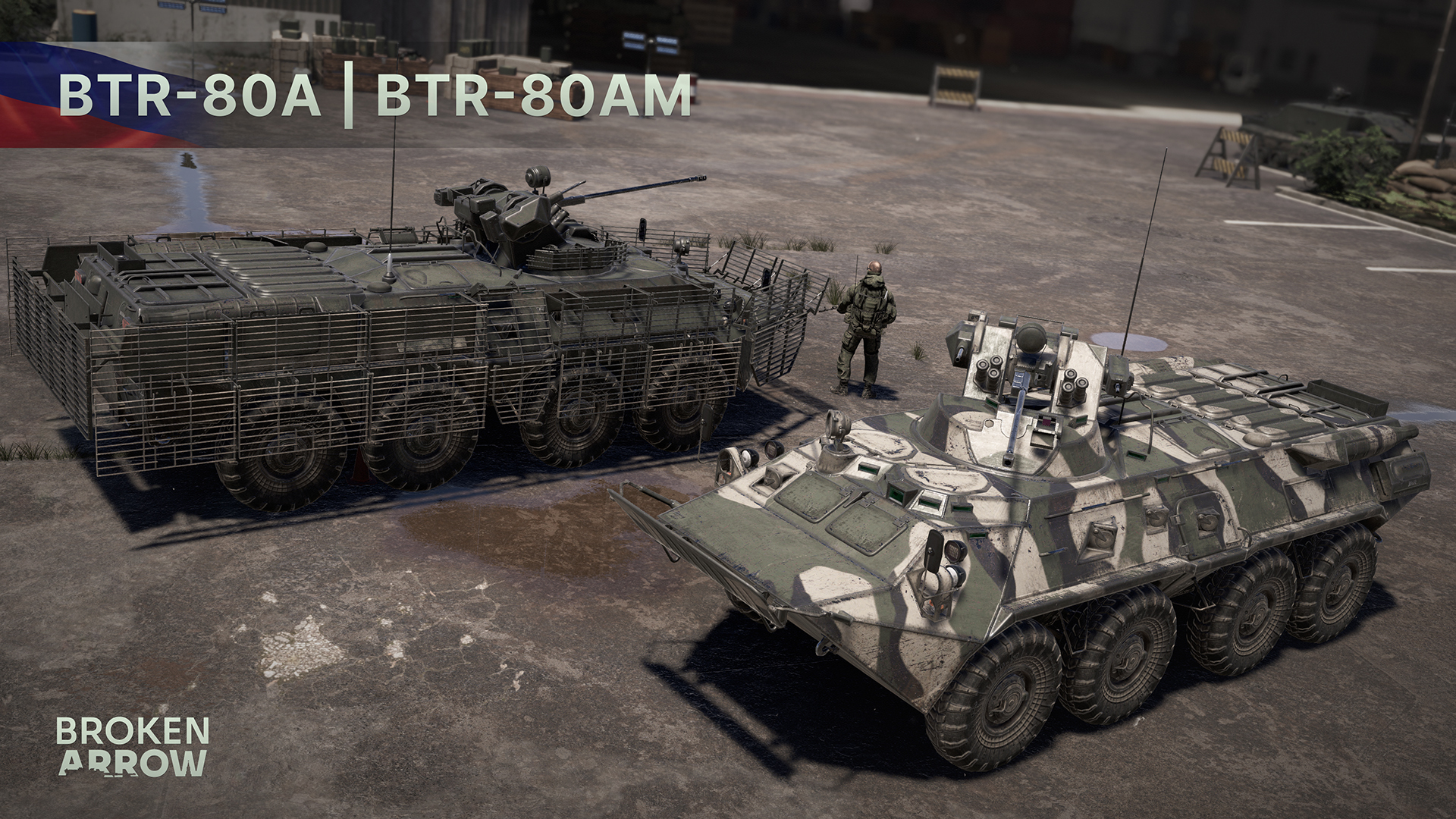
The old BTR-80, which can be upgraded to the BTR-80A standard replacing the old 14.5mm gun with a 30mm autocannon and the capability to add an AGS-17 grenade launcher to the side of the turret.
But increasing the firepower doesn’t solve the main downside of this vehicle, which is its underpowered engine keeping the maximum road speed to 80km/h, which is barely better than most tracked vehicles.
The armor can be upgraded with additional metal plates and cages but the extra weight reduces the speed of the vehicle even more and removes the amphibious capability.
The vehicle can transport up to 8 soldiers.
The BMP-3F, a navalized version of the BMP-3, which can provide some serious firepower to any infantry battle with its 100mm gun + 30mm autocannon. The “Sodema” fire control system can be installed, providing better optics, weapon range, and access to the more powerful gun launched Arkan-M missiles.
No armor upgrades are available to keep the vehicle amphibious but it is possible to install the “Shtora” missile jammer and extra smoke pods.
Up to 7 soldiers can be carried.

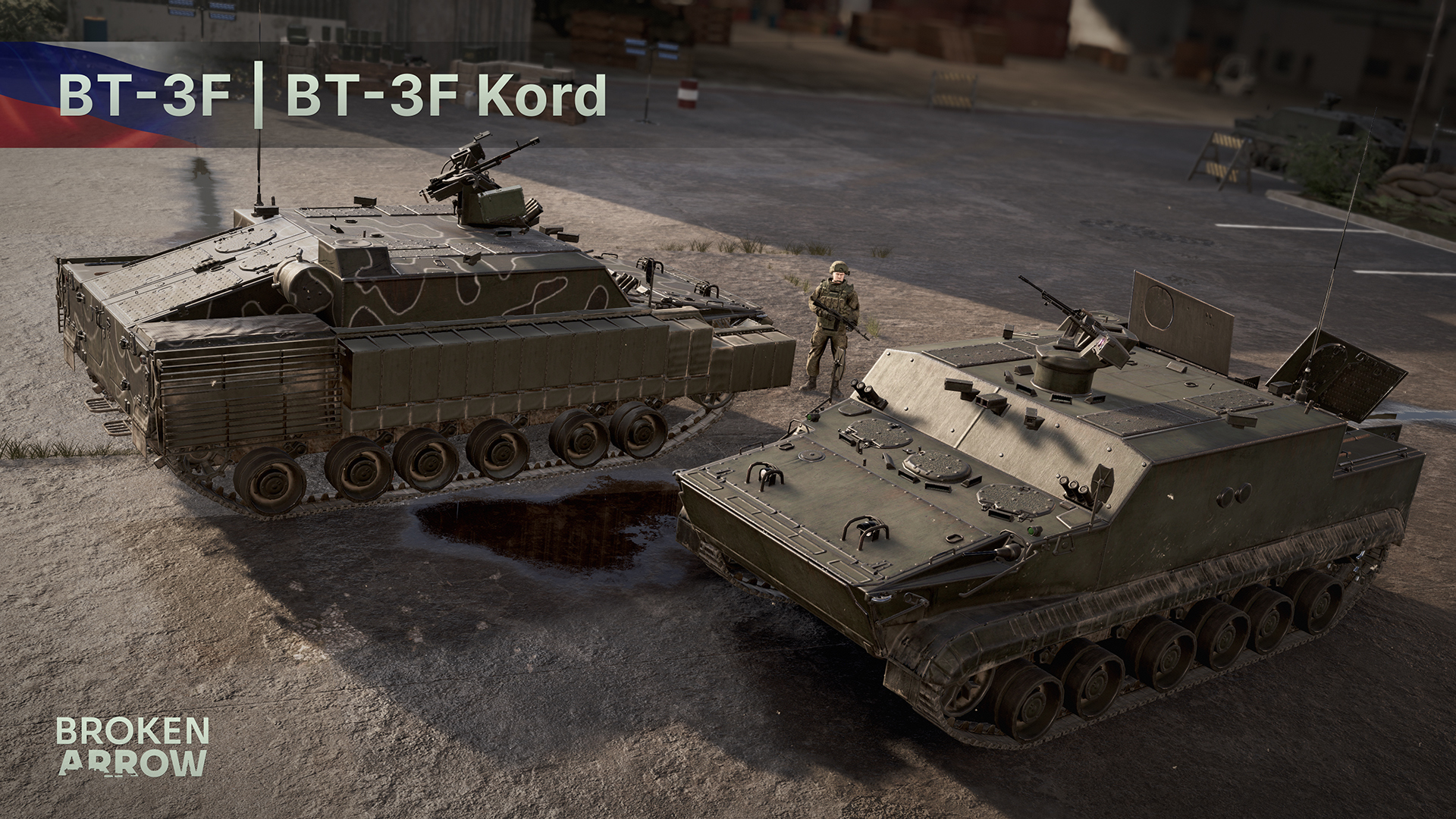
The BT-3F, is a turretless version of the BMP-3 with an enlarged troop compartment allowing up to 14 soldiers to be transported which allows it to bring 2 squads at once.
It retains the 2 forward facing PKT medium machine guns of the BMP-3 on the hull and is equipped with a remotely operated machine gun on the roof, either another PKT or a Kord heavy machine gun or AP-23 autocannon.
The vehicle's can be equipped with additional reactive explosive armor without losing its amphibious capability.
Combat vehicles
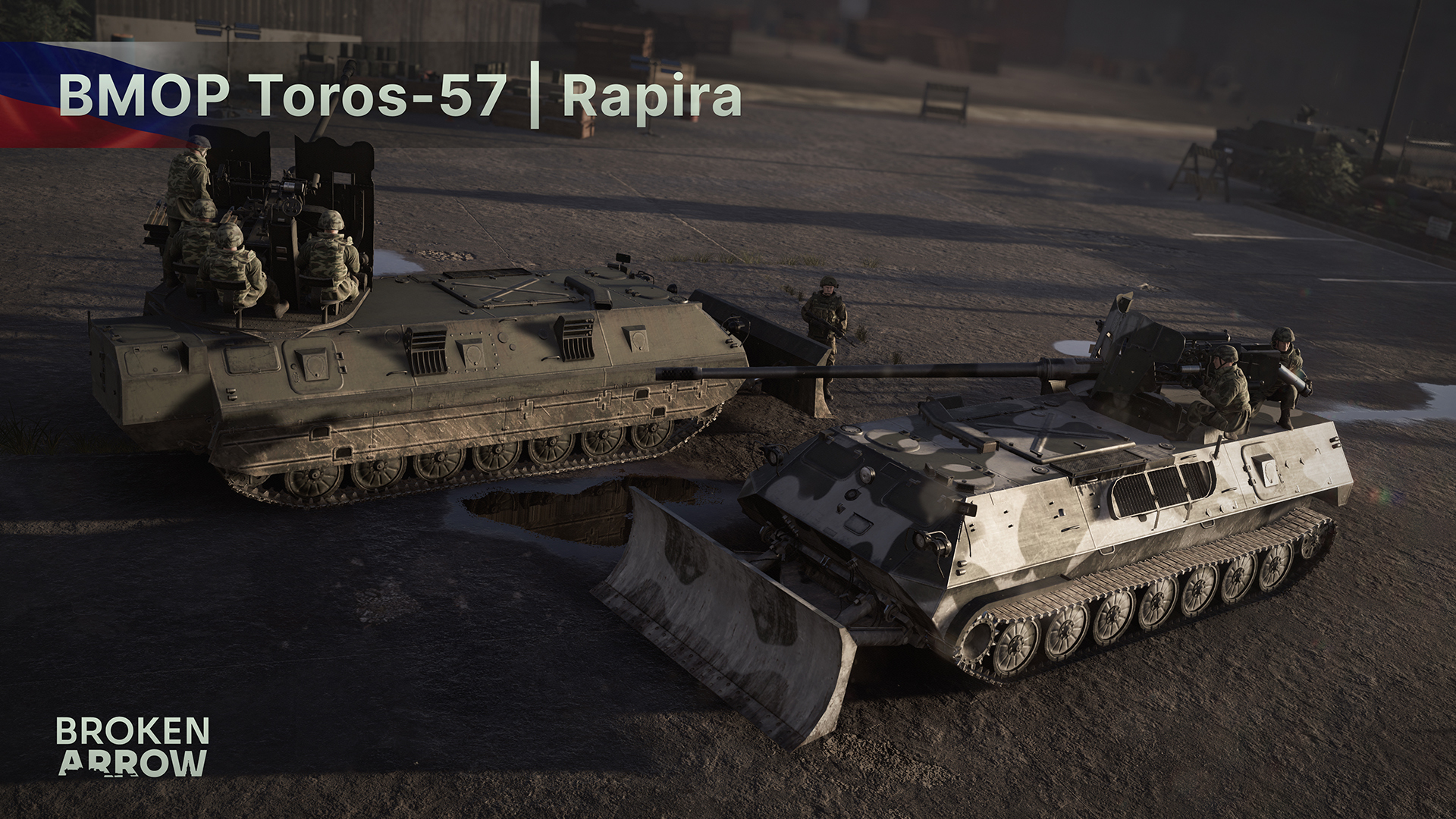
BMOP Toros: A lightly armored tracked vehicle, it nonetheless offers a variety of weaponry, from a 30mm autocannon and grenade launcher, additional Kornet ATGMs, 57mm S-60 anti-aircraft gun or even the Rapira 100mm anti-tank gun.
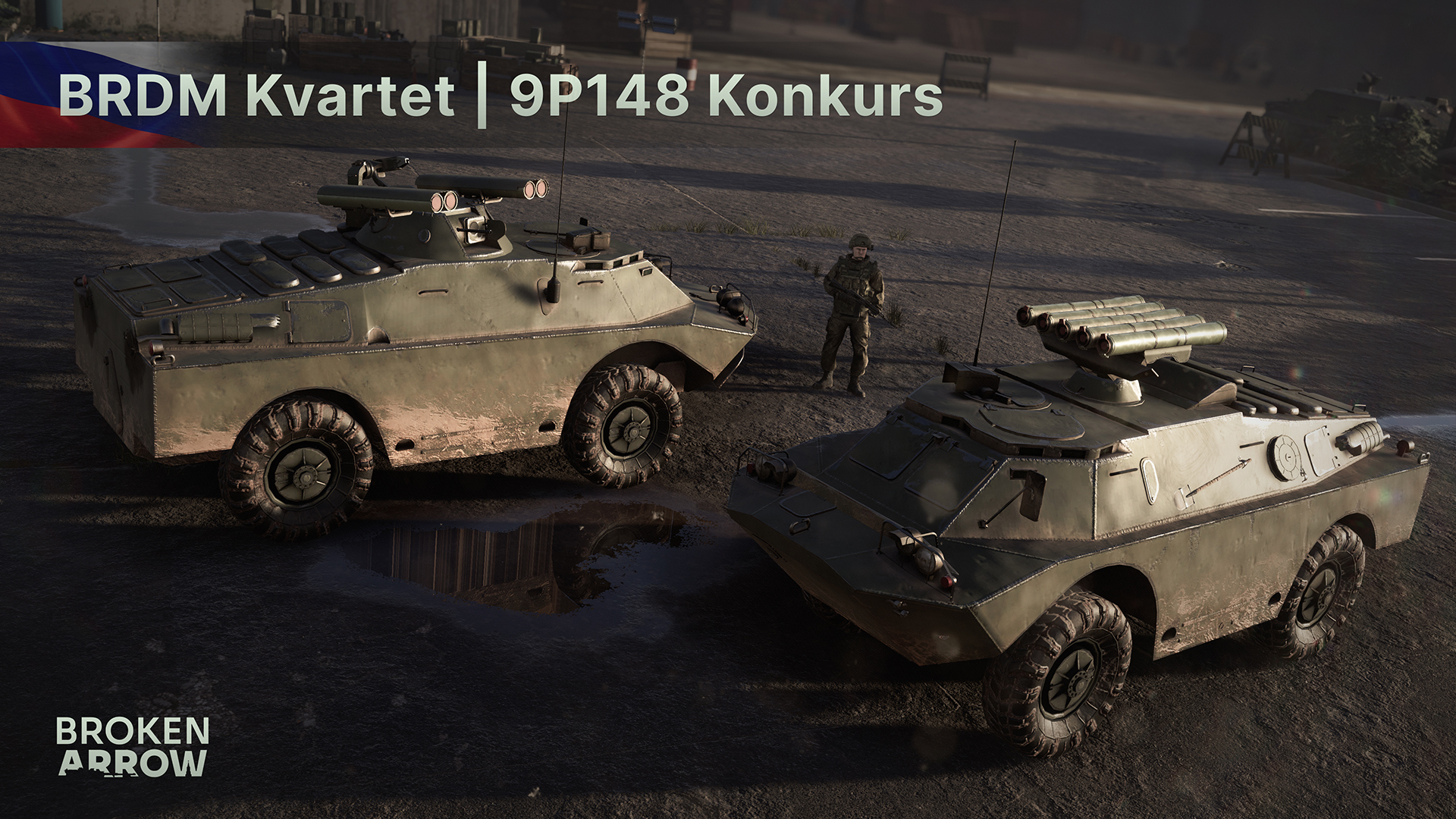
BRDM Konkurs/Kvartet: A BRDM-2 chassis equipped with 5 ready-to-fire ATGM tubes on the roof. The loadout consists of 10 Konkurs-M anti-tank missiles and 10 smaller Fagot missiles for use against infantry. The turret can be replaced by a modified BRDM-2 turret equipped with 4 ready to launch Kornet missiles and 4 additional missiles in reserve.
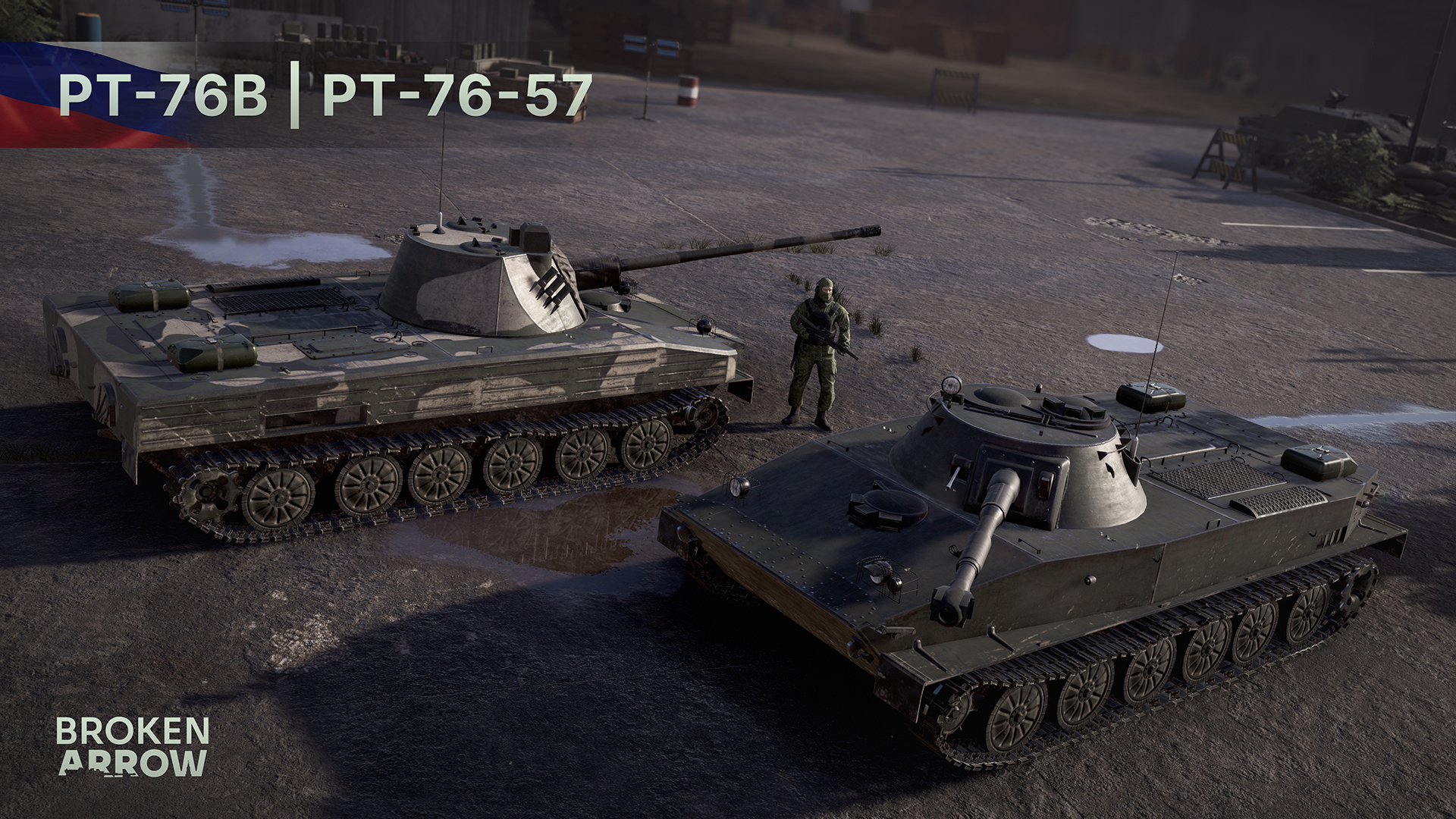
PT-76: This light amphibious tank has been in service for decades in the Naval troops. The original 76mm gun is now completely obsolete and can only be expected to deal with the lightest vehicles or as fire support against infantry.
On top of that the mobility of the vehicle is incrediblyy limited with a maximum speed of 45km/h, unless you upgrade the engine to reach 60km/h - which is still not great but better.
Of course a vehicle with such low performance is extremely cheap in the game allowing you to call-in many of them at the same time and follow the adage “Quantity has a Quality All Its Own” (commonly misattributed to Joseph Stalin or pretty much any famous military leader)
But several interesting upgrades provide more fire power: a BTR-80A turret with 30mm autocannon and AG-17 grenade launcher can be fitted, or even a 57mm autocannon which can even pose a threat to tanks from the side.
In the end a fully upgraded PT-76 can cost more than 3 times its initial price.
T-80BV/BVM: This tank is assigned to naval troops because its gas turbine engine works better in the extremely cold temperatures of the arctic where the naval troops are operating. The base BV version is pretty old, its armor is still good enough to resist even the most powerful autocannon rounds but will be pierced by pretty much any tank gun. The armor piercing rounds are pretty old too and will barely scratch an Abrams at maximum range. But this tank has other advantages: it is fast and has an advanced autoloader providing a good rate of fire. So it is perfect to counter numerous vehicles or to provide fire support against infantry.
The BVM version is a major upgrade of pretty much everything: optics, firepower, armor, speed. Additional lateral protection can also be added to the BVM.

Support
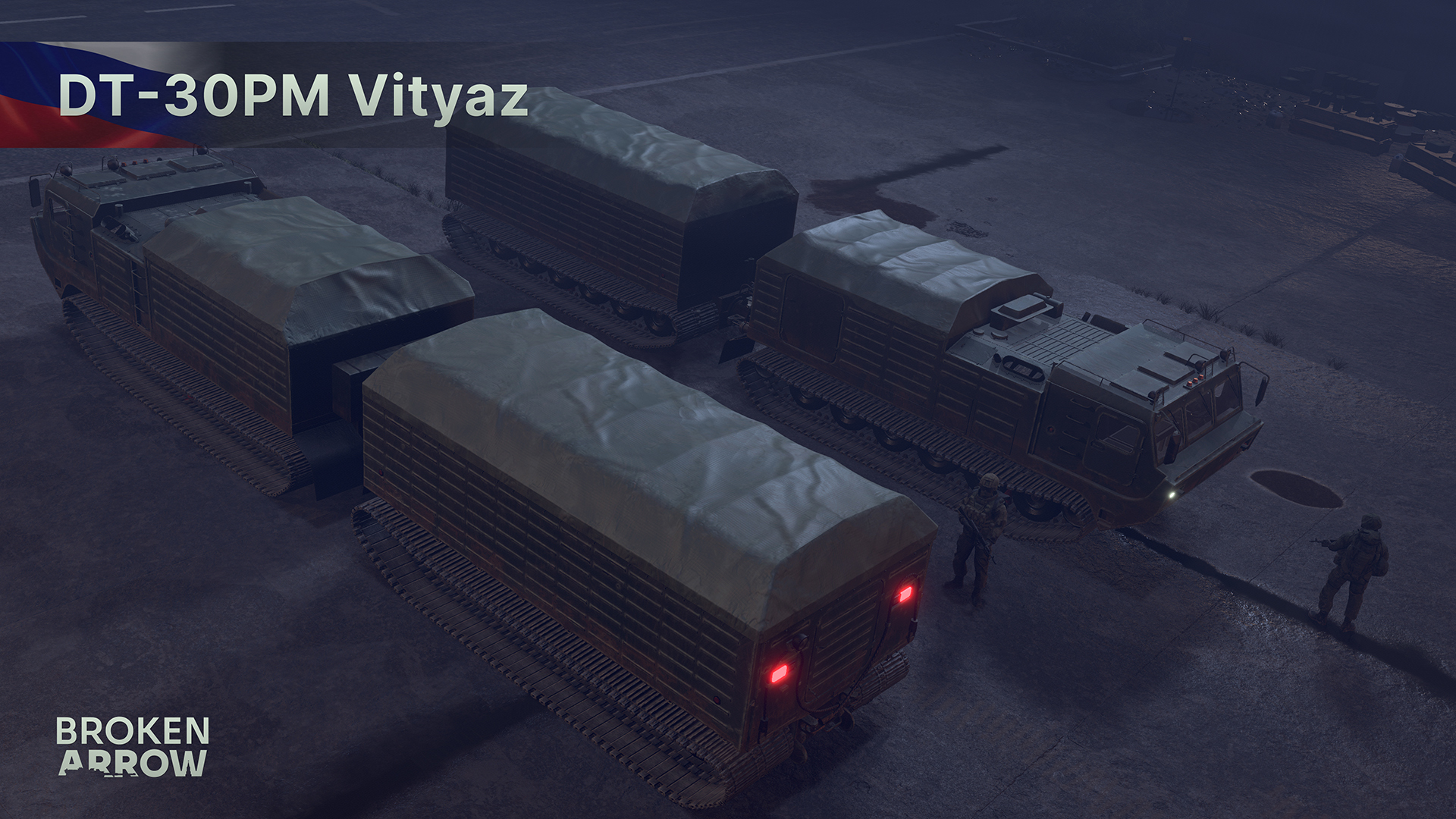
DT-30 Vityaz: This vehicle is an all terrain mechanized workhorse able to carry an outstanding 30 tons of supplies through land, river, swamp, snow. The very large tracks limit its speed on road resulting in an almost constant speed whether it is on road or not.
The best way to use this vehicle is not to drop the supplies and send it back to the base. It is better to consider it like a mobile logistical base that you move around and deploy wherever it is needed. And you keep it constantly filled with supplies with small cargo helicopters.
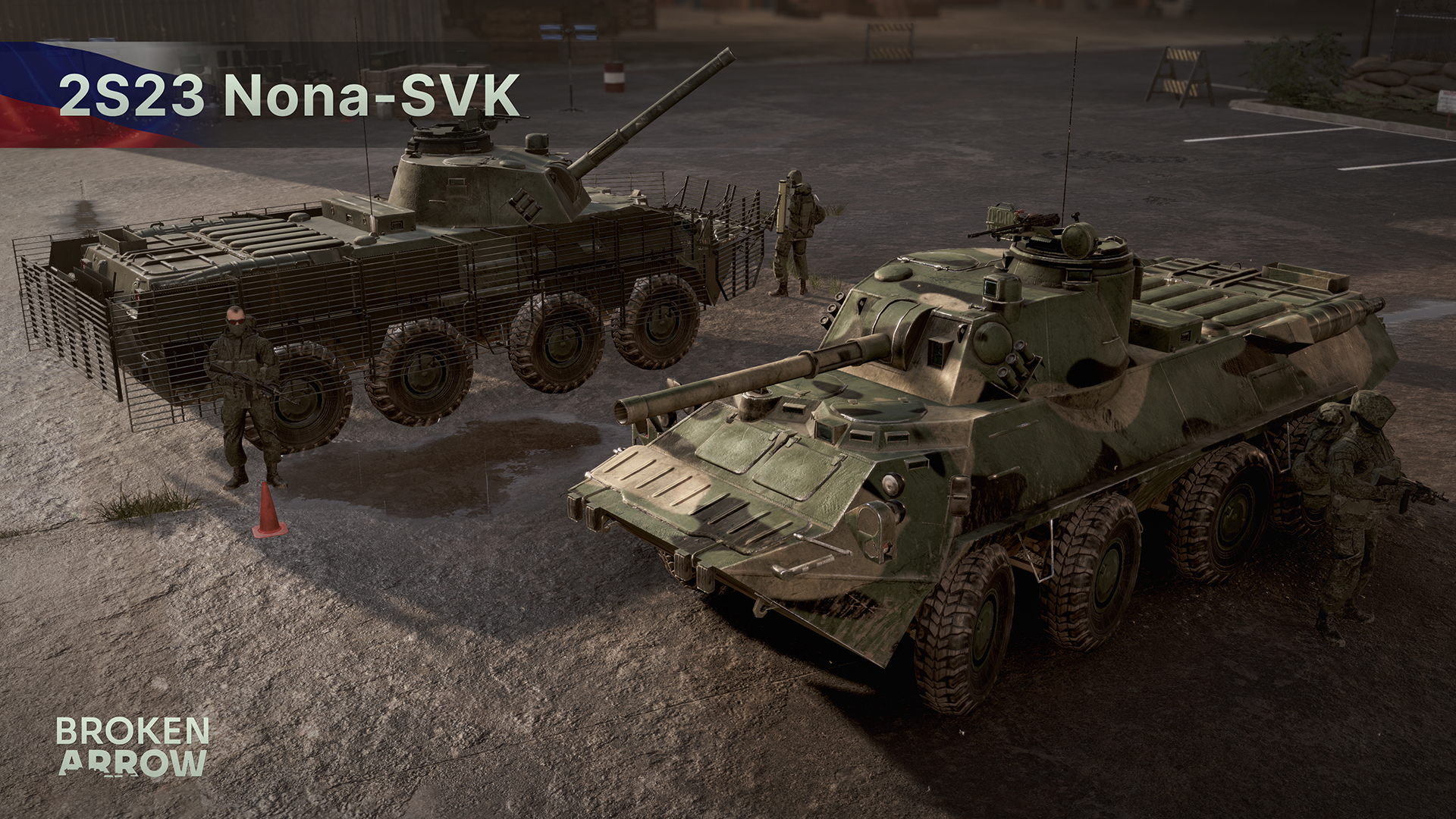
2S23 Nona-SVK: A 120mm mortar mounted on the wheeled BTR-80 platform making it mobile on roads and amphibious. It can trade speed and the amphibious capability for more armor and can be upgraded with rocket assisted and laser guided mortar rounds. The ammo reserve is low, meaning you will frequently have to resupply it.
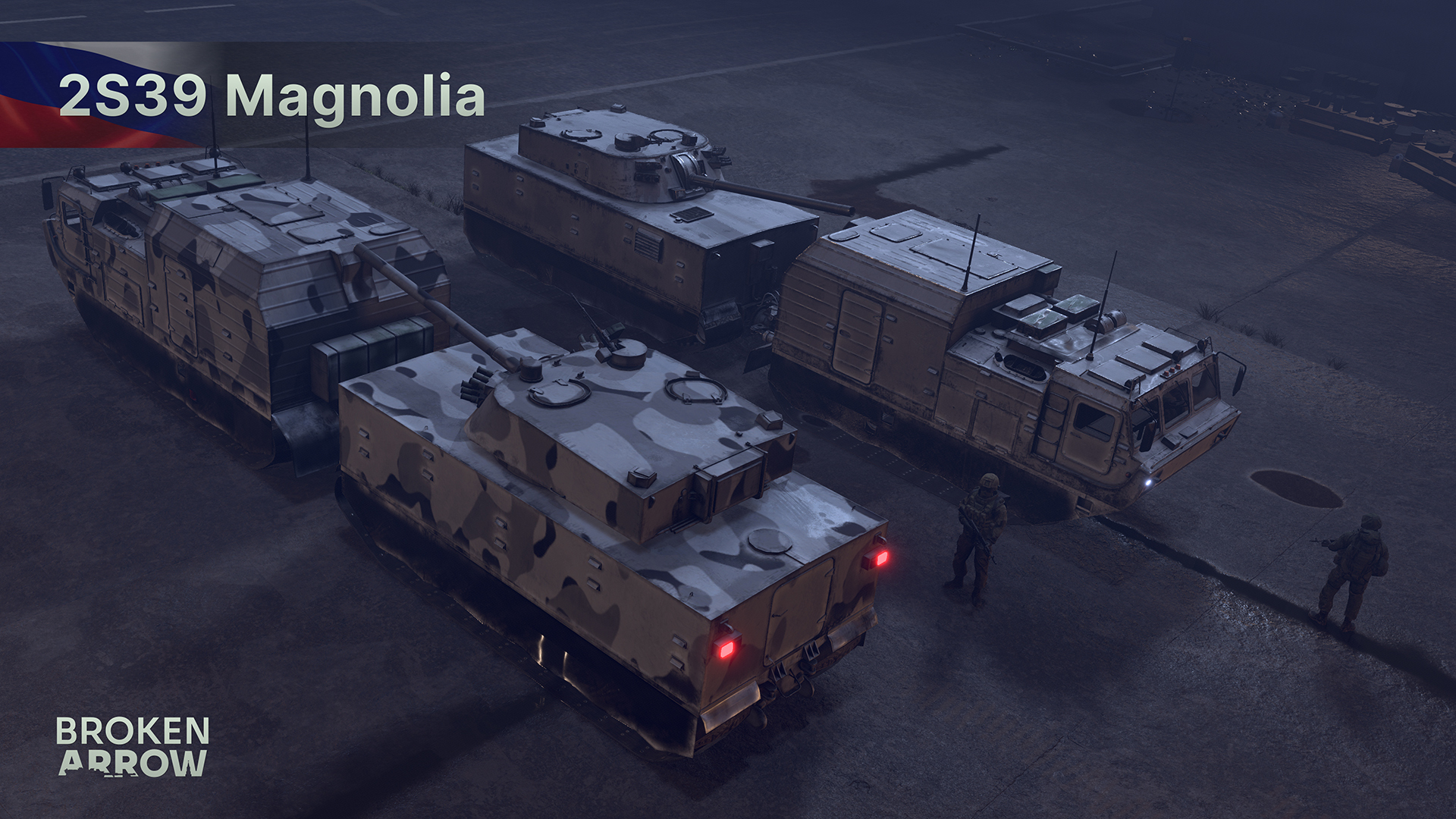
2S39 Magnolia: The opposite of the Nona-SVK, this is a mortar based on the slow DT-30 chassis towing a 120mm mortar system. A large quantity of ammunition is stored and you can choose between high-explosive rounds efficient against infantry in buildings and cluster rounds spreading their damage over a larger area and effective at disabling vehicles.
2S1 Gvozdika / 2S34 Hosta: The Gvodzika is an old 122mm howitzer rather inaccurate and with a low rate of fire equipped with high explosive and smoke rounds as well as a few HEAT rounds for self defense. It can be upgraded to the more modern 2S34 Hosta with a faster rate of fire, more accuracy and it can access laser guided rounds.

A222 Bereg: This coastal defense system equipped with a 130mm gun usually mounted on Russian war ships. It can be used as a standard howitzer but can also engage ground targets and helicopters with special rounds equipped with proximity fuzes.

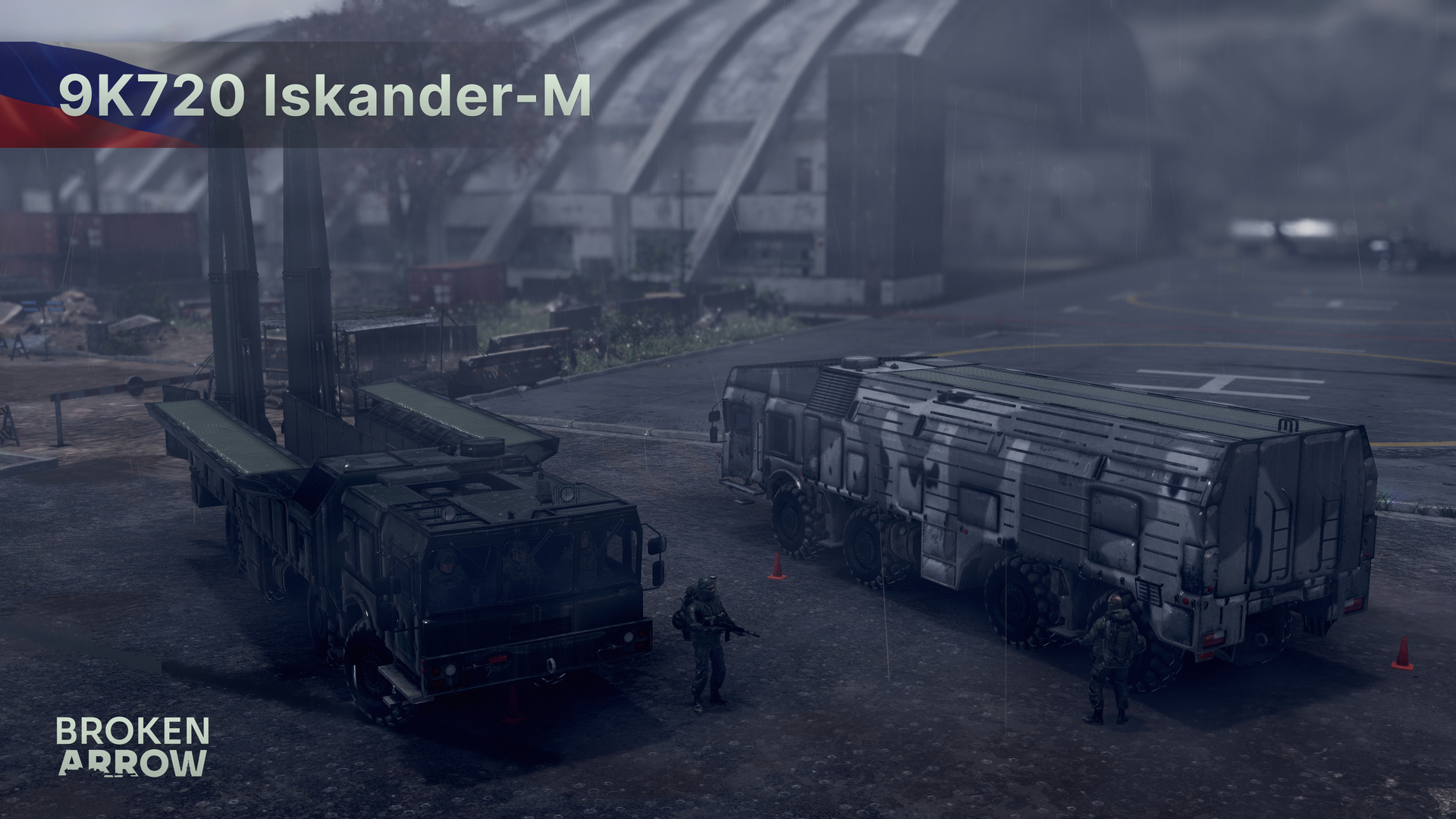
9K720 Iskander: This long range missile launcher can be equipped either with 2 large ballistic missiles or 2 to 4 cruise missiles.
Ballistic missiles fly high in the sky before falling back at high speed making them hard or impossible to intercept by short range air defense. On the contrary, cruise missiles stay as close to the ground as possible to avoid radar detection and require short range air defense to be intercepted.
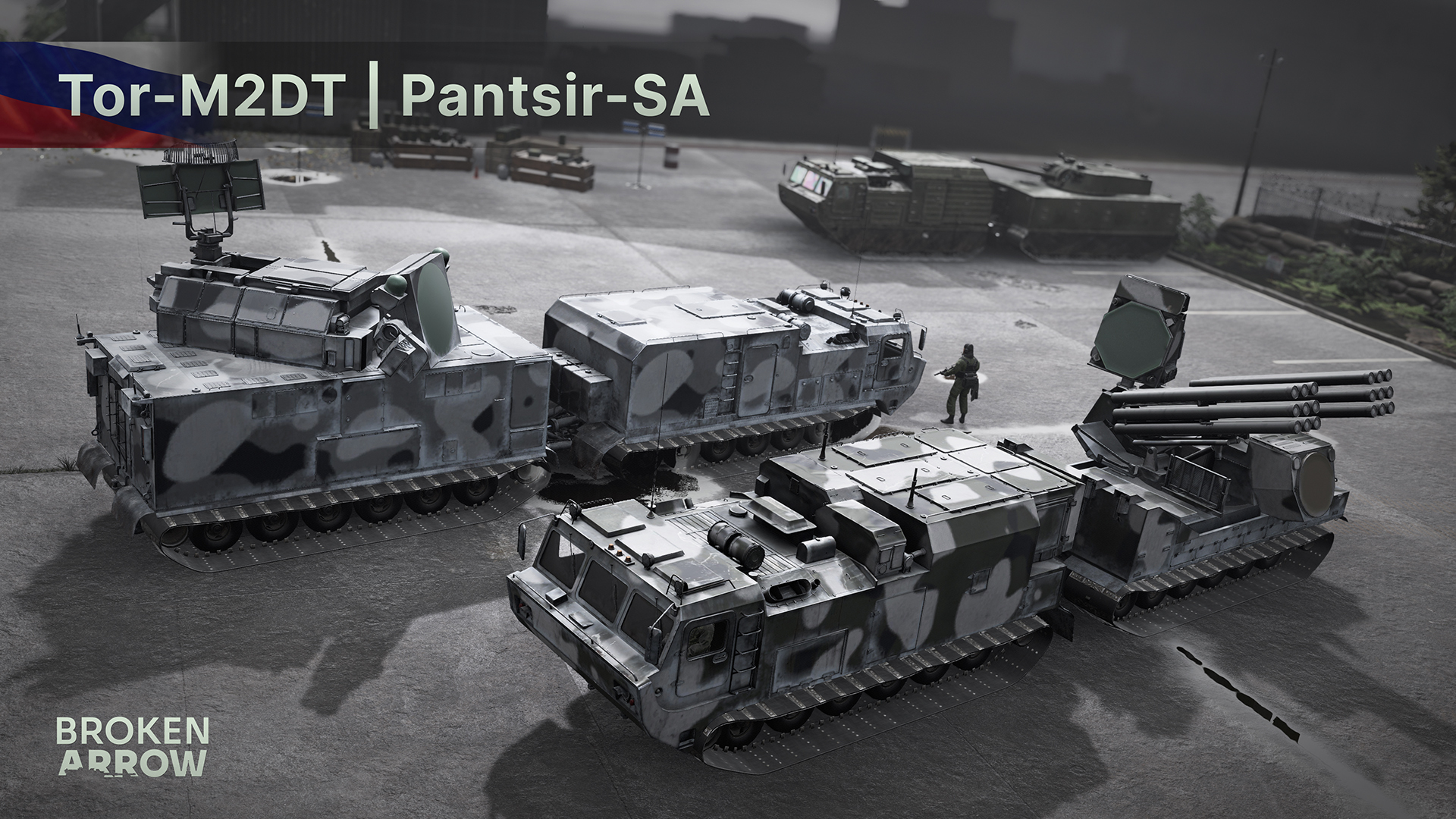
Tor-M2DT: This is a DT-30 chassis with a Tor-M2 module towed. This anti-aircraft system stores 16 vertically launched missiles, that are very efficient against helicopters and against airplanes at short range. Activating the radar increases the range of detection and engagement, and gives the ability to target projectiles like cruise missiles. The Tor module can be upgraded to a Pantsir module with 18 missiles with more range and damage.
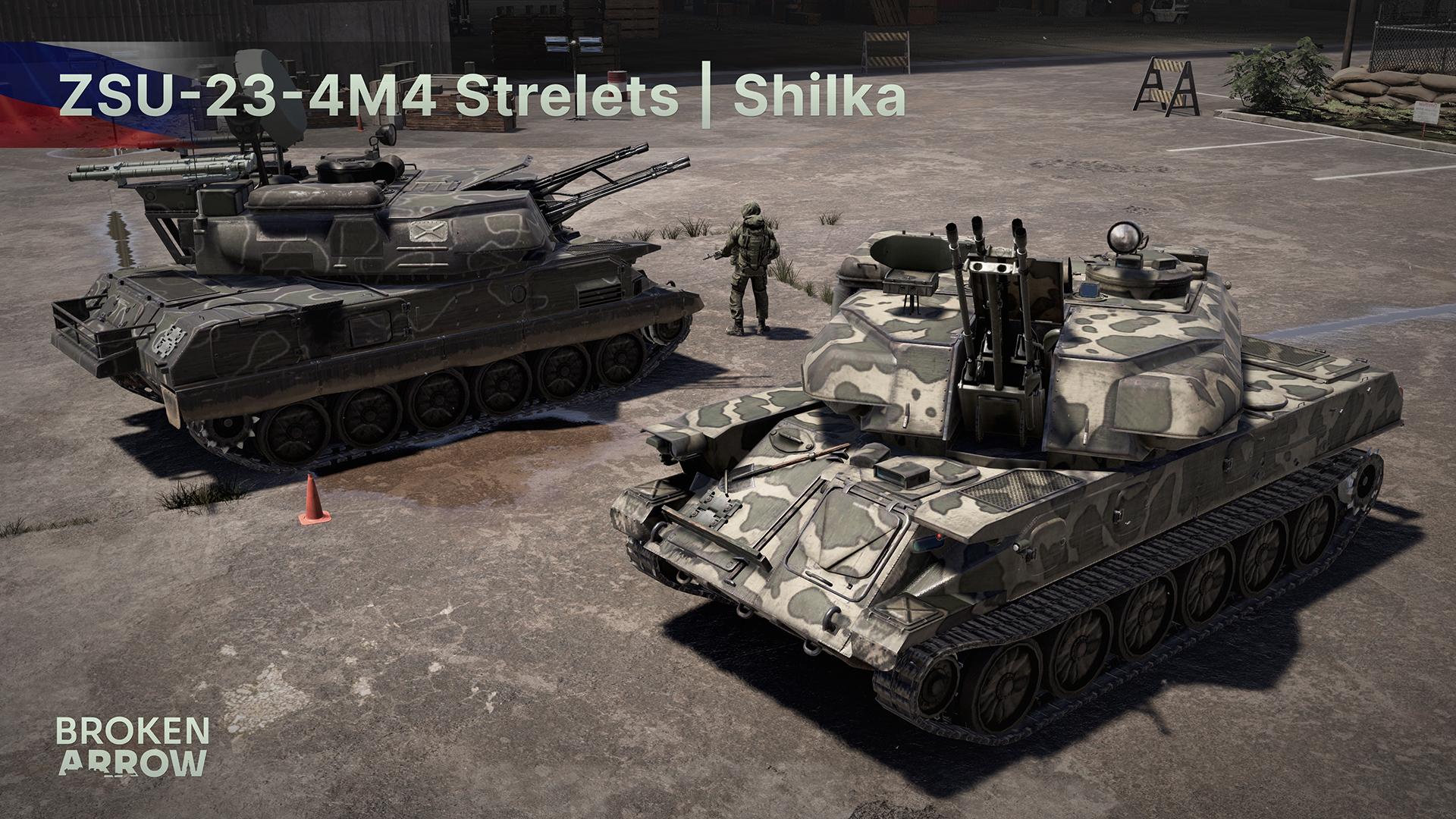
ZSU-23-4 Shilka: An old anti-aircraft system equipped with four 23mm cannons, it can still prove a menace at short range against low flying aircraft, even more so when upgraded with additional Igla MANPADS.
It is also possible to use it as a fire support vehicle, with more ammo but no radar. This is how it was used during the Soviet–Afghan War since there were no air threats and the high elevation of the gun allowed it to engage enemy fighters attacking from elevated positions in the mountains.
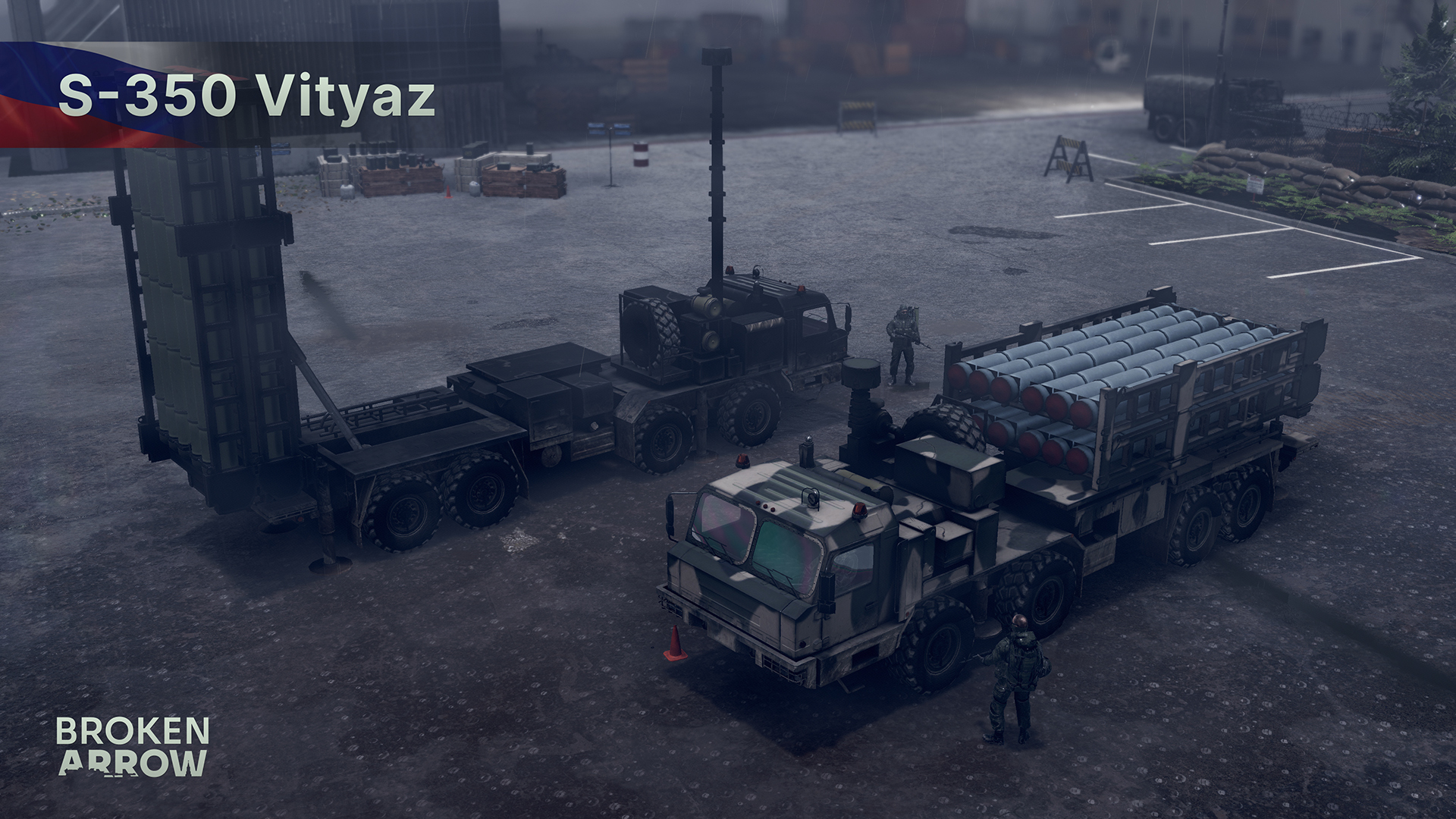
S-350 Vityaz: This modern anti-aircraft defense system mounted on a truck holds 12 vertically launched missiles. The missiles are smaller and have less range than the S-300 which makes it less efficient against aircrafts but better at intercepting saturation attacks with cruise and ballistic missiles.
Helicopters
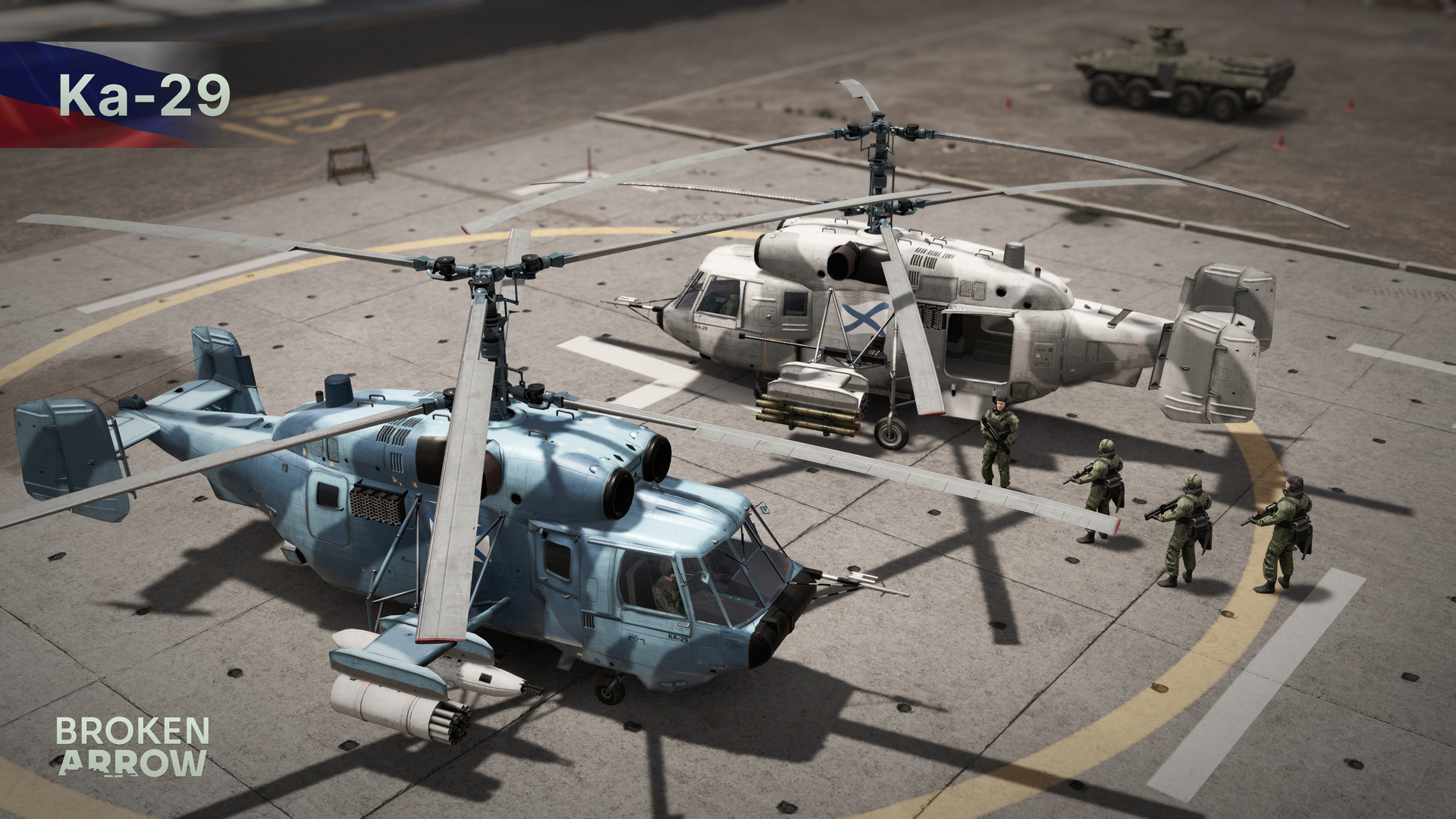
Ka-29: The classic medium lift helicopter of the Russian navy with 16 seats and a capability of transporting 3 tons of supplies, it can also pack some serious firepower with a GShG 7.62mm minigun, 30mm autocannon, S-8 rocket pods, GSh-23L gun pods and 8 Kokon or Ataka ATGMs.
Ka-52K Katran: A navalized Ka-52 attack helicopter with only 4 pylons instead of 6 to make it easier to store on the deck of a ship. On top of the usual Rockets and ATGM carried by the regular Ka-52 it has exclusive access to some exotic weaponry: Kh-31P anti-radiation missiles, Hermes-A fire and forget ATGMs, and even Kh-35U cruise missiles.

Mi-38T: A recent evolution of the Mi-8 intended for use in the arctic. This is an unarmed medium lift helicopter, it can transport 30 men or 7 tons of supplies in one trip at a relatively fast speed.

Aircraft
AN-72P: A light cargo aircraft capable of deploying up to 52 paratroopers or 7.5 tons of cargo. It can also be equipped with a GSh-23L cannon and S-8 rocket pods for light ground attack work.

MiG-29K: A lightweight fighter, agile but with a low autonomy designed for interception. There is a joke saying that this plane grants you air superiority over your own airfield.
It has 6 missile stations carrying older R-27 or newer R-77 medium range air-to-air missiles or R-73 short range infrared missiles.
Alternatively, you can arm it with up to 4 Kh-35U cruise missiles for striking ground targets.

Su-33: This old multirole aircraft is limited to R-73 and the older semi-active R-27 missiles for anti-aircraft duty. It also lacks the avionics to use guided air-to-ground munitions so it is limited to dumb bombs and rockets but has access to a large choice of yield for them.
Make deadly dive attacks with 6 340mm S-25 rockets or bring the hail with 50x OFAB-100 100kg bombs.

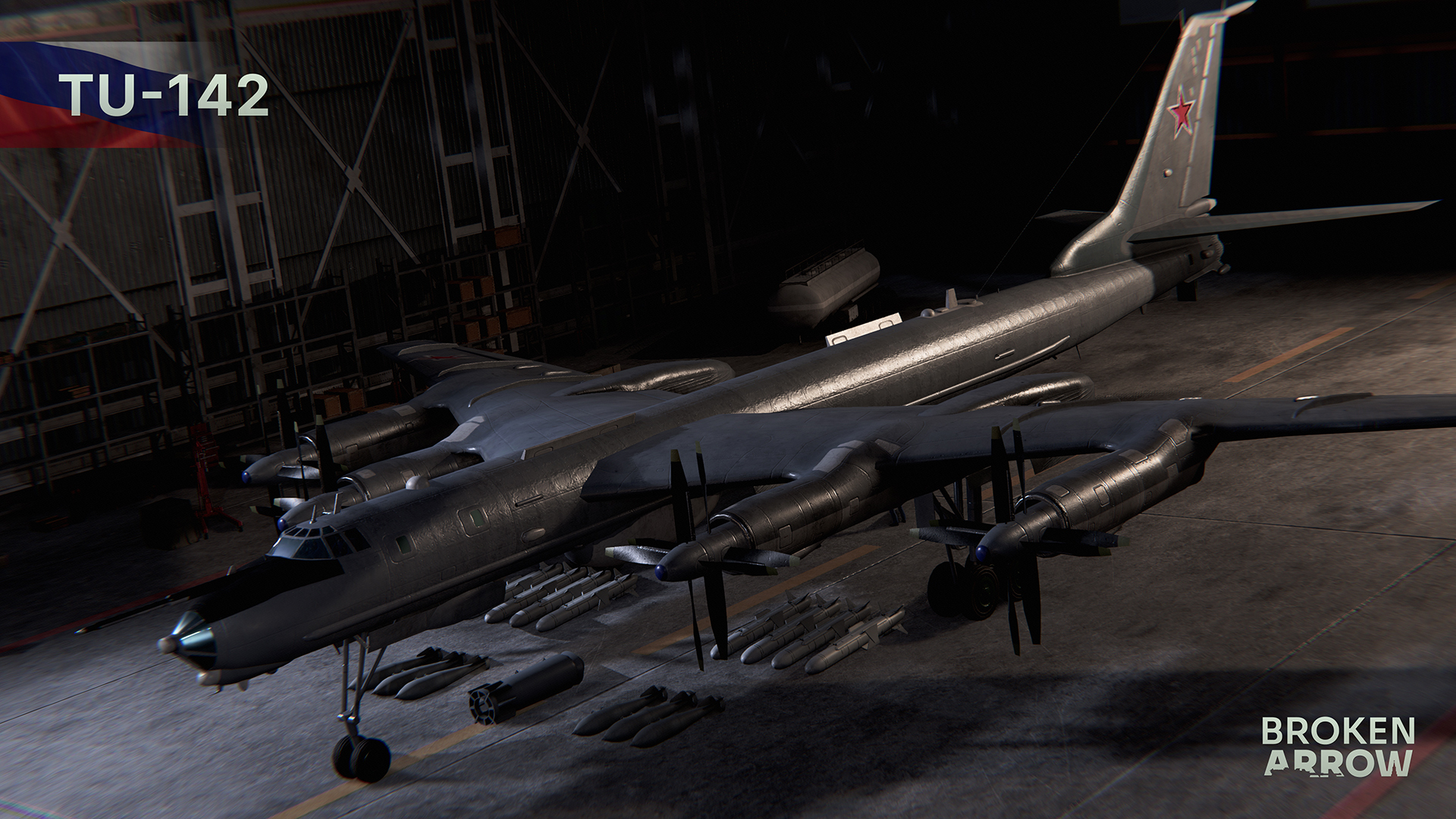
Tu-142: Naval patrol variant of the Tu-95 “Bear” strategic bomber, it carries a smaller bomb load than its sibling, but can still deliver 8 Kh-35Us cruise missiles, 32 FAB-250s, 6 FAB-1500s or a single FAB-3000.
Tu-22M3: This large supersonic maritime strike aircraft makes an appearance delivering up to 3 very fast Kh-32s missiles, or utilizing its afterburner to deliver fast bombing runs with a multitude of bomb options, including 8 KAB-1500 laser guided bombs.

Yak-38M: A slow and lightly armed VTOL aircraft, it stands little chance in a direct air to air engagement, but can still prove valuable in hunting enemy helicopters with gunpods and old R-60 missiles, or performing a light bomber role.

Tactics & strategies
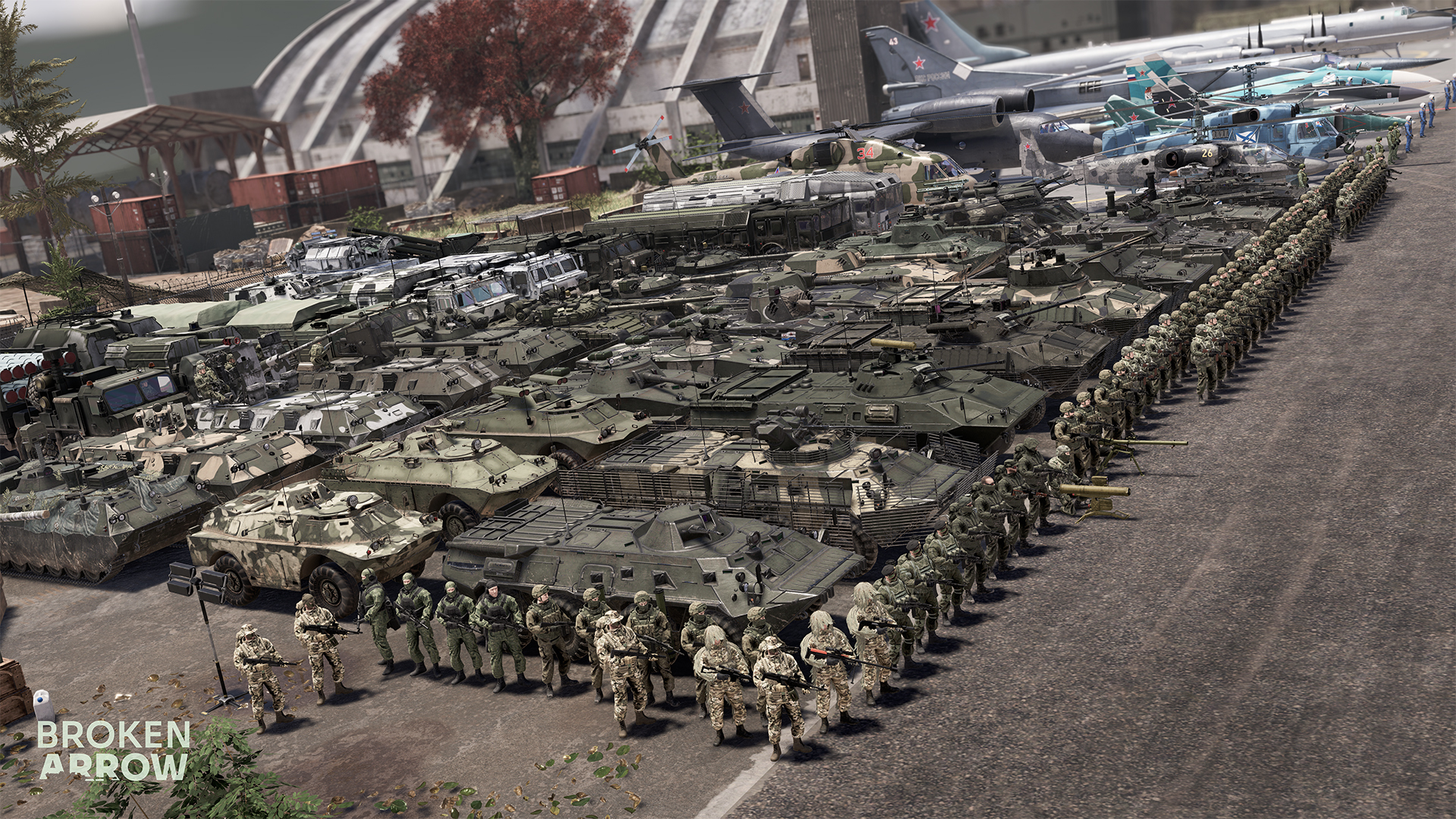
Choosing a specialization grants access to a unique roster of units but also determines the amount of points you can assign in each category.
Coastal troops specialization is very versatile, you have a bit of everything which is nice but also means that the points repartition is spread thin.
As a result this specialization will either be used to compensate for the shortcomings of the other specialization you have selected. For instance VDV offers few support points but many helicopter points. So it can be interesting to focus the support points on anti-aircraft and equip the Ka-52K with Kh-35 cruise missiles and use them as makeshift artillery pieces.
Or this versatility will be used to reinforce an existing strength: for instance, Coastal troops + VDV offers the most aircraft points, allowing you to select the Tu-160 with its nuclear missile and still have some points left to add other planes.
It is also possible to use the points of the other specialization to reinforce one of the multiple facets of the Coastal troops. For instance the Guard Tank Brigade specialization can bring the support points required to play with multiple Iskander cruise/ballistic missiles.
This is a foretaste of the numerous possibilities that the army building system of Broken Arrow offers.
The beta will grant you access to 3 specializations per side and the game will contain 5 per side at release, which makes a total of 20 very unique combinations, each of which are playable in a number of ways.
With such diversity, we aim to offer an exciting multiplayer ecosystem in constant evolution, full of experimentation and crazy combinations between players.
Thank you for your attention and see you next week with a new dev blog.