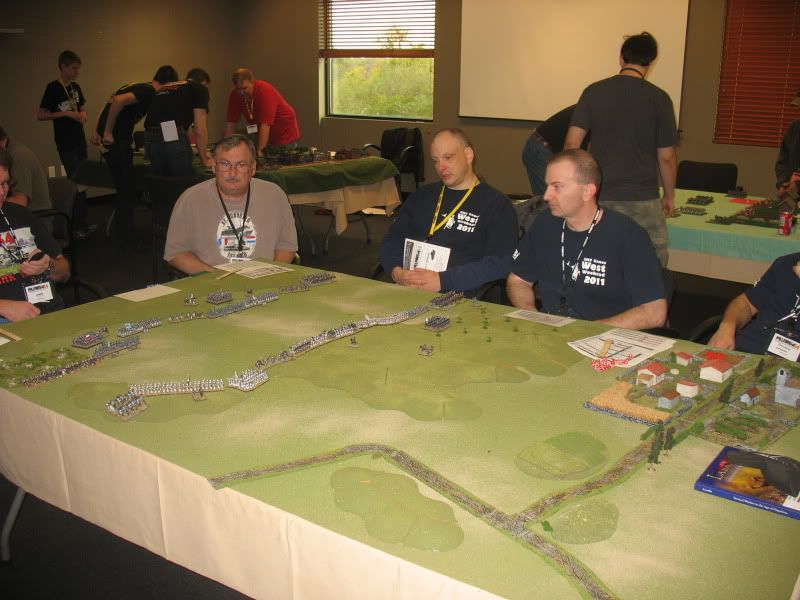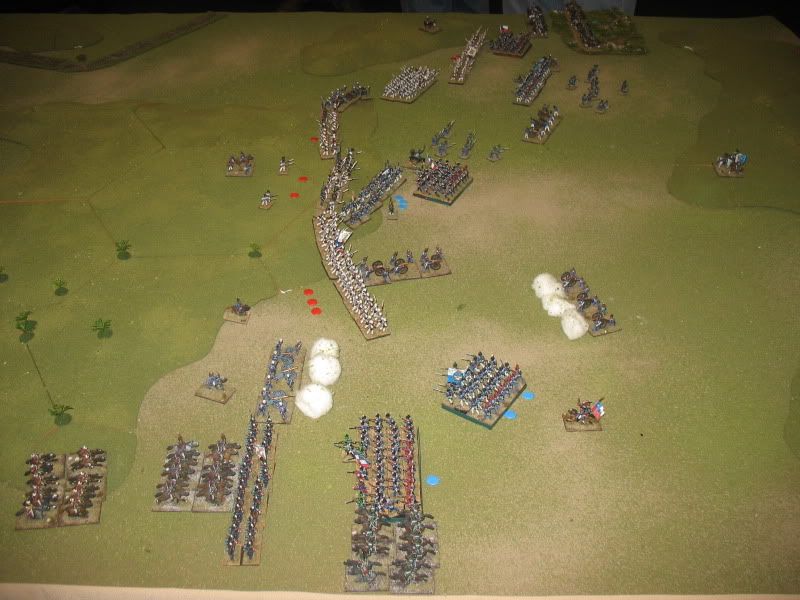

So the concept of the tactical formation is very interesting and the examples in the reference section of how the battalions would form withing the foot print of a unit are great.. however with that in mind I have some questions regarding the extended line formation...
What does the extended line formation represent ? I assume it is not simply all battalions in line since indeed unreformed infantry are already considered in line, so is it something else ? Like Grand Bandes or what else ?
For example I am building a British army, but in general in most of my games I should expect my troops to be in tactical formation, not in extended line.. after all in tactical formation that would already represent for the brits deploying in line correct ?
It would also help me understand why it is harder to form square from extended line, since even reformed infantry could have some or all of their battalions in line ( when represented by tactical in the game ) if the brigade/regimental commanders think they should.. and it would be the same amount of time to form square as long as at least some of the battalions were in line... but since probably extended line represents something else then that is why it takes longer , right ?
It is easy for players used to the tactical game to see extended line, tactical and square as the tactical game's line , column and square but I believe that is not what the authors had in mind given how the rule mechanics work and given the pictures in the book .. am I wrong ?
Finally, I know we will get all the army lists that we need, but since the rules can apply to other theaters of war, War of 1812, South American Wars of independence, I was curious about another design concept..
Unreformed means they tend to maneuver in line and not have light companies skirmsihing
Reformed means both they know how to maneuver in column and also have light companies skirmishing..
( that is why the brits who maneuver in line but have intergral skirmishers move as unreformed but shoot as reformed ), so armies that were used to maneuver in column but did not use light companies ( maybe they just used third rank as skirmishers ).. would they move as reformed but shoot as unreformed?
Finally, since a unit is about three battalions, how should I represent a unit that has maybe 2 battalions with muskets and one battalion with rifles ? Is the rifle characteristic used as long as at least one of the "three" battalions have rifles or when they all have them and if only on has them simply use attachment with rifles ?
Again.. I know all this is not really rules related, but more related to design concepts that the authors have in their mind and not really necessary to play the game, but it would certainly help me when I plan my games and scenarios...
much appreciated,
Francisco