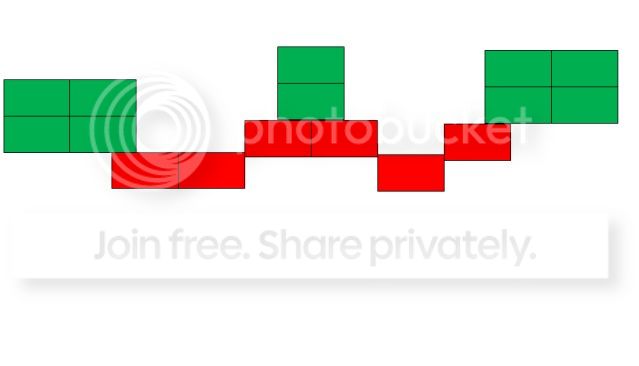
because the files that have not moved forward are not allowed to by the exemptions noted below your quote that you decided not to bother reading, though you did read them before.grahambriggs wrote:But it also says "slide any files of your battle group not yet in contact straight forward " You haven't done that in this diagram.philqw78 wrote:It says bases that step forward must contact. Not that all bases must step forward. So the middle of a line could stap or just one end, or all, providing they contact.Graham in 2 different places wrote:Every stepped forward front rank base must end in contact with an enemy."
But it says ALL of the front rank bases must make contact.
So I can't step forward at all, not even with the one base that would contact.
This is a legal and compulsory step forward by a BG of 6 knight bases
Christmas Quiz 3
Moderators: terrys, hammy, philqw78, Slitherine Core, Field of Glory Moderators, Field of Glory Design
-
philqw78
- Chief of Staff - Elite Maus
- Posts: 8843
- Joined: Tue Feb 06, 2007 11:31 am
- Location: Manchester
phil
putting the arg into argumentative, except for the lists I check where there is no argument!
putting the arg into argumentative, except for the lists I check where there is no argument!
-
philqw78
- Chief of Staff - Elite Maus
- Posts: 8843
- Joined: Tue Feb 06, 2007 11:31 am
- Location: Manchester
It says
"slide any files of your battle group not yet in contact straight forward until the front rank base makes contact with enemy bases* subject to the following conditions"
I'll cut this bit down
No more than 2 MU forward of first line of contact
Every stepped forward base must contact enemy
BG cannot separate to do it
Stepped forward distance is in addition to charge distance
Skirmishers need not step into battle troops**
Not in the rules
**who would be foolish not to intercept them
*But I suppose the above wording would preclude a base from contacting a single enemy base as a single base is not bases
"slide any files of your battle group not yet in contact straight forward until the front rank base makes contact with enemy bases* subject to the following conditions"
I'll cut this bit down
No more than 2 MU forward of first line of contact
Every stepped forward base must contact enemy
BG cannot separate to do it
Stepped forward distance is in addition to charge distance
Skirmishers need not step into battle troops**
Not in the rules
**who would be foolish not to intercept them
*But I suppose the above wording would preclude a base from contacting a single enemy base as a single base is not bases
phil
putting the arg into argumentative, except for the lists I check where there is no argument!
putting the arg into argumentative, except for the lists I check where there is no argument!


This would be the best way to deal with this situation. Forbid C from intercepting because it lies within the "possible" charge path of Red. Then allow Red to VMD when A evades.zoltan wrote:Well, Phil said in the OP that the LH was going to evade. Perhaps this was just a red herring from him.grahambriggs wrote:I think you need to look at the sequence of play zoltan. Declare charges comes before interception charges which comes before evades. At the point of charge declaration, C does not know whether the LH will evade or not
grahambriggs wrote:And there is a specific rule in the interception charges section that I quoted which effectively says you see what would happen if nobody evades and if that means C would be contacted by the step forward then it can't intercept charge.
So you are referring to bullet point 4, left column, page 63. This appears to imply that for the purposes of determining whether or not an enemy BG can intercept, the charging BG is considered to have a charge move that is 2 MUs greater than its "normal" charge move. i.e. in the case of the red knights they are considered to have a 6 MU charge move for the purpose of neutralising enemy intercepts.
Here is the logic.
When Red declares the charge C is a secondary target due to potentially being contacted when stepping forward. Then when A declares its intent to evade C still lies within the potential charge path of Red based on a possible high VMD. B can intercept because it will intersect the established (pre-evade) charge path of Red. After A evades all potential targets within the normal charge range will have evaded, so it should be required toi roll a VMD, potentially contacting B or maybe rolling short and not hitting anyone.
Thracians
Classical Indians
Medieval
-Germans (many flavors), Danes, Low Countries
Burgundians
In progress - Later Hungarians, Grand Moravians
Classical Indians
Medieval
-Germans (many flavors), Danes, Low Countries
Burgundians
In progress - Later Hungarians, Grand Moravians
There are too many instances where the authors chose a pat answer to what could be a more nuanced approach. I'm sure to keep the rules from becoming a continuous feedback loop. I don't envy their position. No matter what decisions are made there will always be plenty of us out here to second guess them.philqw78 wrote:I agree but it isn't, at the moment, written that waygozerius wrote:it should be required to roll a VMD
Thracians
Classical Indians
Medieval
-Germans (many flavors), Danes, Low Countries
Burgundians
In progress - Later Hungarians, Grand Moravians
Classical Indians
Medieval
-Germans (many flavors), Danes, Low Countries
Burgundians
In progress - Later Hungarians, Grand Moravians