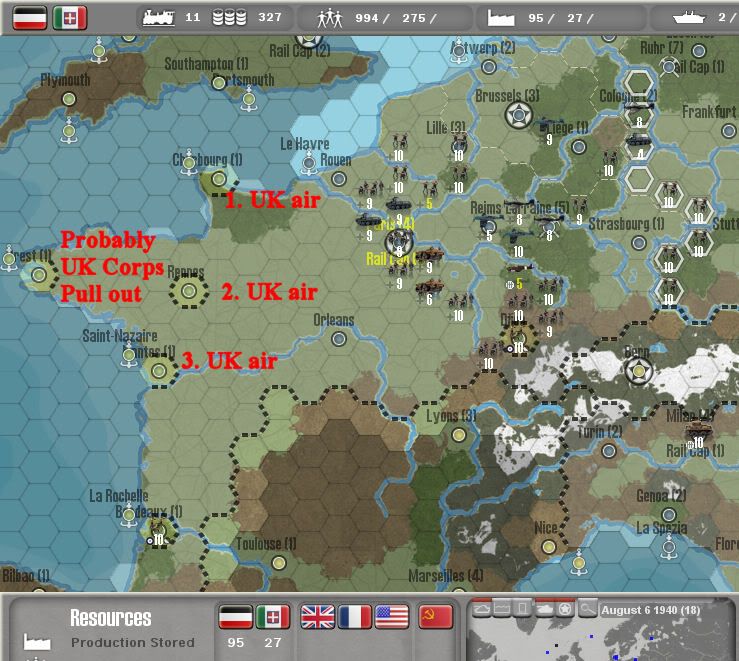
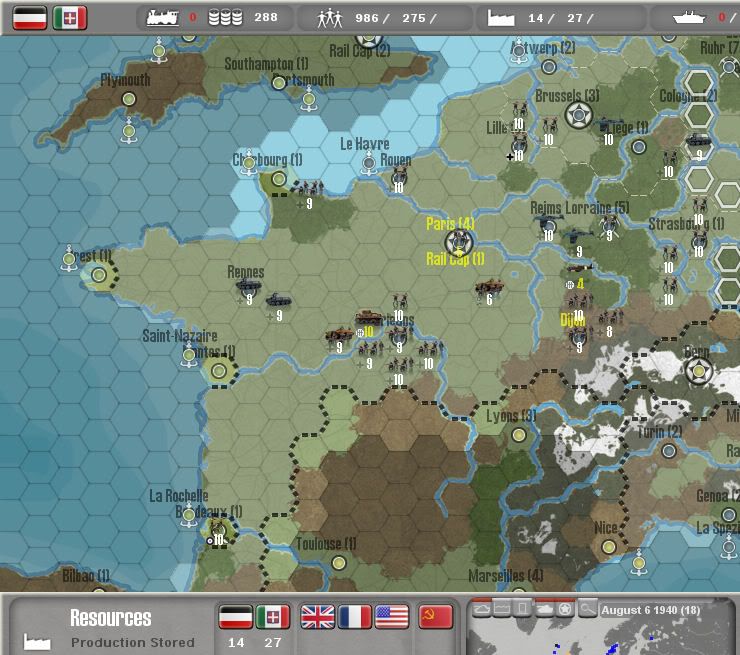
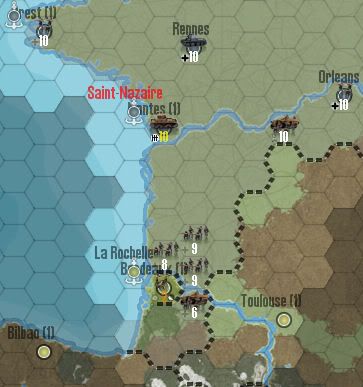
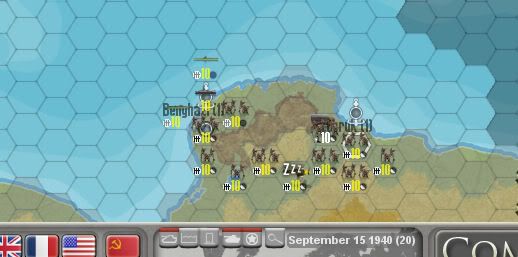
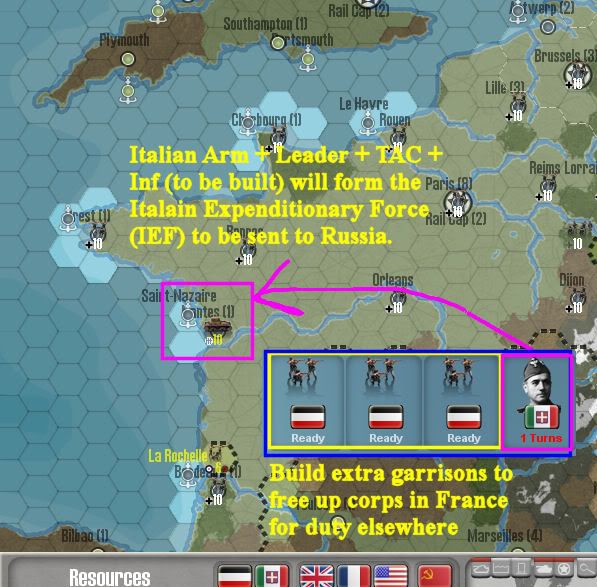
The Brits left behind two divisions in Dijon and Bordeaux and "company" to "battalion" size units in Brest, Nantes, Bordeaux and Remmes. It looks like Kessingler has some more work ahead of him in mopping up the remnants of the UK BEF in France.
The UK control of the 4 unoccupied French cities were accomplished by them being occupied by UK units at the time that France fell. The BEF UK infantry corps was very likely evacuated through Brest and the other three cities occupied by three UK air units.
The UK division (i.e., garrison) in Dijon was eliminated at the cost of 1 Italian TAC bomber step, 1 German fighter step and 2 German infantry corps steps. This equates to a cost of 17 PPs (in repairs) for the axis to 15 PPs lost for the Brits.
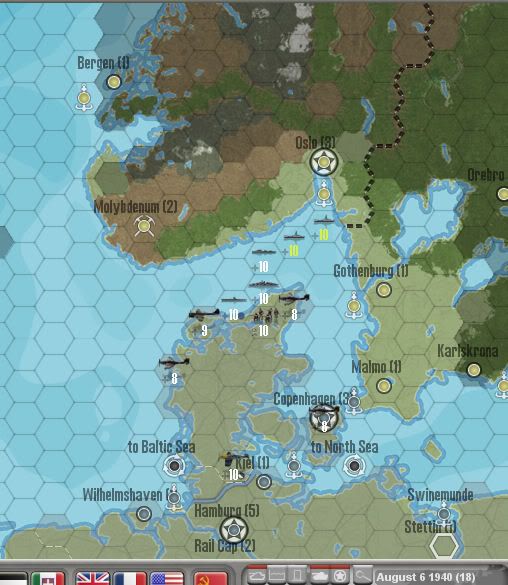
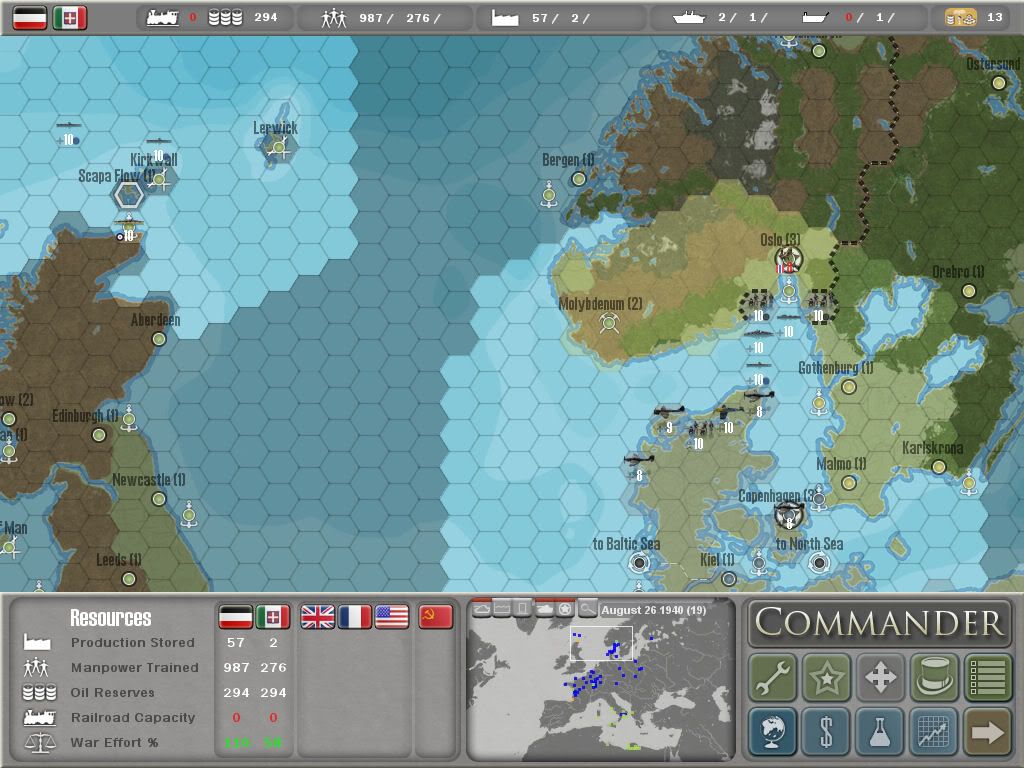
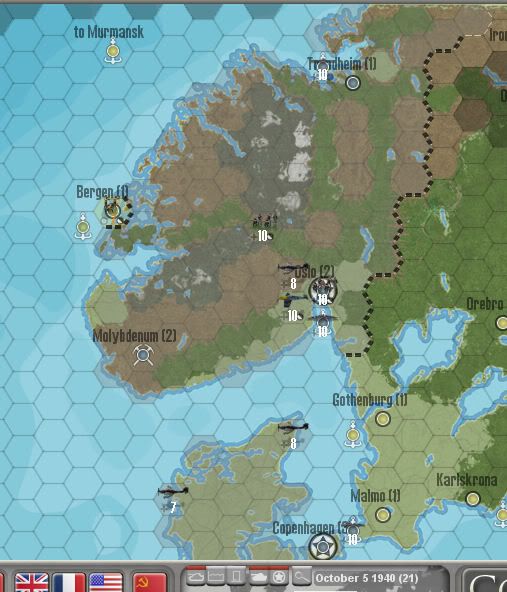
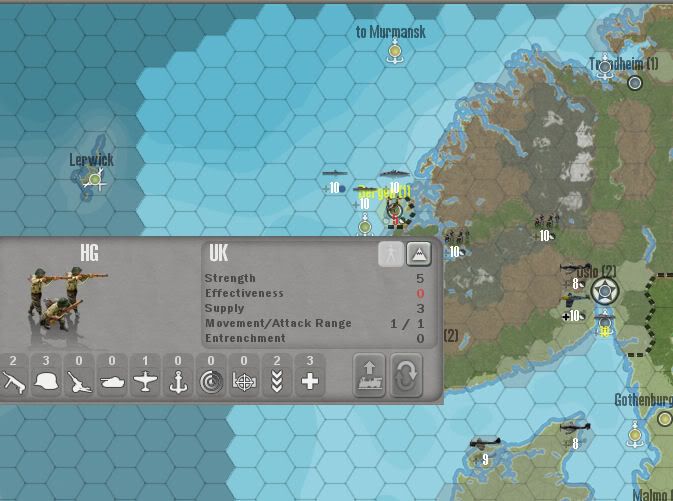
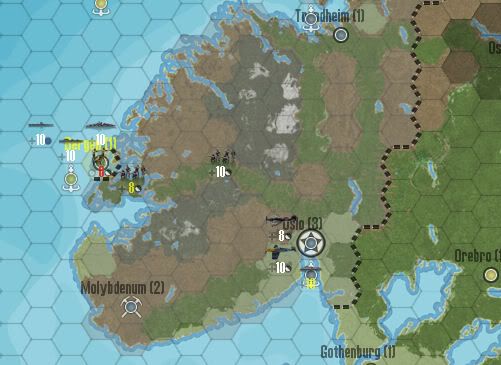
The invasion of Norway was initiated and now invasion transports sit off the coast of Norway. These is no sign, or hint, that this invasion force has been spotted yet. Rundstedt HQ's is located in northern Denmark and is closely monitoring the situation. Significant strength from the Luftwaffe was brought into the area both to directly support the invasion and to defend against any possible opposition to the invasion by the RN or RAF.
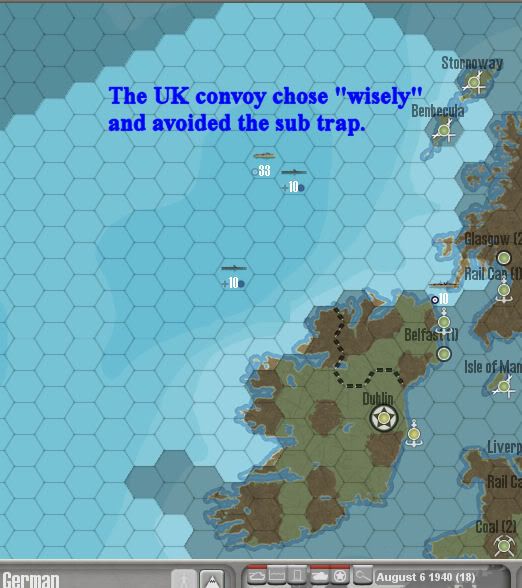
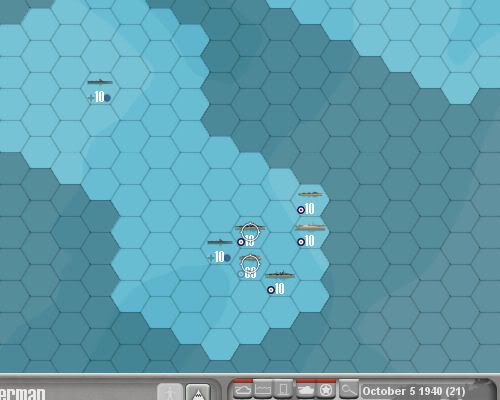
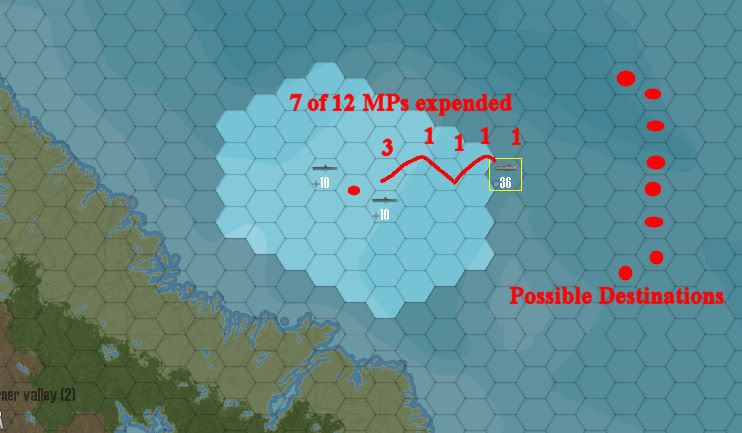
In the Atlantic, a German u-boat flotilla had positioned itself for an ambush of a convoy. However; the convoy chose "wisely" in the path it took and avoided the trap.
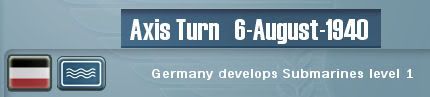
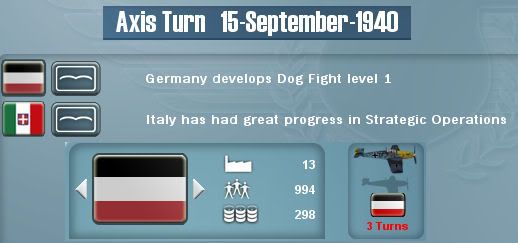
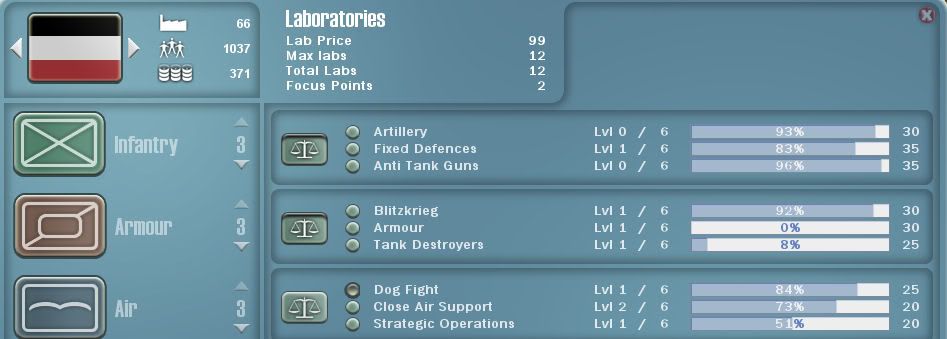
The Germans achieved sub tech level 1.
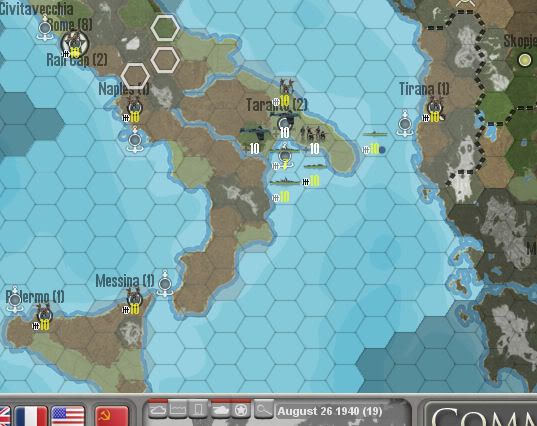
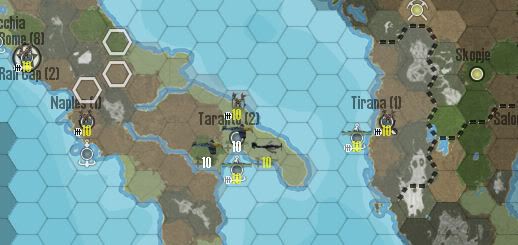
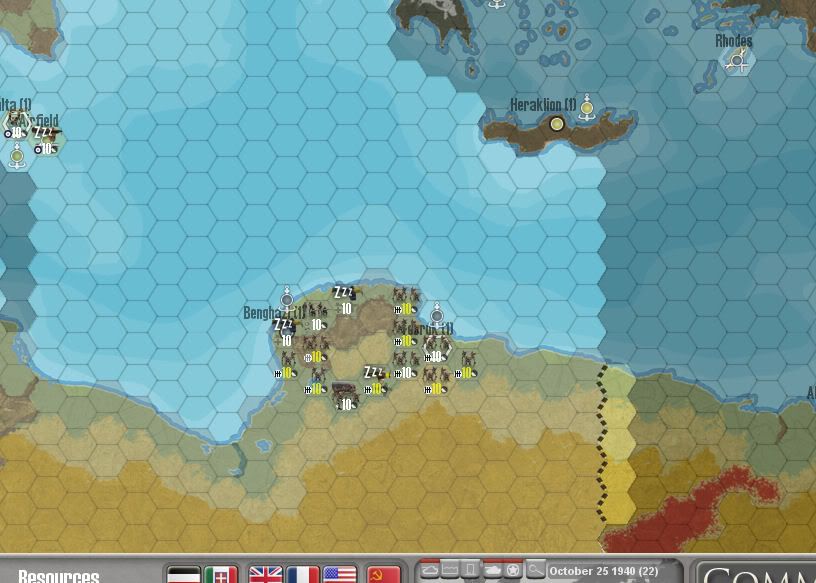
In the Med (not shown), the UK sub group took two more steps off the Italian BB (which is at 4-steps). This BB retired to Taranto and is protected in port by the Italian sub group and DD squadron. Three more Italian corps did make it to Libya.
The invasion of Norway was launched this turn. I have 5 air units (3 TAC, 1 FR & 1 SAC), BB, DD and one sub flotilla covering the invasion. Also, the remaining two sub flotillas are in position to respond to any move by the RN or any attempt to transport troops to Bergen.
Two German fighters and an infantry corp were railed to Taranto for deployment to Libya.
The mop up in France continues with only the UK division (i.e., garrison) in Bordeaux left. Kessingler and four infantry corps are headed there to finish them off. They also hear that the French wine in that region is very good. Kessingler and his staff is looking forward to stocking their cellars.
18. For those into equations here they are for how technology impacts transports:
a. attack strength = attackVal + max(0,floor((techSurfaceShips + 1) / 2))
b. shock = shockVal + max(0,floor((techSurfaceShips + 3) / 4))
c. quality = qualityVal + max(0,floor(techSurfaceShips / 4))
d. flak = flakVal + max(0, techRadar - 4)
attackVal, shockVal, qualityVal and flakVal are the current values for these variables and are passed to the methods in which the above equations are added.
19. The coefficients of these functions are controlled through the general.txt file in order to be able to tweak these functions as necessary. The general form for equations (a-c) is: val + (A*techSurfaceShips + B) / C and for equation d is: val + (A*techRadar + B) / C. The coefficients A, B & C are set separately for each of the four areas in the general.txt file.
Commonwealth Country Specific Graphics
21. The following British, or Commonwealth, units that are name or renamed will have their own country specific unit graphics. This allows players all over the world to easily customize their British forces by just including the following “key” in a unit’s name to “unlock” the country’s specific unit graphic for that country.
a. Canada or Canadian
b. Australia or Australian
c. India or Indian
d. New Zealand
e. South Africa or South African
f. Poland or Polish
Elite Unit Specific Graphics
22. German units with names that include “SS” with trigger German SS NATO images.
23. Soviet units with names that include “Guards”, “GDS” or “Gds” will trigger Soviet Guards NATO images.
24. Soviet units that reach experience level 3 will automatically be promoted to Guards.
25. NATO images for all countries at zoom level 3 will now show a number of dots equal to the experience level for each unit.
Map and Scenario Changes
26. Fredericton in Canada has been renamed to Saint John.
27. All units starting in Canada has Canadian in their name. Therefore; they will “unlock” the Canadian specific unit graphics.
28. The US Lend Lease destroyer has been renamed to include Canadian in the name and will also “unlock” the Canadian specific unit graphics.
Softer Air Bases when Used in a Ground Defense Role
It was becoming common practice to use air units in ground defense roles. Because of the movement range of these units they were at times being deployed at speeds and distances that modern airmobile forces would envy. Also, they were often times holding up just as well or even better against ground attacks than normal ground units. While air units do have a significant number of ground troops that were historically used in infantry roles they had no where near the ability to hold as did regular infantry.
29. The survivability for air units attacked by ground units or invasion transports is halved (rounded up) and caped at 5 (i.e., cannot exceed 5).
a. defenderSurv = min(ceil(A*defenderSurv/B), C)
b. A=1, B=2 & C=5 and are set in the general.txt file.
30. The survivability for air units attacked by destroyers or battleships is NOT halved but is caped at 5.
a. defenderSurv = min(defenderSurv,C)
b. C=5 and is set through the general.txt file (the same C as in 29).
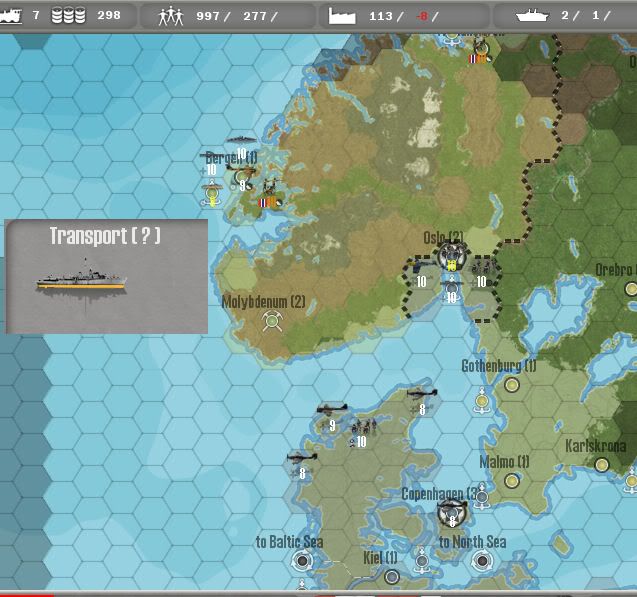
Norway fell and German naval and submarine units attacked another British BEF in Bergen. Note that one of the changes in GS v1.10 is that you can no longer tell what your opponent's transport is carrying. I suspect it's a garrison but would really prefer a corps. Given the air, naval and land assets in or near Norway I don't see the BEF surviving for long.
I don't plan to pull out the two infantry corps. Plaid presented a good analysis in my axis vs AI AAR in the cost tradeoff of keeping the two infantry corps there versus pulling them out an replacing them with two garrisons. Cost to keep them there (replace the two infantry corps) = 70 PP's. Cost to replace them with two garrisons = 30 PP's (cost to build the garrisons) + 16 PP's cost to transports the garrisons + 16 PP's cost to transport the two infantry corps = 62 PP's. So in effect it costs 8 PP's to beef up the defense of Norway from two garrisons to two infantry corps.
German infantry close on Bordeaux and knock the UK garrison down to 2-steps.
A German infantry corps transport makes it to Benghazi. Egypt / Iraq joined the allies last turn and given how active Neil is with the Brits I fully expect him to march into Libya. If so, I plan to move the tactical bomber locate near Taranto there. Regardless the two fighters there are headed to Libya. I plan to build another German leader next turn for Libya.
German air tech in dog fighting reached level 1 and I paid for a 5th German fighter.
I think all of these changes are very exciting - I do have a small comment regarding air units vas battleships/destroyers.
If I had to put money on who was going to win a 20 day battle between an air corps or a naval group I would always put money on the air - i don't know if there should be limitations to air versus naval. An air corps represents several air bases whereas a naval group would generally all bunch together for effective bombardment. It would be very difficult for naval to destroy many ground units scattered across various bases and without air support Naval should be very very scared of entering enemy airspace.
I think that battleships and destroyers attacking air units should have no advantages other than basic stats and they should get there butts kicked if they decide to try engage in a battle with an air corps - that an air corps is able to suffer any casualties is only due to air units dying to Flak in attacking the naval units or very occasionally a base being hit by naval bombardment (although this didn't happen much in the real war in Europe).
afk_nero wrote:I think all of these changes are very exciting - I do have a small comment regarding air units vas battleships/destroyers.
If I had to put money on who was going to win a 20 day battle between an air corps or a naval group I would always put money on the air - i don't know if there should be limitations to air versus naval. An air corps represents several air bases whereas a naval group would generally all bunch together for effective bombardment. It would be very difficult for naval to destroy many ground units scattered across various bases and without air support Naval should be very very scared of entering enemy airspace.
I think that battleships and destroyers attacking air units should have no advantages other than basic stats and they should get there butts kicked if they decide to try engage in a battle with an air corps - that an air corps is able to suffer any casualties is only due to air units dying to Flak in attacking the naval units or very occasionally a base being hit by naval bombardment (although this didn't happen much in the real war in Europe).
Remember that the survivability of air bases is NOT halved against attacks from destroyers or battleships. It's just caped at a maximum of 5. In early and mid game there will be no or very little difference in bombardment of air bases. In a hotseat test using the 1944 scenario US & UK BB's and DD's would consistently inflict 2-steps off loss when bombarding air units on the coast.
You're right that air units can devastate naval units but that's from air attacks. What we're representing is from naval units attacking the ground crews and airbases of air units. The air devastation against naval units comes from the air attacks against those naval units not from the ground crews fighting back.
If it's October then it must being mud & rain in Central Europe. Yep ... it's October.
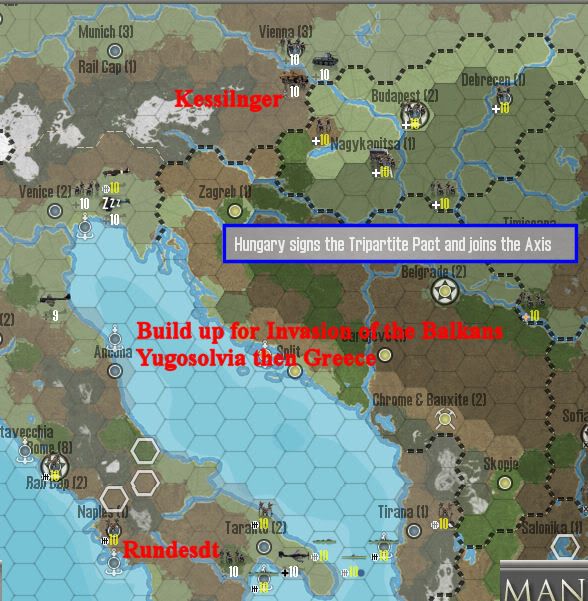
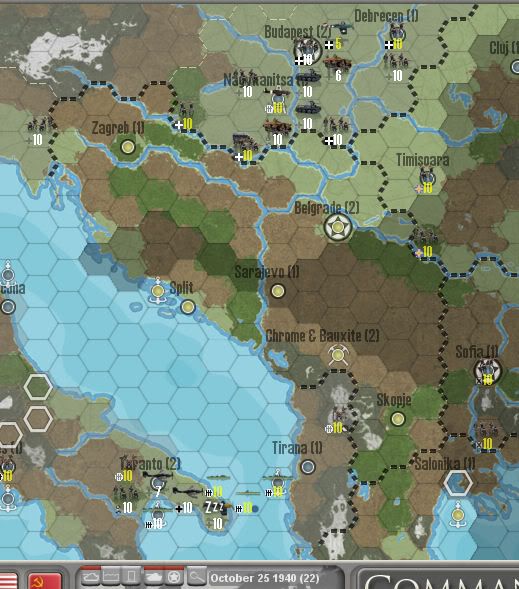
The Brits land a division (i.e., garrison) in Bergen, which will soon be dispatched. The badly depleted division in Bordeaux was abandoned by the Brits and easily finished off. But before Kessingler could enjoy the French wine he was transferred to Hungarian boarder to lead the land attack against Yugoslavia. Also, Rundstedtf's HQ was transferred from northern Denmark to the German airfield near Taranto, Italy. He will command all German air units there, which will provide support for the Balkans campaign. Also, these air units are one or two turns from North Africa and can easily be moved if the British move into Libya from Egypt.
One of the German flotillas happened on a well escorted convoy. It decided to leave it alone. It's clear that I need more u-boats but I need to start building for Russia.
What do you know?! It's October and I got fair weather all over including Central Europe.
The Brits reinforced their "division" back to full strength in Bergen and the Kreigsmarine and Luftwaffe knocked it down to half-strength (i.e., 5-steps). It turns out that this division is the UK "Home Guard" division and it's morale (i.e., effectiveness) is non-existent. Who can blame them though. Thrown away like a bad penny.
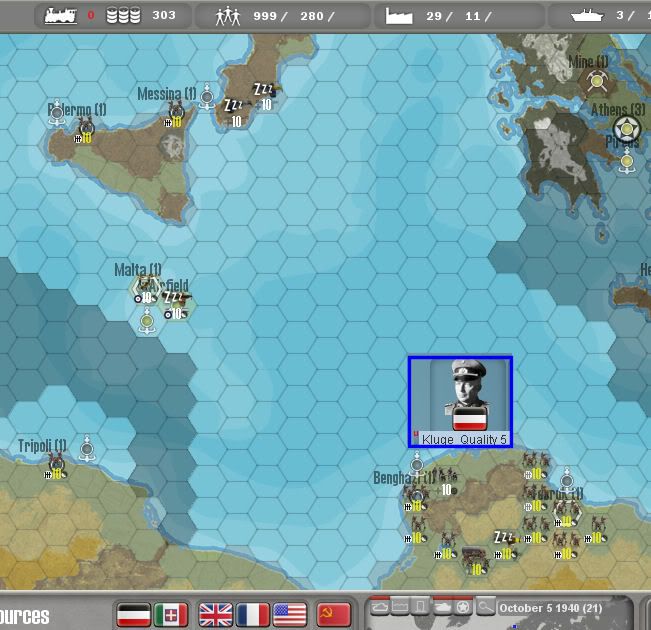
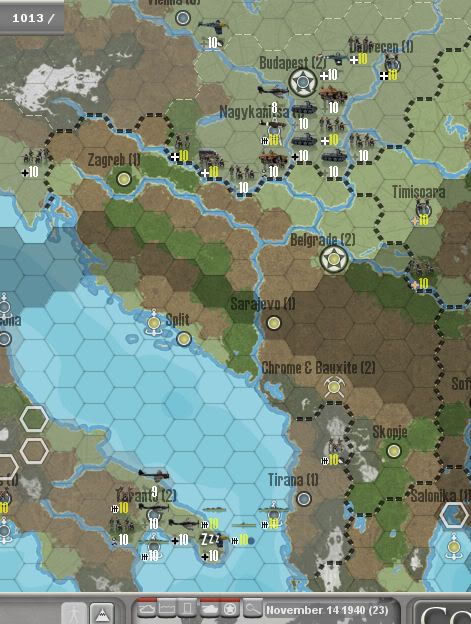
Kluge takes command of the German ground and air forces in North Africa. And the buildup for the Invasion of Yugoslavia then Greece continues. If next turn is fair weather then the axis will invade Yugoslavia; however, if not then the first snow turn after next turn will be the go date.
The Germans ended the turn with 119 PP's. Usually, I would build three more subs before Barbarossa; however, I'm going to hold off on sub building until Barbarossa and try to build up a stronger force for Barbarossa than I usually have. I will build up the sub force after that.
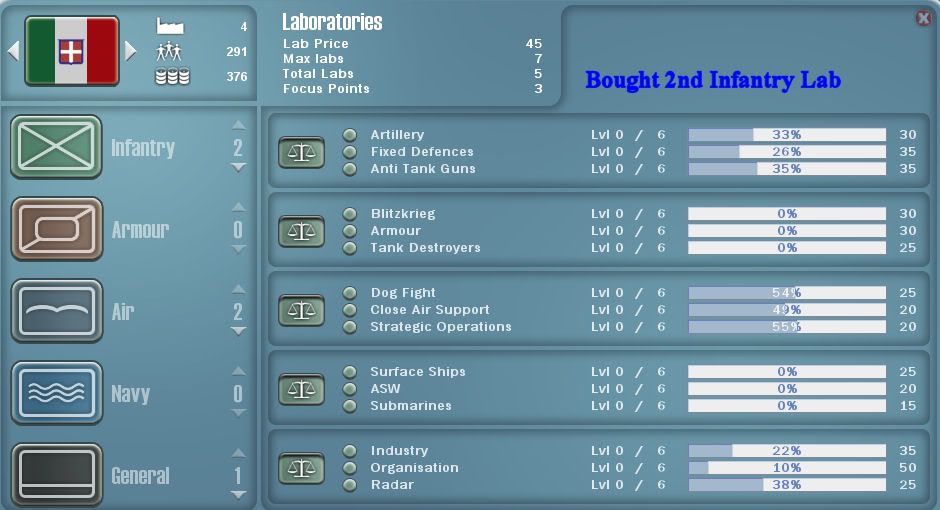
Mud & rain in central and northern Europe so no invasion of Yugoslavia. The Italians finally accumlated enough PPs to purchase their 4th lab, which was a 2nd infantry lab.
The build up for the Balkans continue and the Germans deployed their 5th fighter.
The clean up of Norway continues with the UK division in Bergen being reinforced by 3-steps and the Germans only knocking off 2-steps. Things are always much more difficult in the mud & rain.
We will now switch to GS v1.10h. For the complete v1.10 change log see the first post in this AAR. Thechanges since the last update are highlighted in red below.
Commonwealth Units and Leaders
26. The following British, or Commonwealth, units that are name or renamed will have their own country specific unit graphics. This allows players all over the world to easily customize their British forces by just including the following “key” in a unit’s name to “unlock” the country’s specific unit graphic for that country.
1. Canada or Canadian
2. Australia or Australian
3. India or Indian
4. New Zealand
5. South Africa or South African
6. Poland or Polish
27. Now players can also command UK/CW forces with a leader from their favorite CW country. Added the following CW leaders to the UK faction.
1. Bernard Freyberg, 1st Baron Freyberg (New Zealand) (1889 - 1963).
2. Guy Granville Simonds (Canadian) (1903 - 1974).
3. Sir Thomas Blamey (Australian) (1884 – 1951)
4. Harry D.G. Crerar (Canadian) (1888 - 1965)
5. Field-Marshal, Jan Christian Smuts (South African) (1870-1950)
6. Captain Kodandera "Kipper" Madappa Cariappa (Indian) (1899 - 1993)
7. Boleslaw Bronislaw Duch (Polish) (1885-1980)
28. Both CW units/ leaders are “chrome” and are functionally UK units/leaders. However; players can now customize the look and feel of the UK/CW forces to add a bit more flair, historical realism and / or national pride to their GS gaming experience.
Elite Units
German SS units were “elite” because they were both composed by more fanatical troops than regular army units and because they got priority on equipment, manpower and training. It was often the later that contributed to their “eliteness”.
Russian “Guards” units were the elite units in the Russian army. They achieved their elite status through extraordinary performance on the battlefield.
29. German units can be “upgraded” to SS units by renaming them to include SS, which a space either before or after, in their new name. This upgrade follows the rules of a technology upgrade where the unit cannot be adjacent to an enemy unit and will not be able to move the turn of the upgrade. The cost of the upgrade, however, is 15 PPs for armor, mechanized and infantry corps and 10 PP garrisons and is quite a bit more than a technology upgraded. The upgrade results in an increase of 1 in attack, defense, shock, quality and survivability. Also, the image or counter for the upgraded unit will change to a SS version of the image or counter. There is a limit on the maximum number of SS units in play at any one time, which is 0 (1939 – 1940), 1 (1941), 3 (1942), 5 (1943), 8 (1944) and 10 (1945).
30. Soviet units that achieve an experience level of 75 (i.e., level 3), or higher, are promoted to a “Guards” unit. Once promoted they will never lose that status unless completely destroyed. There is no cost for this promotion; however Guards units do get an increase of 1 in attack, defense, shock, quality and survivability. Also, the image or counter for the promoted unit will change to a Guards version of the image or counter. There is a limit on the maximum number of Guards units in play at any one time, which is 0 (1939 – 1940), 2 (1941), 5 (1942), 8 (1943), 12 (1944) and 16 (1945). When at this limit no more units will be promoted until the limit increases or a Guards unit is destroyed.
31. A German, or Russian, unit must be in supply level 4 (or higher) to be converted, or promoted, to an elite unit.
32. The 1942, 1943 and 1944 scenarios were slightly updated by adding some, but not many, Guards and SS units.
Experience Level
There have been extensive changes to how experience is lost and gained in order that units don’t lose experience so easily and that units attacking secondary and, usually, easy targets (e.g., naval bombardment) don’t gain experience at the same rate as if attacking their primary target (e.g., other ships).
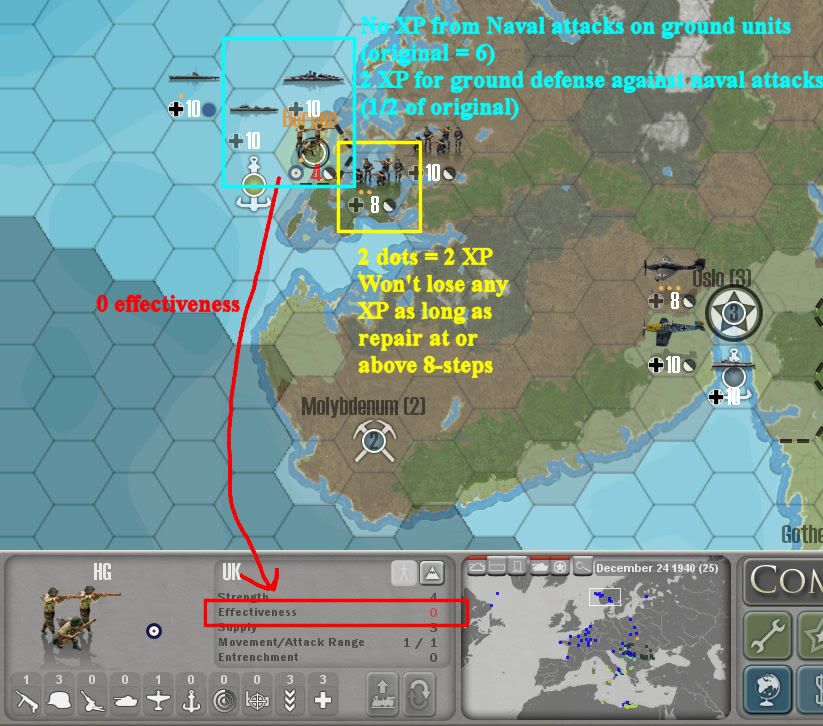
33. Ground units. Ground units per attack gain 6 XP points for attacks on other ground units and 3 for attacks on air units. On defense they gain 4 XP points versus defense against other ground units, 4 XP versus defense against air and 2 XP version defense against naval. Ground units lose no experience for repair (i.e., reinforcement) at 8-steps or 9-steps and lose a flat 5 XP points per step; otherwise. For example, a ground unit is at 5-steps and repairs back to 10-steps. They would lose 5 + 5 + 5 + 0 + 0 = 15 XP points. The same unit at 3-steps, which repaired 5-steps back to 8, would lose 5 + 5 + 5 + 5 + 5 = 25 XP points.
1. GROUND_VS_GROUND_ATTACK_XP 6
2. GROUND_VS_GROUND_DEFENSE_XP 4
3. GROUND_VS_AIR_ATTACK_XP 3
4. GROUND_VS_AIR_DEFENSE_XP 4
5. GROUND_VS_NAVAL_DEFENSE_XP 2
34. Air units. Air units lose a flat 5 XP points per step repaired even at 8- or 9-steps.
35. Naval units. Naval units lose a flat 5 XP points per step repaired even at 8- or 9-steps.
1. NAVAL_VS_NAVAL_ATTACK_XP 6
2. NAVAL_VS_NAVAL_DEFENSE_XP 4
3. NAVAL_VS_AIR_ATTACK_XP 0
4. NAVAL_VS_AIR_DEFENSE_XP 4
5. NAVAL_VS_GROUND_ATTACK_XP 0
36. NATO images for all countries at zoom level 3 will show a number of dots equal to the experience level for each unit.
Garrisons as Headquarter Units
37. A leader attached to a garrison increase the movement of that garrison by 1 as long as the leader is attached.
Last edited by rkr1958 on Sun Sep 05, 2010 3:05 am, edited 1 time in total.
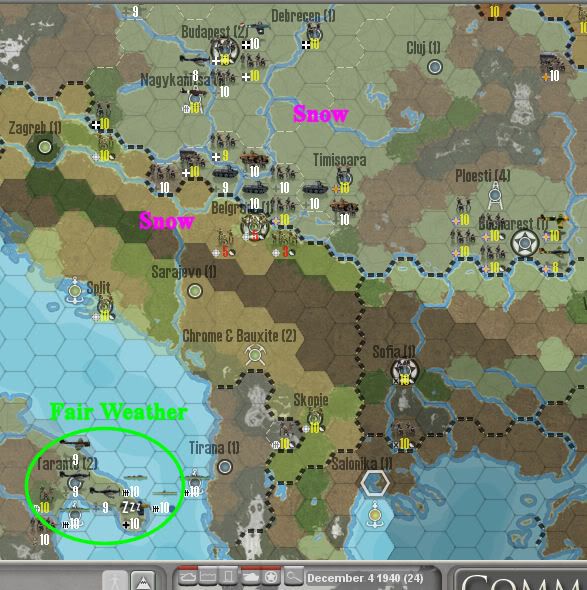
It was snow in Central Europe so the go order for the invasion of Yugoslavia was issued. One thing to note is that the air units near Taranto were in the fair weather zone and attack without any winter penalty. The progress made was pretty much as expected.
The siege of Bergen continues. It's slow going in the winter there.
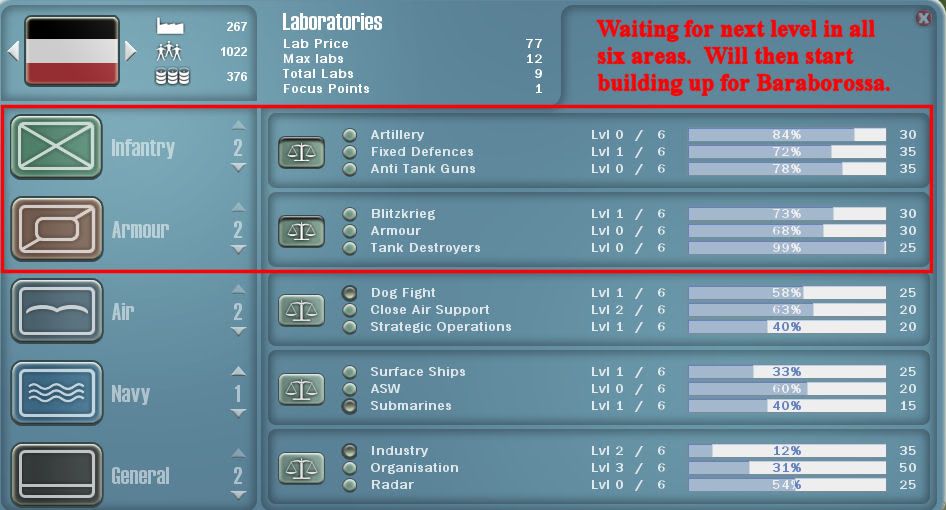
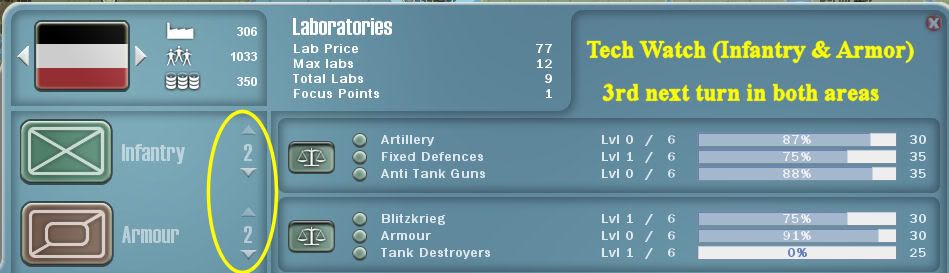
As soon as German tech makes a breakthrough in all three infantry and all three armor tech areas then the build up for Barbarossa will begin.
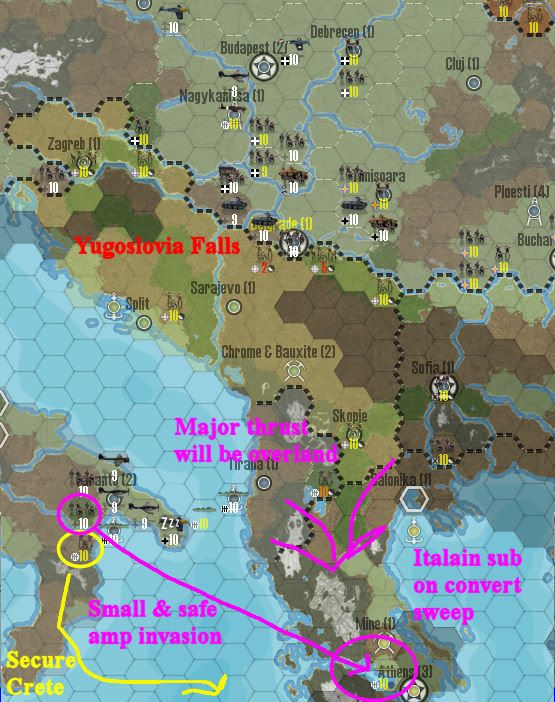
Yugoslavia fell (in two turns) and this was much easier in the snow than I expected. I'm use to going after Yugoslavia in fair weather and often times (I'm estimate at ~ 15 to 25%) it still takes 2 turns to conquer. I guess the one difference are the losses, which weren't that high. The key, I believe is to have your main air base in a fair weather zone (i.e., Taranto area).
Even after this conquest there's no rest for the wicked with preparations for the invasion of Greece already underway. Next turn I will rail a number of units to the Greek boarder and launch a German and Italian amphibious fleet. The Italian sub is covertly sweeping the channel southeast of Athens (I always forgot it's name) for UK sub groups.
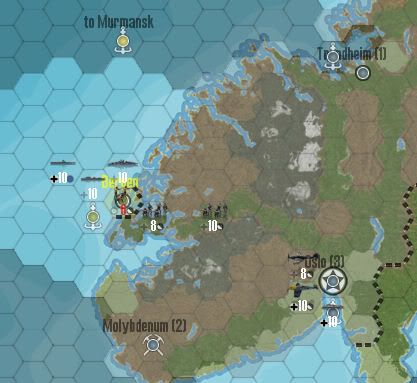
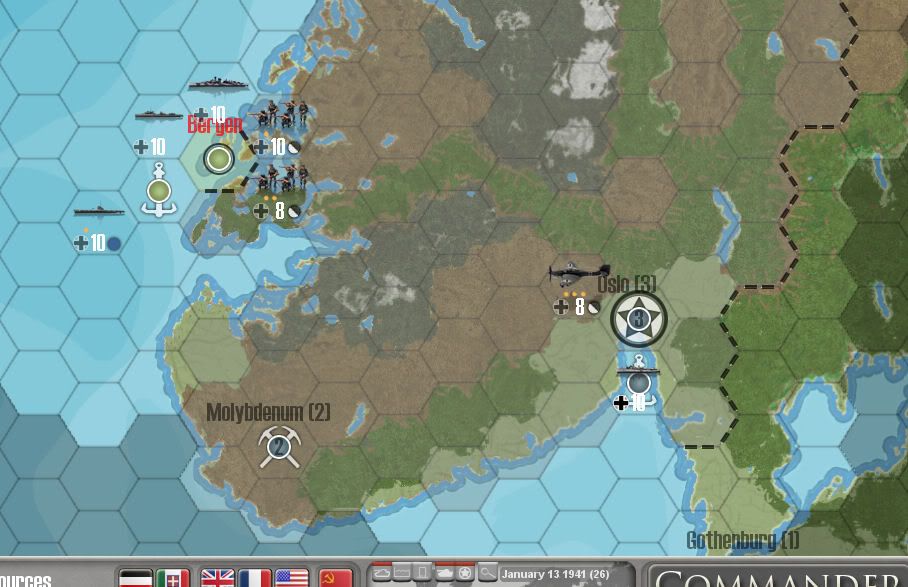
The siege of Bergen continues with the Germans making a lot of headway this turn. You can see direct evidence of our recent changes in this screen cap. You can see that the German corps has an experience level of 2 (i.e., two dots) and that the UK garrison has a level of 1. Also, as long as the the German infantry corps is at 8-steps it will not lose any XP points. Finally, naval units gain no XP points for bombardment against land units.
One thing that I'm trying this game is that I'm not building any more new subs until after I'm ready for Barbarossa. This may come back to bite me but I want to go in stronger than I usually do and something has to give (e.g., either subs, research and / or the Balkans).
.
Very little actual combat this turn but a lot of action. This turn was like playing a chess match.
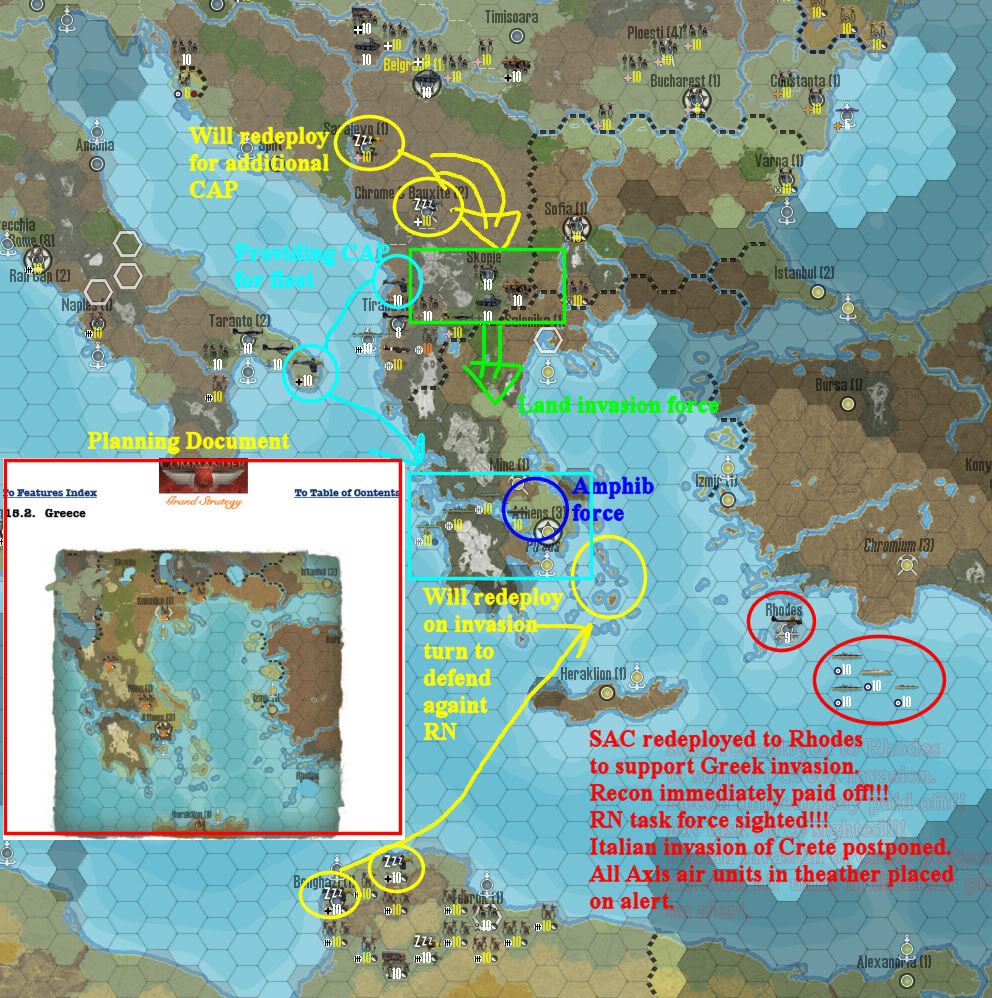
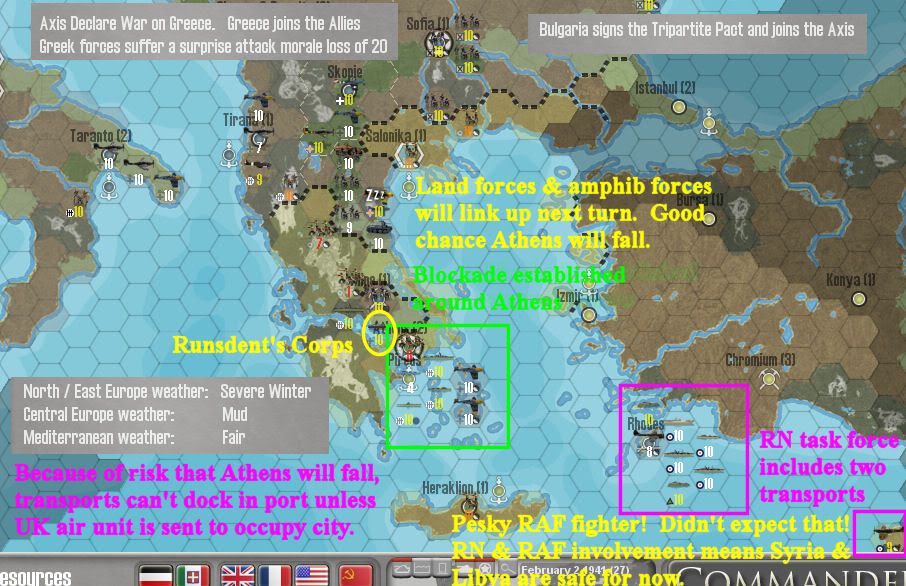
In preparation of the Greek operation I first re-based the German strategic bomber to Rhodes to defend against any move by the RN against this operation. Well, to my surprise it spotted a large RN task force directly southeast of Rhodes apparently lying in wait to ambush any move against Crete or any invasion that hits Athens from the east. Now, I feel even more comfortable about may decision to invade Greece overland and only land one infantry corps by amphibious invasion from protected waters. I have two fighters on CAP protecting both the invasion force and the air bases nearby. On the first turn of the invasion I will move the two German fighter units in Libya to the Greek Isles to defend against any possible counterattack by the RN and to interdict any attempt to reinforce Crete. Because of the RN task force discovered this turn then planned invasion by the Italian garrison against Crete has been postponed. It would be just too vulnerable. If Neil makes a move to reinforce Crete then that's a battle I would be happy to fight and inflict damage on the RN in the Med. Note that I used the Greek setup in the manual as a planning document to position my ground and air forces for next turn's invasion.
In Norway the defenders of Bergen were finished off but Bergen remains UK. The reason for this is that I didn't fully appreciate the XP changes even though I was in the midst of them. Here's is an exchange with Neil and the group that I will include here and which I hope folks find helpful.
Neil wrote:I was puzzled by that!
Ronnie wrote:I assume you mean Bergen still be controlled by you. The reason is that the tactical bomber in Norway has XP 3 and is at 8-steps. With the changes to XP, that bomber won't lose any XP if repaired at 8-steps or higher. So I decided to not attack with that bomber (if necessary) until the very last, when the effectiveness of the garrison was 0 (or near 0), in order to maximize the chance of avoiding damage to the TAC and losing experience. It was needed at the end and it knocked off the final three steps of the garrison after the infantry corps had attacked.
This is a direct example, and a result, of the XP changes we made in the last release. Basically, I will now be much more careful to avoid losses with units that have experience and are at 8 or 9-steps.
Borger wrote:Hi Ronnie
The current general.txt is setup so only land units will not lose XP if repaired from 8 or 9 steps. Air and naval units will lose 5 XP per level repaired up to 10 steps. Is this different from what it should be? It's easy to change general.txt so also air units won't lose XP from 8 steps and above.
Neil wrote:Borger,
I think the current set up is fine as air units get plenty of opportunity to gain experience compared to ground units which get beaten up more often...
[quote="Ronnie]All,
That's fine and good to know. I won't be so "careful" with my air next time. Which, not to give away anything since Neil has already sent his return turn, but "INVASION GREECE" will happen next turn. And, I have a 8-step tactical bomber that I was worried about nursing, which I will no longer worry about.
At least the order of attack that I did in Norway minimized air step losses. That's a positive.
Bottom line is that I'm ok with how things are set as far as repairs and loss of XP points.[/quote]
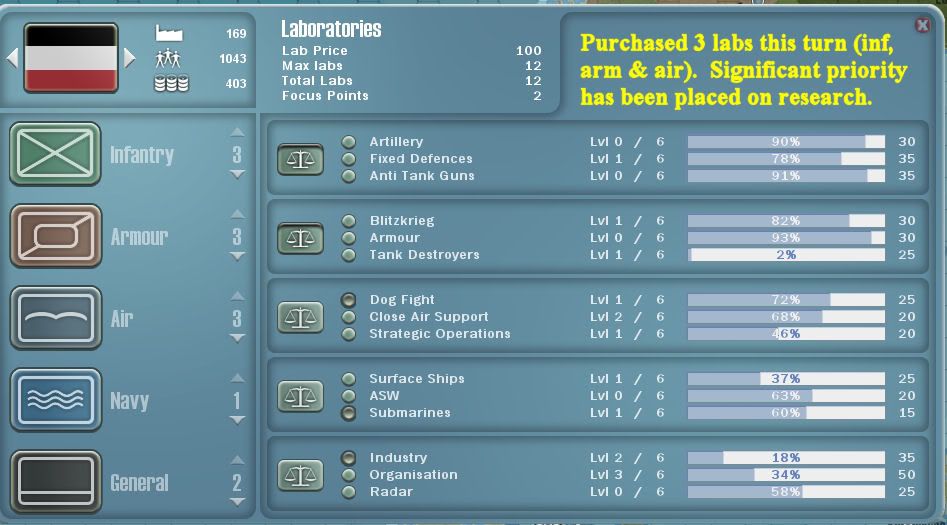
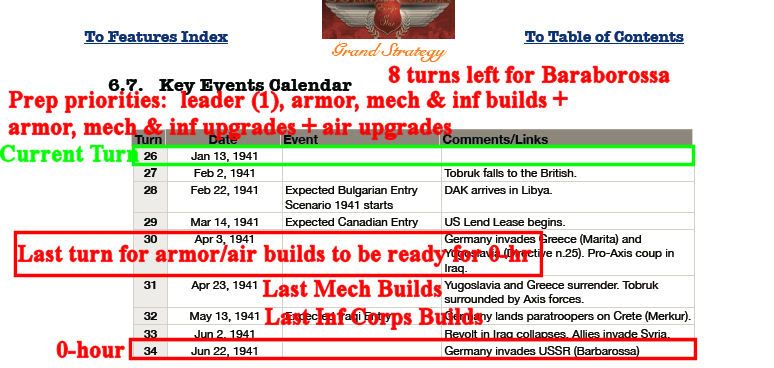
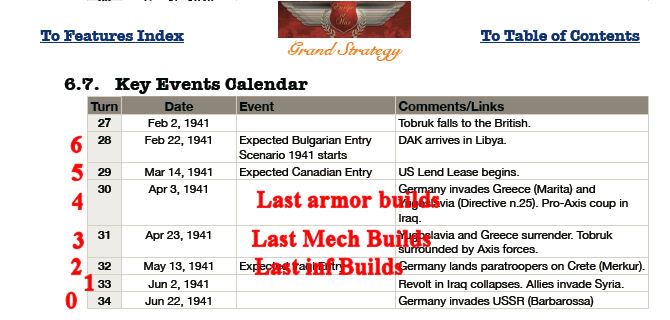
In preparation for Barbarossa, I decided to go all in with respect to German research and purchased a 3rd infantry, armor and air lab this turn. Note that the GS manual provided lots of valuable charts as illustrated below for my planning of Barbarossa. The axis are definitely on a tight schedule in 1940 / 1941 to get everything done that they need to before the invasion of Russia.
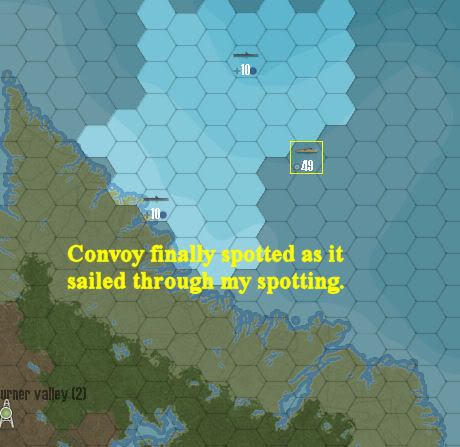
German u-boats finally spotted a convoy and should get back into action next turn.
I really like these new changes with respect to the Balkans. This is the first game that I've made my main ground invasion force against Greece overland. It looks like I have a good chance to take Athens next turn with this approach. It usually takes me 2 turns the other way, which is to land two infantry corps next to Athens. These corps are on their own and at supply level 1 until Athens is captured. However; that's not the case this time as my ground force will link up with the amphibious corps next turn. I did move Runsdent's corps out to sea to land next turn. Kesslinger's corps is in position to command all forces, including the air units in and next to Taranto.
It'll be interesting to see what Neil will do. I discovered two transports in the RN task force. However; he cannot risk moving any transport to port, unless he occupied the city with an air unit, due to the fact that Athens could fall next turn. I have moved almost all of the axis power into the area. If he does decide to contest this operation I will move Luftwaffe bombers in range of Crete and the RN next turn and try to punish the RN for that.
As the axis player in 1939 - 1941 for operations prior to Barbarossa (e.g., Norway, Greece), I'm a big believer that you need to move in overwhelming air, even if it's not needed most of the time, just for the cases where it is (like this game with Neil). In the actual war the majority of the Luftwaffe was used for Norway and for the Balkans. I think there's a reason for this. It's much better (in my opinion) to have units in place that aren't needed versus being without them and needing them. Even if it's 10 or 20% of the games that you really need them. Better safe than sorry.
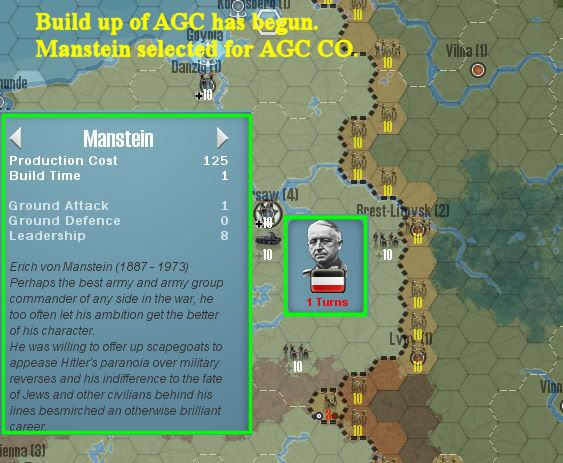
Preparations for Barbarossa proceed with Manstein named as CO of the newly formed Army Group Center.
massina_nz wrote:In the game I played agaisnt Neil, he used his transports to screen his CVs. He didn't use them to occupy anything.
Interesting. That's 16 PPs and 2 of his estimated 4 available transport slots.
Still looks cheaper then CV steps. And if he ships nothing he don't need slots.
Understand. 16 PPs is equivalent to what it cost to repair 2 CV steps. But I don't think the Italian navy; especially it's sub group is much of a threat to the UK CV. It's the Luftwaffe that is and transports don't protect against that.
If you look at the RN task force, he has 2 BBs, 1 DD and 1 CV that I can see (plus the two transports). I have to assume that he also has at least 1, and maybe 2, UK sub groups nearby. The surface fleet and the possibility of 1 or 2 sub groups is enough to keep me from engaging that task force by sea. In fact, I would think Neil would welcome a sortie by the Italian navy and would bait me a bit to try. But, he'll get no such sortie. I plan to keep the Italian navy under the axis air umbrella and continue to provide support to the Greek invasion.
rkr1958 wrote:Understand. 16 PPs is equivalent to what it cost to repair 2 CV steps. But I don't think the Italian navy; especially it's sub group is much of a threat to the UK CV. It's the Luftwaffe that is and transports don't protect against that.
If you look at the RN task force, he has 2 BBs, 1 DD and 1 CV that I can see (plus the two transports). I have to assume that he also has at least 1, and maybe 2, UK sub groups nearby. The surface fleet and the possibility of 1 or 2 sub groups is enough to keep me from engaging that task force by sea. In fact, I would think Neil would welcome a sortie by the Italian navy and would bait me a bit to try. But, he'll get no such sortie. I plan to keep the Italian navy under the axis air umbrella and continue to provide support to the Greek invasion.
In our game Neil built lots and lots of Italian subs. Maybe he expects same from his opponents.
rkr1958 wrote:Understand. 16 PPs is equivalent to what it cost to repair 2 CV steps. But I don't think the Italian navy; especially it's sub group is much of a threat to the UK CV. It's the Luftwaffe that is and transports don't protect against that.
If you look at the RN task force, he has 2 BBs, 1 DD and 1 CV that I can see (plus the two transports). I have to assume that he also has at least 1, and maybe 2, UK sub groups nearby. The surface fleet and the possibility of 1 or 2 sub groups is enough to keep me from engaging that task force by sea. In fact, I would think Neil would welcome a sortie by the Italian navy and would bait me a bit to try. But, he'll get no such sortie. I plan to keep the Italian navy under the axis air umbrella and continue to provide support to the Greek invasion.
In our game Neil built lots and lots of Italian subs. Maybe he expects same from his opponents.
Now that you mention it ... I had forgotten that. In my only other game against him as the allies he built 5 or 6 more Italian subs (giving him 6 or 7 in the Med) and 6 more German subs (giving him 9 in the Atlantic). I guess he'll be really surprised when he can finally read this AAR and sees that I have not built any additional subs so far. Not even 1 additional German sub.
Very interesting theory. I see why you (Plaid) are such a tough opponent. That was q very insightful observation and would had never occurred to me. But it will for now on. Thanks.