Baukommando Becker & Marders
Posted: Tue Nov 06, 2018 10:31 am
Marder tank destroyers were supposed to be an immediate (ad hoc) response to T-34 tanks and especially KV-1, with which they were so big problems in 1941
Marders were widely used in late spring, summer and autumn of 1942, in anticipation of new heavy tanks capable of fighting in Soviet tanks
Therefore, I think that Marders should be cheaper, also in terms of CPs (I think they should cost 4 CPs), and besides, the introduction of new StuG F/8 and G (AT versions) should be postponed to winter 1942-43 (the last two-three scenarios in PK) or this StuGs could be available in 1942, but should be much more expensive than Marders, and only in 1943 should get cheaper
Another issue is Baukommando Becker's spec is available too late (should be available since March 1942)
Then this specialization would finally make sense after such changes and would be used by the players.
about StuG F, F/8 and G versions from Wikipedia:
"StuG III Ausf. F: (Sd.Kfz 142/1; March–September 1942, 366 produced) The first real up-gunning of the StuG, this version uses the longer 7.5 cm StuK 40 L/43 gun. Firing armour-piercing Panzergranat-Patrone 39, the StuK 40 L/43 could penetrate 91 mm of armour inclined 30 degrees from vertical at 500 m, 82 mm at 1,000 m, 72 mm at 1,500 m, 63 mm at 2,000 m, allowing the Ausf. F to engage most Soviet armoured vehicles at normal combat ranges. This change marked the StuG as being more of a tank destroyer than an infantry support vehicle. An exhaust fan was added to the rooftop to evacuate fumes from spent shells, to enable the firing of continuous shots. Additional 30 mm armour plates were welded to the 50 mm frontal armour from June 1942, making the frontal armour 80 mm thick. From June 1942, Ausf. F were mounted with approximately 13 inch (334 mm to be exact) longer 7.5 cm StuK 40 L/48 gun. Firing above mentioned ammunition, longer L/48 could penetrate 96 mm, 85 mm, 74 mm, 64 mm respectively (30 degrees from vertical).
StuG III Ausf. F/8: (Sd.Kfz 142/1; September–December 1942, 250 produced) Introduction of an improved hull design similar to that used for the Panzer III Ausf. J / L with increased rear armour. This was 8th version of the Panzer III hull, thus the designation "F/8". This hull has towing hook holes extending from side walls. From October 1942, 30 mm thick plates of additional armour were bolted on to speed up the production line. From F/8, the 7.5 cm StuK 40 L/48 gun was standard until the very last of the Ausf. G. Due to the lack of double baffle muzzle brakes, a few L/48 guns mounted on F/8s were fitted with the single baffle ball type muzzle brake used on the Panzer IV Ausf. F2/G.
StuG III Ausf. G (Sd.Kfz. 142/1; December 1942 – April 1945, ~8,423 produced, 142 built on Panzer III Ausf. M chassis, 173 converted from Panzer III): The final and by far the most common of the StuG series. Upper superstructure was widened: welded boxes on either sides were abandoned. This new superstructure design increased its height to 2160 mm. The back wall of the fighting compartment got straightened, and the ventilation fan on top of the superstructure was relocated to the back of the fighting compartment. From March 1943, the driver's periscope was abandoned. In February 1943, Alkett was joined by MIAG as a second manufacturer. From May 1943, side hull spaced armour plates (Schürzen) were fitted to G models; these were primarily intended for protection against Russian anti-tank rifles, but were also useful against hollow-charge ammunition. Side plates were retro-fitted to some Ausf. F/8 models, as they were to be fitted to all front line StuGs and other tanks by June 1943 in preparation for the battle of Kursk. Mountings for the Schürzen proved to be inadequate, as many were lost in the field. From March 1944, an improved mounting was introduced; as a result, side skirts are seen more often with late model Ausf G. From May 1943, 80 mm thick plates were used for frontal armour instead of two plates of 50 mm + 30 mm. However, a backlog of StuGs with completed 50 mm armour existed. For those, a 30 mm additional armour plate still had to be welded or bolted on until October 1943."
So these vehicles appear far too early in the game. StuG F may remain, but from the summer of 1942
Marders were widely used in late spring, summer and autumn of 1942, in anticipation of new heavy tanks capable of fighting in Soviet tanks
Therefore, I think that Marders should be cheaper, also in terms of CPs (I think they should cost 4 CPs), and besides, the introduction of new StuG F/8 and G (AT versions) should be postponed to winter 1942-43 (the last two-three scenarios in PK) or this StuGs could be available in 1942, but should be much more expensive than Marders, and only in 1943 should get cheaper
Another issue is Baukommando Becker's spec is available too late (should be available since March 1942)
Then this specialization would finally make sense after such changes and would be used by the players.
about StuG F, F/8 and G versions from Wikipedia:
"StuG III Ausf. F: (Sd.Kfz 142/1; March–September 1942, 366 produced) The first real up-gunning of the StuG, this version uses the longer 7.5 cm StuK 40 L/43 gun. Firing armour-piercing Panzergranat-Patrone 39, the StuK 40 L/43 could penetrate 91 mm of armour inclined 30 degrees from vertical at 500 m, 82 mm at 1,000 m, 72 mm at 1,500 m, 63 mm at 2,000 m, allowing the Ausf. F to engage most Soviet armoured vehicles at normal combat ranges. This change marked the StuG as being more of a tank destroyer than an infantry support vehicle. An exhaust fan was added to the rooftop to evacuate fumes from spent shells, to enable the firing of continuous shots. Additional 30 mm armour plates were welded to the 50 mm frontal armour from June 1942, making the frontal armour 80 mm thick. From June 1942, Ausf. F were mounted with approximately 13 inch (334 mm to be exact) longer 7.5 cm StuK 40 L/48 gun. Firing above mentioned ammunition, longer L/48 could penetrate 96 mm, 85 mm, 74 mm, 64 mm respectively (30 degrees from vertical).
StuG III Ausf. F/8: (Sd.Kfz 142/1; September–December 1942, 250 produced) Introduction of an improved hull design similar to that used for the Panzer III Ausf. J / L with increased rear armour. This was 8th version of the Panzer III hull, thus the designation "F/8". This hull has towing hook holes extending from side walls. From October 1942, 30 mm thick plates of additional armour were bolted on to speed up the production line. From F/8, the 7.5 cm StuK 40 L/48 gun was standard until the very last of the Ausf. G. Due to the lack of double baffle muzzle brakes, a few L/48 guns mounted on F/8s were fitted with the single baffle ball type muzzle brake used on the Panzer IV Ausf. F2/G.
StuG III Ausf. G (Sd.Kfz. 142/1; December 1942 – April 1945, ~8,423 produced, 142 built on Panzer III Ausf. M chassis, 173 converted from Panzer III): The final and by far the most common of the StuG series. Upper superstructure was widened: welded boxes on either sides were abandoned. This new superstructure design increased its height to 2160 mm. The back wall of the fighting compartment got straightened, and the ventilation fan on top of the superstructure was relocated to the back of the fighting compartment. From March 1943, the driver's periscope was abandoned. In February 1943, Alkett was joined by MIAG as a second manufacturer. From May 1943, side hull spaced armour plates (Schürzen) were fitted to G models; these were primarily intended for protection against Russian anti-tank rifles, but were also useful against hollow-charge ammunition. Side plates were retro-fitted to some Ausf. F/8 models, as they were to be fitted to all front line StuGs and other tanks by June 1943 in preparation for the battle of Kursk. Mountings for the Schürzen proved to be inadequate, as many were lost in the field. From March 1944, an improved mounting was introduced; as a result, side skirts are seen more often with late model Ausf G. From May 1943, 80 mm thick plates were used for frontal armour instead of two plates of 50 mm + 30 mm. However, a backlog of StuGs with completed 50 mm armour existed. For those, a 30 mm additional armour plate still had to be welded or bolted on until October 1943."
So these vehicles appear far too early in the game. StuG F may remain, but from the summer of 1942


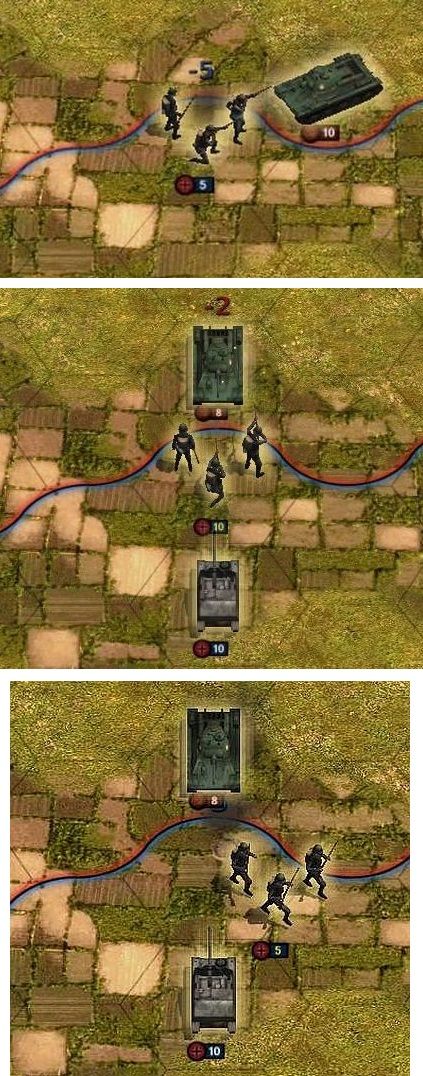
 StuGs fought: 3 StuG III D at Gazala (May, 1942) and 4 StuG III F/8 in Tunisia (April, 1943)