Page 3 of 3
Posted: Wed May 05, 2010 10:38 am
by trulster
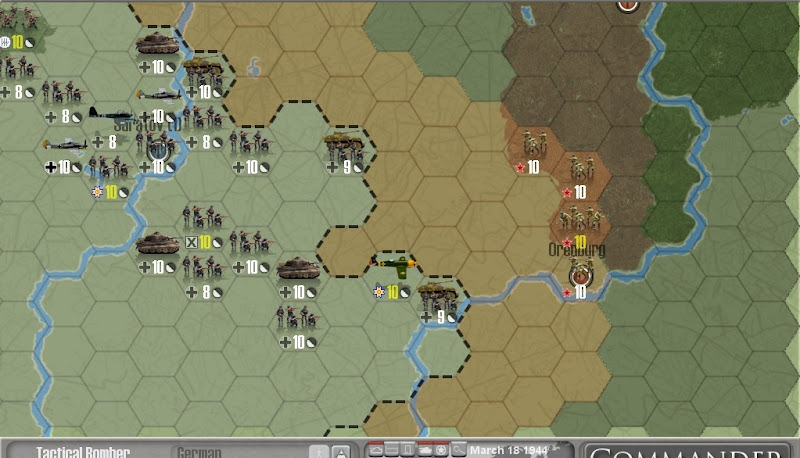
March 18th, 44. Advanced scouts reveal the Urals defence line, strechting from Orebourg and probably all the way up to Ufa. Gorki is captured.
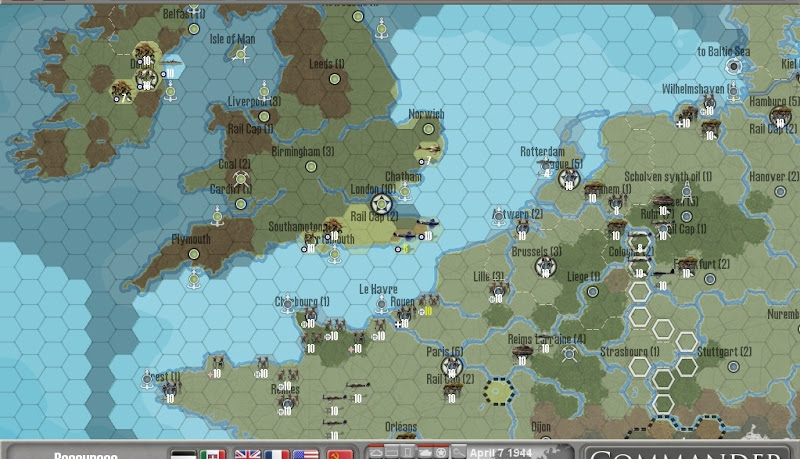
April 7th, 44. The Allies have no respect for Irish neutrality and brutally waltz into Dublin. Kesselring has been put in command of the West Wall and after a winter of preparation the message to the Allies is: Bring it on!
Finally the German research manages to produce some results for the Luftwaffe and all squadrons are fitted out with brand new FW-190s.
The southern convoy is eliminated but the fat central convoy is too heavily escorted for any uboat attacks and slips through to the British Isles.
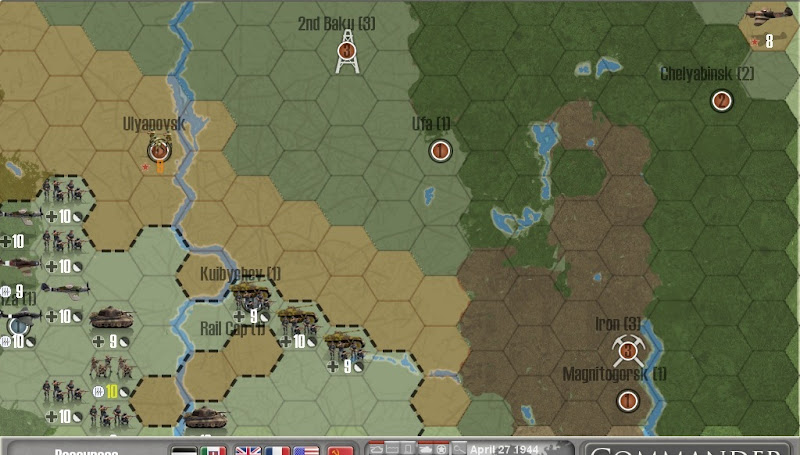
April 27th, 44. Severe winter rages on into April but Astrakhan is invested and Kuibyshev is taken, again only defended by a garrison. For the first time in half a year the Red Air Force show up to intercept bombers, even losses.
The newly upgraded Lufwaffe perform fighter sweeps over Britain with painful results for the outclassed RAF.
Posted: Thu May 06, 2010 12:20 pm
by trulster
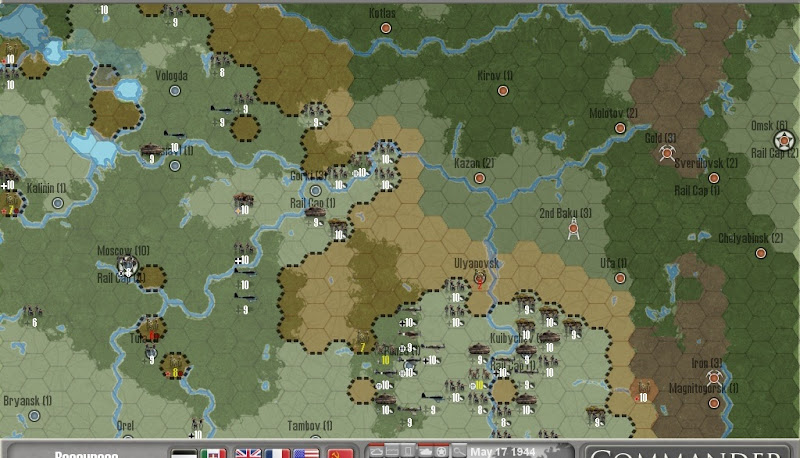
17th of May 44 and severe winter still rages in Russia! Only 12 hexes to Omsk but with this short a summer against dug-in Russians it may get dicey. Ulyanovsk holds but will fall promptly, ditto Astrakhan.
Massive partisan uprisings, a total of 9 this turn, most in Russia. Seems to be a trend for 1944, huge garrison forces required.
RAF pull back from the coast and the Luftwaffe bombs a mech near Southampton.
Posted: Sun May 09, 2010 12:44 pm
by trulster
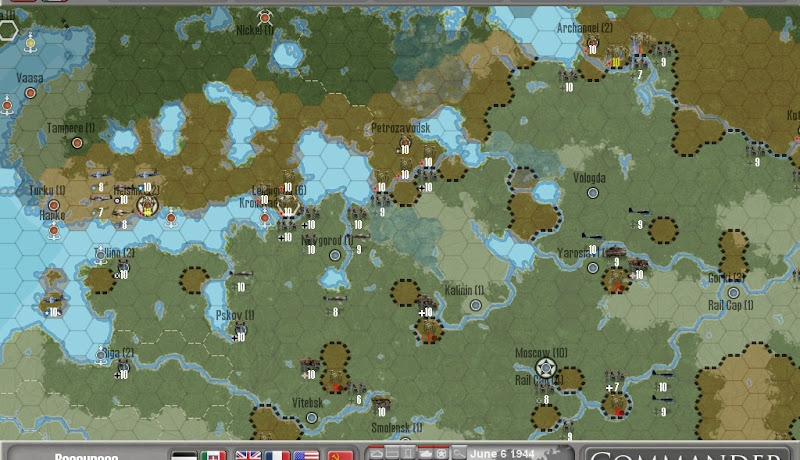
June 6th, 44. Finally summer arrives in Russia and the Axis armies surge forward. No signs of any D-day in the West, while the drive on Archangelsk is on. Allied air still sit tight in Helsinki.
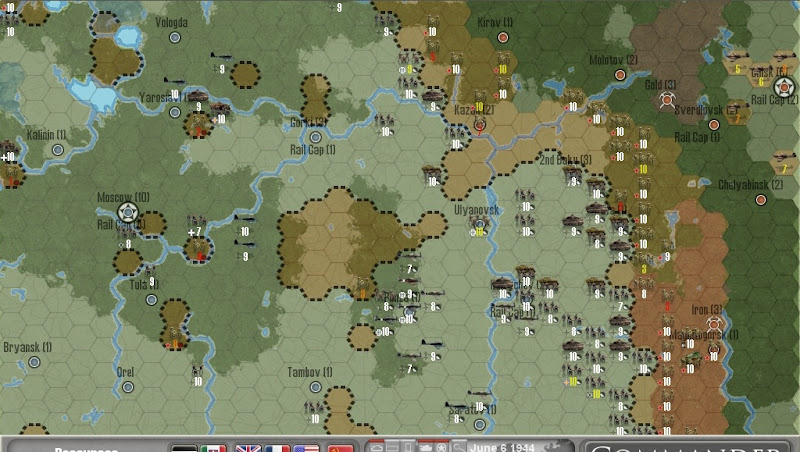
Contact is made with the Russian defence line and the vanguard yields to the mechanised German spearheads. Ufa is taken. Surprisingly strong and upgraded Red Air Force contest all bombings, however their efficiency is low.
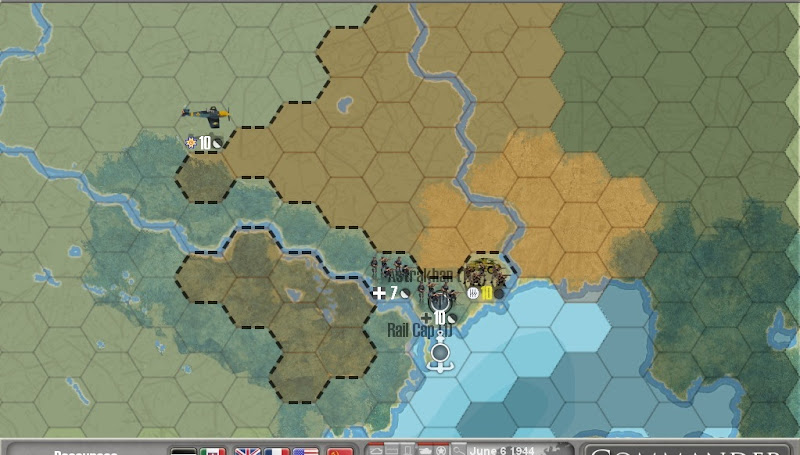
A multinational coalition captures Astrakhan in an operation including Hungarian-German land forces supported by an Italian naval landing from the Caspian under Rumanian air cover.
Posted: Thu May 13, 2010 9:55 am
by trulster
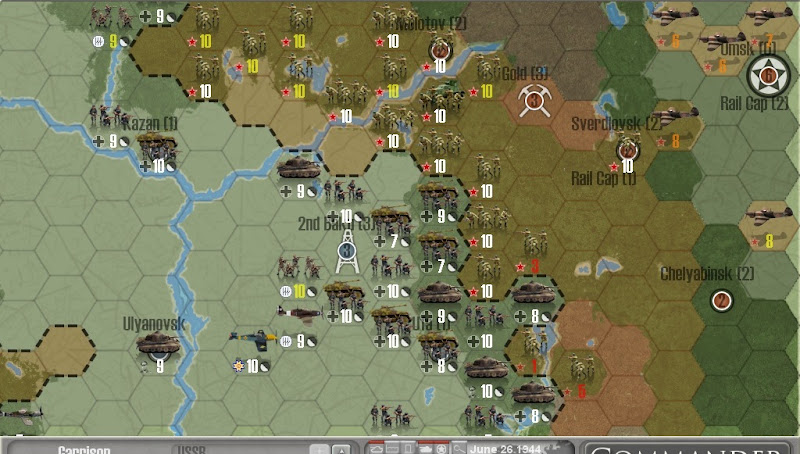
June 26th, 1944. Strongest Russian defences seem to have formed around Molotov, but the Manstein press on into the Urals forests amongst vicious air battles. Surely the Russian economy cannot take much more now? Kazan is captured.
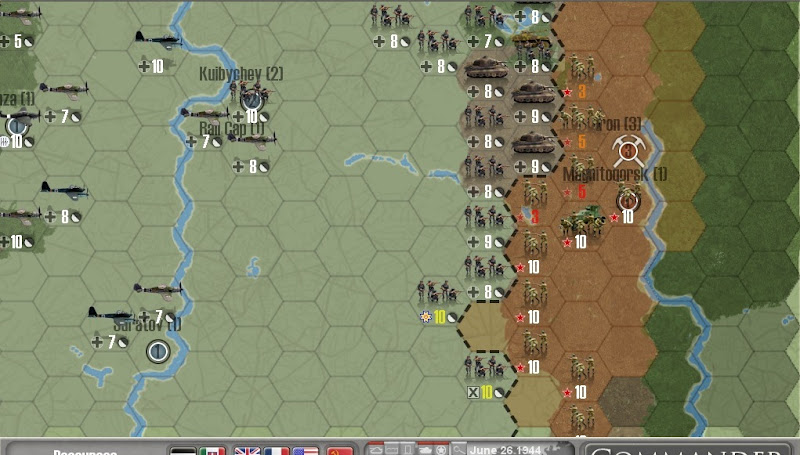
Push on Magnitogorsk in a bid to split the Russian line in half.
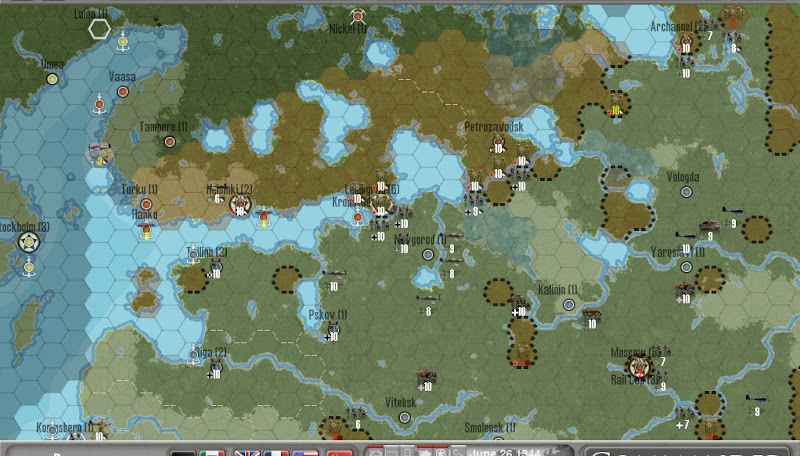
Archangelsk due to fall next turn, further limiting the Russian economy. However, a partisan pops up in Moscow of all places!
Suddenly an ARM and MECH appear in Finnish ports. Probably remnants from the aborted 43 invasion of Denmark which must have been hiding in the Bothinan Sea. The transports are bombed by the Luftwaffe with little success, but with Finland cut off from the Urals there is little these troops can do anyway.
In the West, some uboat attacks on the central convoys.
Posted: Tue May 18, 2010 8:17 pm
by trulster
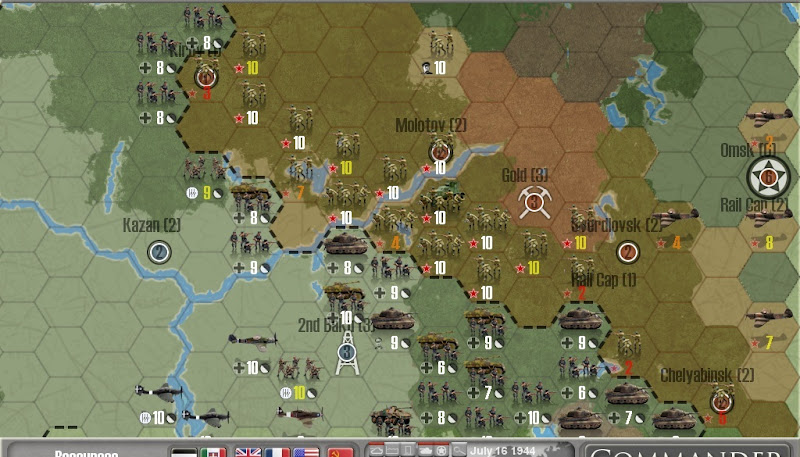
July 16th, 44. Archangelsk falls while in the Urals the weak Russian resistance is broken as the panzers reach the outskirts of Chelyabinsk. Fierce air battles continue but the Axis have more planes and gradually win the war of attrition. Fives hexes left to Stalin's last hideout.
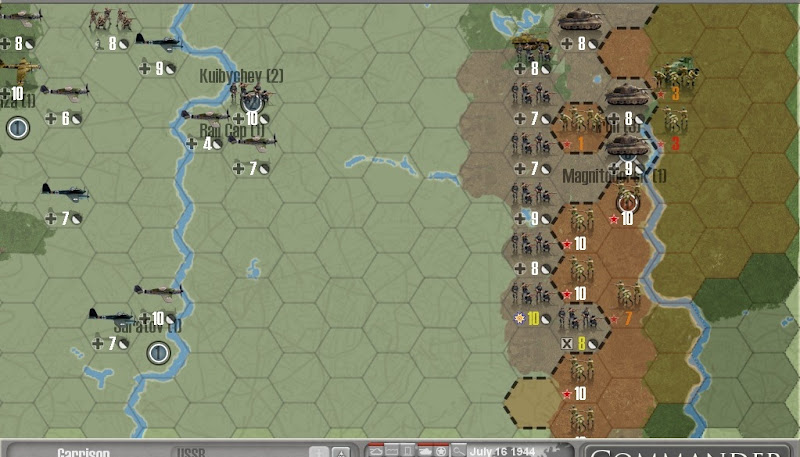
Magnitorosk ripe for conquest. North of Scotland the Russian convoy runs into a sub which is subsequently annihilated by Allied air, the first Axis sub sunk in the war.
Posted: Sat May 22, 2010 10:20 am
by trulster
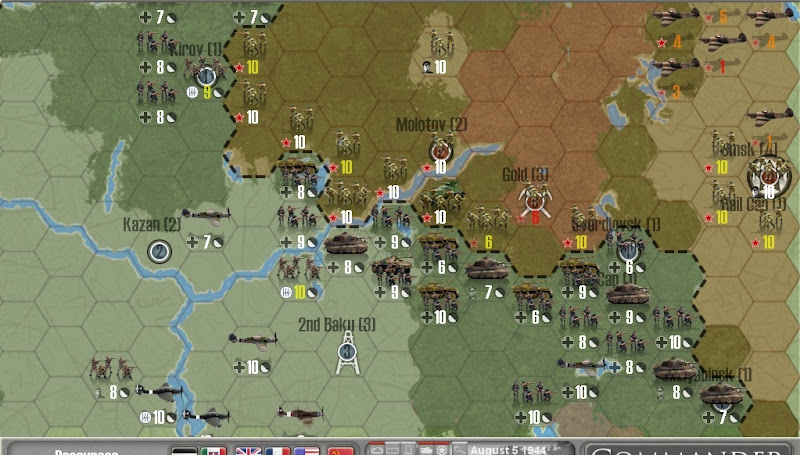
August 5th, 44. More garrison forces die as the unstoppable panzers thunder into Chelyabinsk and Sverdlovsk while Italians occupy Kirov. Next stop Omsk, where Stalin is trying to establish some desperate defence and hoping for an early winter.
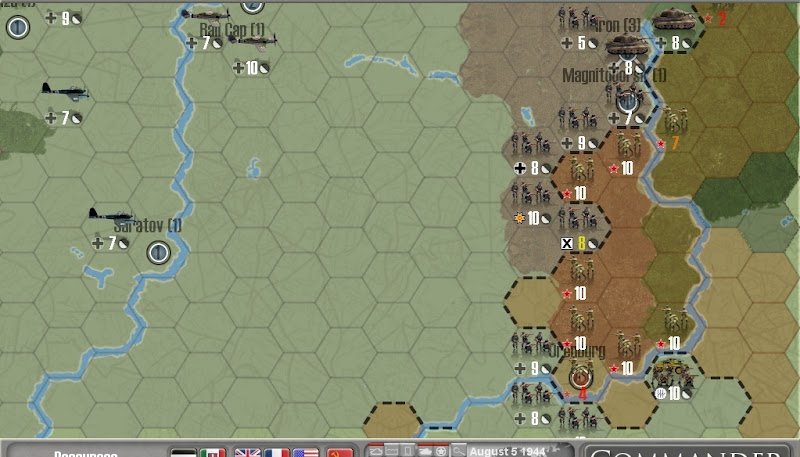
Magnitogorsk taken and Orenburg reduced.
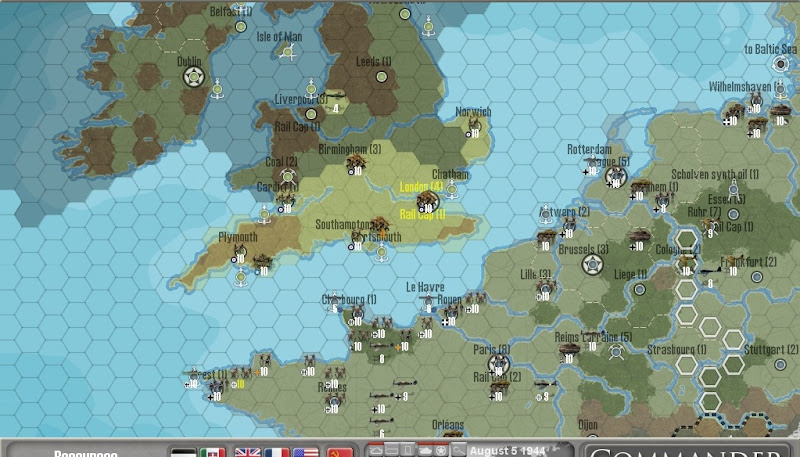
With the RAF having vanished to Scotland (?) Göring authorises a strategic bombing campaign against the British Isles. Target number one: London.
Posted: Sun May 23, 2010 9:06 am
by trulster
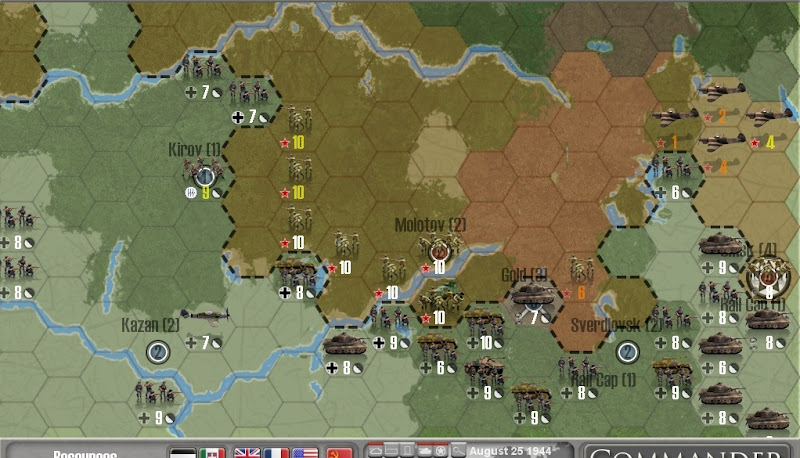
August 25th, 44. Russian gold mines taken and the last stand of Stalin in Omsk is at hand as preliminary attacks are made. There will be no King Winter to the rescue this time. The group of units defending the southern Urals are pocketed out of supply with the capture of Orenburg.
Russian losses now exceed 20 million!
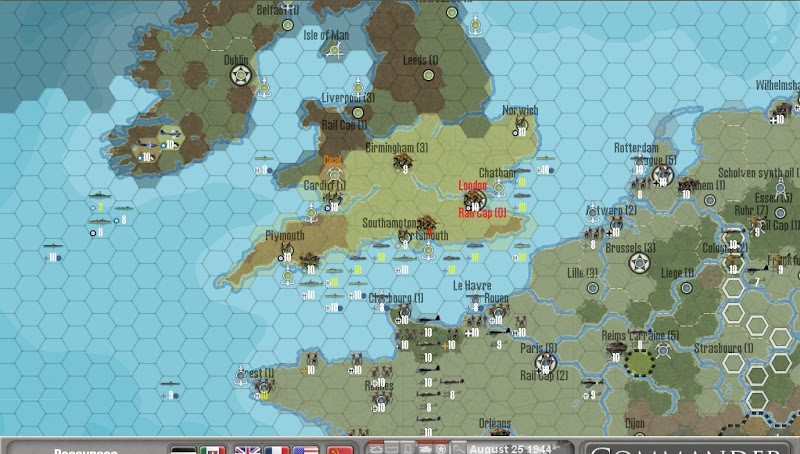
In the west, Allied ships run into another sub and sink it, the Luftwaffe strikes back at the USN. Görings strategic bombing campaign continues and London is rubbled. Seeing no signs of significant Allied air assets nor land forces, and with expendable land forces at hand, the Axis launch a "reverse D-Day" at the British beaches. A risky venture, but maybe the dual blow of Russian surrender and an Axis landing in Britain can terminally undermine the Allied will to fight.
Posted: Tue May 25, 2010 9:42 am
by trulster
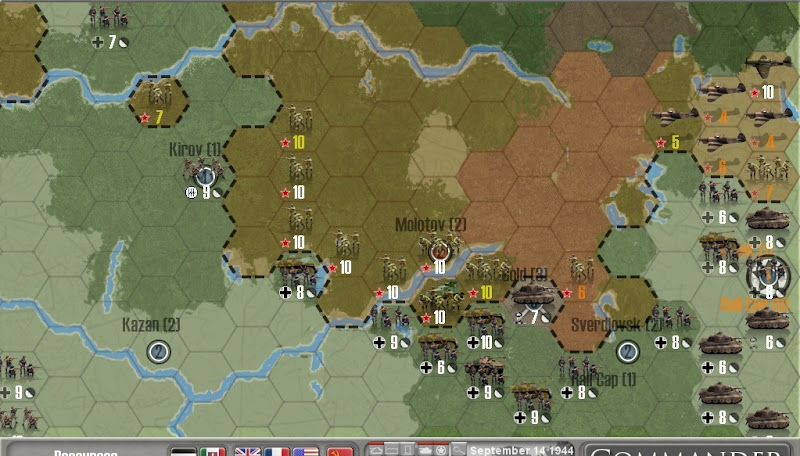
September 14th, 1944. The beast is downed in Siberia. Desperate defenders inflict some losses on Manstein's panzers but in the end Omsk is stormed. The war in the East is finally over after three long years of struggle.
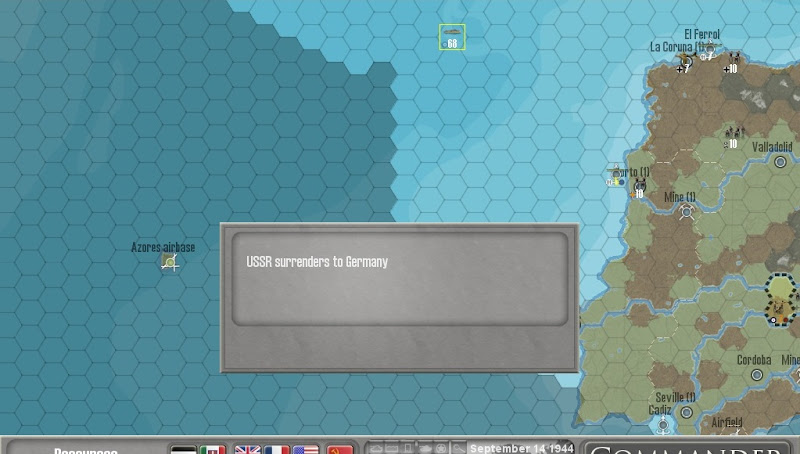
Quick war crimes tribunals are held, unsurprisingly ending with Stalin being shot for crimes against humanity. After surrender though, a dozen die-hard partisans spring up and it seems total peace will never come in the East.
With the USSR out of the war, will northern convoys again head for the UK?
Also note the Spanish front, which remained quiet since the conquest of winter 1940.
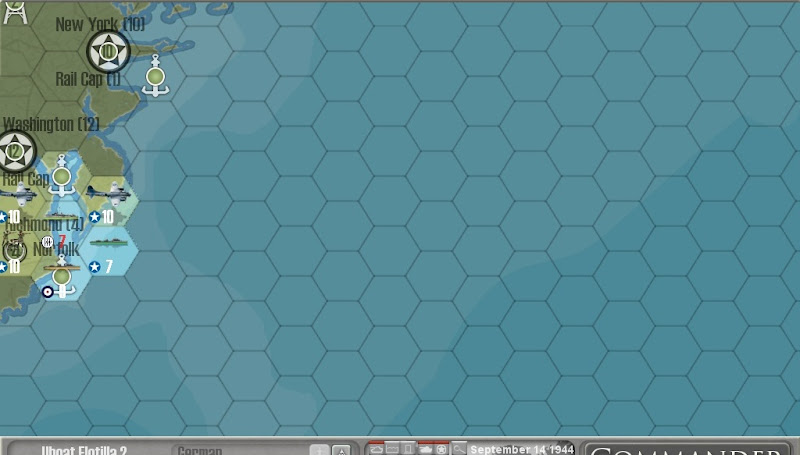
Another Italian gambit meets with overwhelming American force as Richmond proved to be heavily protected.
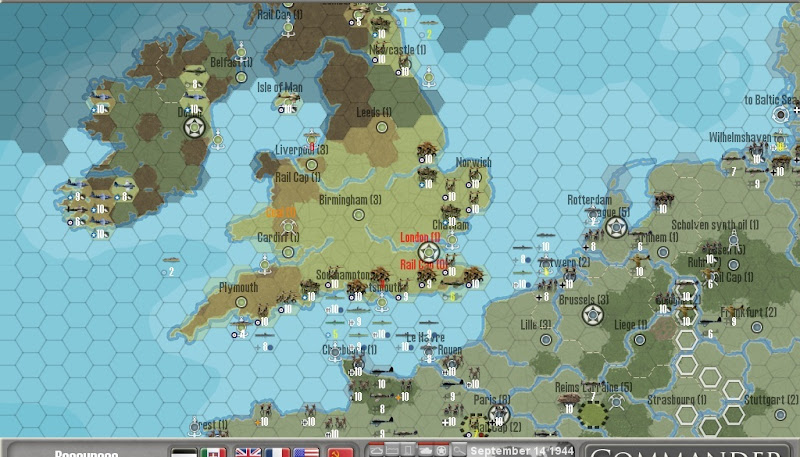
The risky reverse D-Day ends in disaster as swarms of Allied bombers, based in Ireland and Scotland, ignore air combat losses as they overwhelm Axis fighter cover and devastate the transports. A couple of survivors limp back to port. Also, a surprisingly huge land force appeared from Northern England to cover the beaches, so any landing would be unlikely to suceed in any case. With this sizable force at hand perhaps the Allies could have managed an invasion somewhere earlier. Some Allied transports are spotted off Bergen in Western Norway.
The bright spot in this debacle is the Italian Navy, which together with the Luftwaffe sink one BB and DD while heavily damaging several others. Canaris estimates the Axis to have achieved parity in BBs at this point of the war.
Posted: Tue May 25, 2010 11:35 am
by richardsd
get used to the partisans, if its anything like the AI you will get 10 a turn in Russia!
Posted: Tue May 25, 2010 2:59 pm
by trulster
richardsd wrote:get used to the partisans, if its anything like the AI you will get 10 a turn in Russia!
Wow, maybe the probability is calculated per hex, and, as is known, Russia is huuuuge so that does mean lots of partisans. Well, something to do for the Wehrmacht on the long road back west.
Posted: Tue Jun 08, 2010 10:20 am
by trulster
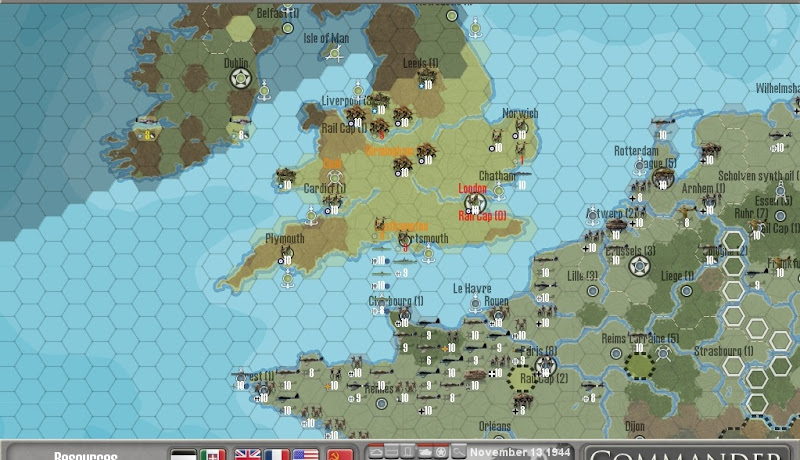
November 13, 44. With rebasing from Russia complete, the Axis dominate the English skies and bomb at will, reducing cities and units. Tech upgrades also grant the range to hit escort forces in the Atlantic.
Posted: Wed Jun 16, 2010 5:10 pm
by trulster
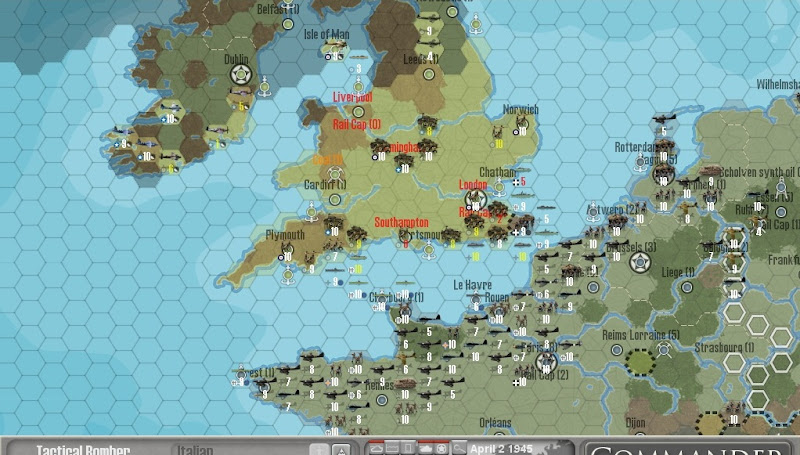
April 2nd 45 - almost the end to a long war. Despite air superiority making a landing in Britain is very tough as long as at least some enemy air can fly to cover invasion hexes. One mech is destroyed by shore and air bombardment and Hungarian (!) forces struggle ashore near Dover, but for a more serious landing 4-5 months of grinding down Allied air would be needed, their losses exceed their income so it is a question of time. Another Brit fighter and two ships destroyed.
Meanwhile, in occupied Russia 5-10 partisans rise up each turn and more than 40 roam the steppes.
Posted: Fri Jun 18, 2010 9:15 am
by trulster
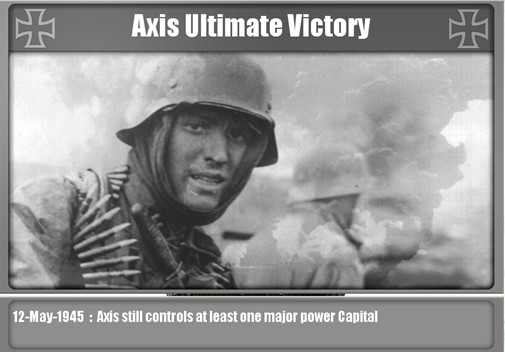
The Hungarians are blasted into the channel and the war ends!
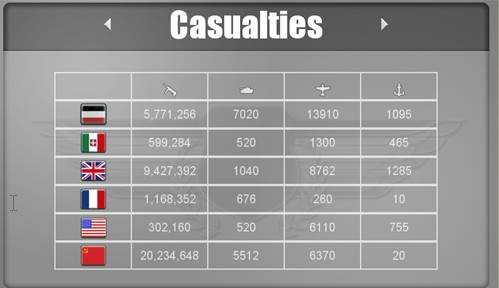
Massive casualties. Kudos to my opponent for sticking with it even when it became clear that Russia would be finished off. Back in the winter of 41 that looked quite unlikely with German lines on the breaking point, partly due to overcommitment of forces to Africa/Middle East in expectation of a tougher Allied resistance there.
In total it seems the war was decided as much in the Atlantic as in Russia. Huge naval losses meant the Allies had a hard time coming up with a way back into Europe apart from an abortive Scandinavian venture. Perhaps an invasion of Portugal/Spain should have been tried, but with a serious German/Italian uboat menace there would be a significant chance of failure.