Re: Battlefield: Europe MOD v2.4
Posted: Fri Apr 03, 2026 7:31 pm
I guess you must have missed the start of the first cycle (which requires the player to start the blockade by turn 12) in order to get the first strength reduction in turn 16. Then the second cycle starts at turn 18, with a strength reduction in turn 22. The idea is that if the player is unable to start the blockade before the onset of the first winter then the Soviets manage to send enough supplies to the city so that there is no strength reduction in February '42 and then the first strength reduction will only happen in turn 22. Perhaps it should be better communicated to the player, though. I will add such a warning to the first Leningrad blockade message.JimmyC wrote: Thu Apr 02, 2026 2:08 am I am doing another playthrough and am around turn 50. This is the first time i determined to properly siege Leningrad. Whilst the defenders health does indeed reduce after time, it takes a very long time (it seems over 1 year before it starts decreasing)
In the next version the counter-battery will be a bit weaker: the Kronstadt island fortress will have only range 1 so it will not be able to bombard the blockading units. It means one less enemy artillery shooting back.JimmyC wrote: Thu Apr 02, 2026 2:08 am during the siege you are constantly being attacked by the artillery, coastal battery and battleship and having to repair your troops. Although i used the cheaper security infantry/minor Axis allied troops, it is still costly to have to repair them and sometimes you have to rotate them as they get too injured. I formed the opinion that it is better to forget about the siege and just attack it directly. If you bring up some of the heavy/longer range artillery, it is quite feasible. It also frees up your forces doing the siege to do other things.
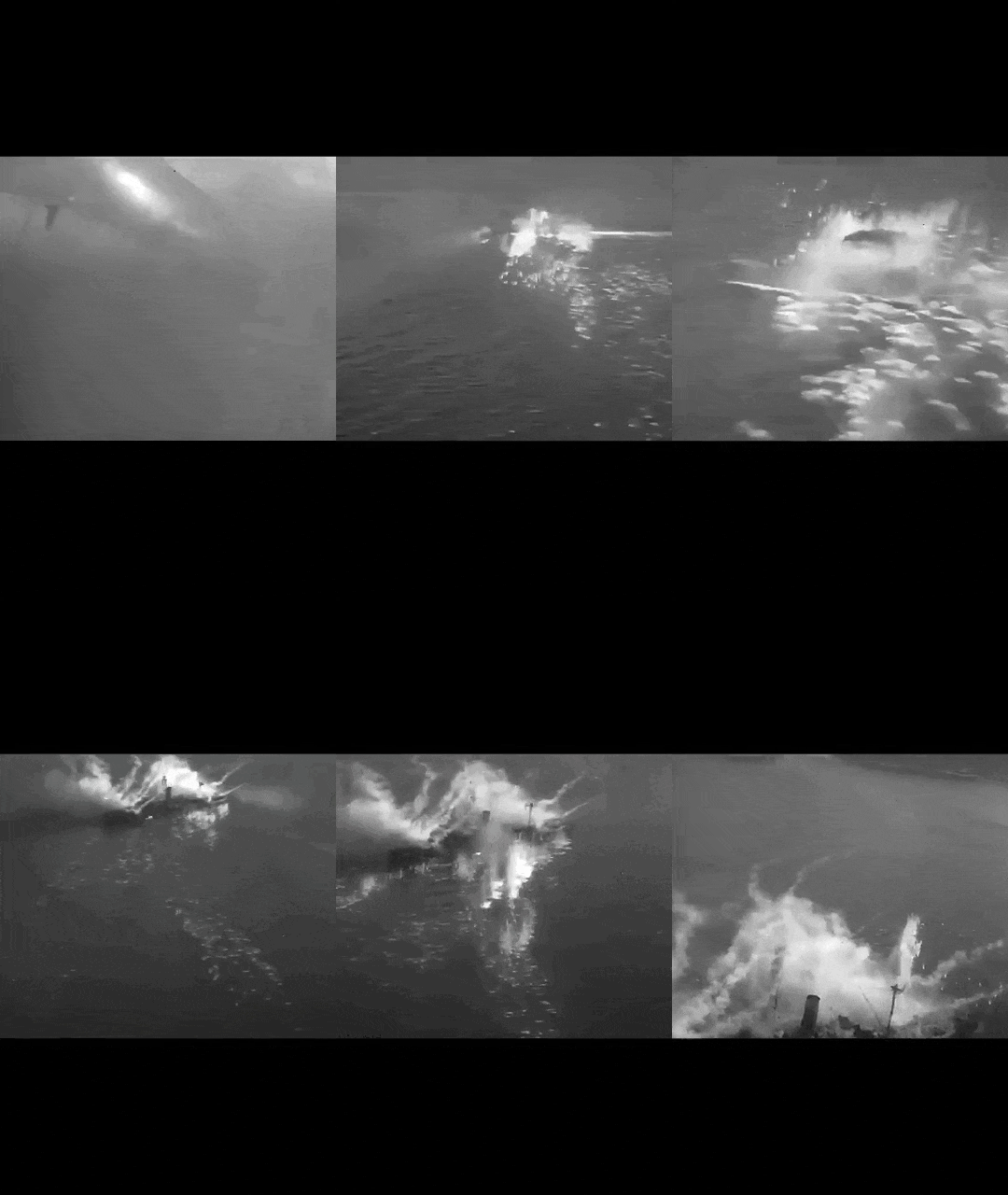
The battleship can be sunk fairly easily: with a little luck the Rudel Ju 87 unit alone can sink it in just 2 turns, and if another bomber is used as well, for example a Ju 88 or the Finnish tac bomber, then almost surely. (Historically the Battleship Marat was sunk by two Ju 87s in September 1941, one of which was piloted by Rudel.)
It also makes sense to place a 3.7 cm towed AT unit on the open countryside blockade hex so that it cannot be seen and thus attacked by the Soviet artillery. That's the most vulnerable spot
Other than that, in the next version the defending units will have slightly higher starting strength, but the the strength reduction will also be a bit higher at times, mainly during the winter cycles.
So I think it will still worth to keep the blockade, but it also depends on the other priorities.


 vs
vs 