Re: New Projekt: Phcas & AKRebels "PAK"-Mod - RELEASE v0.58
Posted: Thu Nov 11, 2021 9:58 pm
ok...so I need to download each version and finish with .58?
Forum
https://forum.slitherine.com/
Yeah, you need 0.53 as a base and all later updates on top of that until 0.58.goose_2 wrote: Thu Nov 11, 2021 9:58 pm ok...so I need to download each version and finish with .58?


 Klasse.
Is it possible to do this in mod ?4. FLAMMENWERFER- FLAMMENWERFER (FLAMETHROWERS)
Flamethrowers were first used by the German Army during World War I for use against fortified positions and bunkers. In accordance with a proposal received from Peter V. Stahl, a technical specialist of I./KG 51, in February 1940, tests were carried out in Tarniewice of a backward-facing Flamenwerfereinbau flamethrower mounted on He 111, which would "spew" burning oil from specially mounted pipes. The installation was conceived as a defensive weapon against fighter attacks, since it was assumed that the pursuing enemy aircraft would fly into a large, dense, black cloud of smoke created by a flamethrower and absorb it, blinding the pilot or making it difficult to aim.
The tests were carried out with a Bf 109 flying in the role of an attacker, and although the tests proved effective, as a result of which the Messerschmitt's windshield was covered with soot at an altitude of 150 m, the idea officially did not go any further.
Ignoring the lack of interest in his idea, Stahl continued to work and installed a flamethrower on the Ju 88A.1 Wk.Nr 6093 9K + EH - 1./KG 51 in Villaroche, France, in the late spring of 1940. The tank was installed in the rear part of the fuselage, next to the tail wheel, to which two ventilation pipes were attached, and the third pipe was attached to the enlarged wing tip on the left side. When applied, the results were visually impressive, and one day, on August 19, 1940, Stahl may even have contributed to the crash of a Spitfire over the southern coast of England. The specially configured Ju 88 later participated in operations in the Soviet Union in 1941, was attributed to Stab I./KG 51, and was successfully defended at least once with a flamethrower during an attack by Russian fighters.
A Ju 88, possibly A-1 Wk-Nr 6093 9K+EH of 1./KG 51, based at Villaroche in France in the spring of 1940, makes a dramatic low-altitude flyby when the crew activates the Flammenwerfereinbau.
The Ju 88A-4 Wk-Nr 1050 9K + FB from Stab I./KG 51 was equipped with a Flammenwerfereinbau. This can be seen here in January 1942 with the rudder decorated with the signs of the defeat of ships, and during the tests of the flamethrower in Wiener Neustadt, when it was piloted by Hauptmann Heinrich Hahn.
Drawing of the Gero II installation on the Fw 190F.
Gero IIC on FW-190F-8 figure.
In February 1945, Focke-Wulf was asked to prepare the Fw 190F.8 with a specially protected rear fuselage and tail section for the expected Flammenwerfereinbau produced by Arado and Norddeutsche Dornier, but it is believed that such work was not carried out before the end of the war.
Gero IIA and IIB.
The total length is 3120 mm.Diameter 470 mm
The fuel tank capacity is 375 liters.
Empty weight 230 kg. Curb weight 540 kg.
Gero IIC
The total length is 1920 mm. The diameter is 450 mm. The fuel tank capacity is 164 liters. Empty weight 173 kg. Curb weight 300 kg.
Sources of data and images: Caldwell, Donald and Muller, Richard, Luftwaffe over Germany - Defense of the Reich, Greenhill Books. LUFTWAFFE SPECIAL WEAPONS1942–45. ROBERT FORSYTHE.
https://zen.yandex.ru/media/ww39_45/ori ... 519feda543
And on August 31, the Slovak Popular Uprising began. Kombinovana Letka took an active part in the competition, which included 57 aircraft of various types. From August 30 to October 10, its pilots carried out 350 sorties, without their own losses, while shooting down 6 German aircraft and destroying about 130 targets on the ground. When it became clear that the uprising had been defeated, the planes that were in flying condition were driven to the territory controlled by Soviet troops. The remaining materiel fell into the hands of the Germans. Slovakia's aviation ceased to exist, which was formalized by the corresponding directive.
In total, according to Slovak data, from March 1939 to June 1944, pilots shot down about 215 Hungarian, Polish, Soviet, and American aircraft. Own losses amounted to 67 vehicles (22 B-534, 13 C-328, 32 Me-109) and 157 people.
http://www.airwar.ru/history/af/clovak/clovak.html

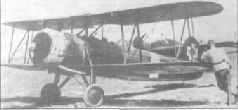
On October 15, 1940, Slovak aircraft received new identification marks: blue crosses with red circles in the middle began to be applied to the keels and wings
http://www.tinlib.ru/transport_i_aviaci ... _02/p9.php
From the Editor PAK-Mod v0.59.uzbek2012 wrote: Mon Nov 15, 2021 11:14 am Terminator are you planes from where did you get the pictures from Slovakia mods ?
viewtopic.php?f=147&t=40309&hilit=PzC+Slovakia+Mod+1.0b
Hi, i'm looking at this
Fixed in next updateterminator wrote: Sun Nov 14, 2021 9:51 am Slovak transport bug (Poland v0.59) :
Slovak transport bug.jpg
terminator wrote: Mon Nov 15, 2021 9:49 am The Slovak planes surrounded in red do not seem to have the right Slovak insignia :
Slovak planes.JPG
Excellent and very fastphcas wrote: Mon Nov 15, 2021 8:07 pmSky PNG.pngterminator wrote: Mon Nov 15, 2021 9:49 am The Slovak planes surrounded in red do not seem to have the right Slovak insignia :
Slovak planes.JPG
Fixed in next update


Near the KASKR-I autogyro (red engineer) (left to right): designers - Nikolai Kamov and Nikolai Skrzhinsky, pilot Ivan Mikheev. The back row — mechanics E. A. Kreindlin and M. F. Drankovich.
Pay special attention to the fact that the autogyro itself says "helicopter". This is to the question of whether an autogyro should be considered a helicopter.
The short-range scout and spotter autogyro A-7-3a made its first flight in 1934. For the first time, the autogyro received defensive armament from three 7.62 mm machine guns. The pilot was responsible for the front PV-1 with a belt-powered, firing through the propeller. And the observer led the defense of the rear hemisphere from a paired DA-2 machine gun (Degtyarev-aviation) with disc magazines on the ring turret. Later, the wing below had nodes for the suspension of four FAB-100 bombs and six RS-82 unguided missile shells. The maximum design speed of the A-7 was 218 km/h. At the beginning of 1941, the People's Commissariat of Commerce and Aeroflot organized an expedition to the foothills of the Tien Shan to prove the possibility of using gyroplanes in forestry and agriculture. The planes returned (successfully) from the mission two days before the start of the war.
Machine gun mount of paired machine guns D A (Degtyarev-aviation) on the autogyro A-7-3a.
The baptism of fire of domestic rotorcraft occurred during the "winter" war with Finland. The only participant is the autogyro A-7bis. The A-7bis was used as a regular spotter aircraft. In terms of speed, of course, it was significantly inferior to the SSS aircraft, but it was significantly superior in maneuverability and take-off and landing qualities. Heavy artillery fire was corrected from the gyroplane. I didn't have to fight off the Finnish Bulldogs and Gontlites even once. The Finns also did not have a well-organized air defense system. In total, the gyroplane made 20 sorties, flying a total of 11 hours and 14 minutes.
And what about allies/rivals?
All significant countries had helicopters/gyroplanes: England, France, Japan, the USA, Germany - no one was completely left out.
http://xn--80aafy5bs.xn--p1ai/aviamuseu ... ozhir-a-7/
https://zen.yandex.ru/media/mlozha/vert ... 69d1938d25
Very well but the Slovak Air Force would still need a reconnaissance plane :phcas wrote: Mon Nov 15, 2021 8:07 pmSky PNG.pngterminator wrote: Mon Nov 15, 2021 9:49 am The Slovak planes surrounded in red do not seem to have the right Slovak insignia :
Slovak planes.JPG
Fixed in next update